Best One-Piece Recurve Bows for Hunting
The classic hunting recurve: a single piece of laminated hardwood and fiberglass, no bolts, no seams, just the bow Fred Bear hunted with. Bear Archery still dominates the category with designs in continuous production since the 1950s — the Grizzly, the Kodiak line, the Super Kodiak — and a used market that holds value like almost nothing else in archery. What you give up against a takedown is flexibility: the draw weight you buy is the draw weight you own, it doesn't pack down for travel, and if you outgrow it or the limbs twist, you're shopping again. What you get is a bow with no adjustment to fuss over, dead-reliable simplicity, and the kind of fit and finish that makes these heirlooms. Buy your hunting weight the first time — 45-50 lb for most adult men — and it'll outlive you.
BowRanker tracks 4 one-piece recurves from 1 brand, priced $500 to $730. The highest-rated of them is the Bear Grizzly at 4.8★. Compare them all below.
Bear Archery
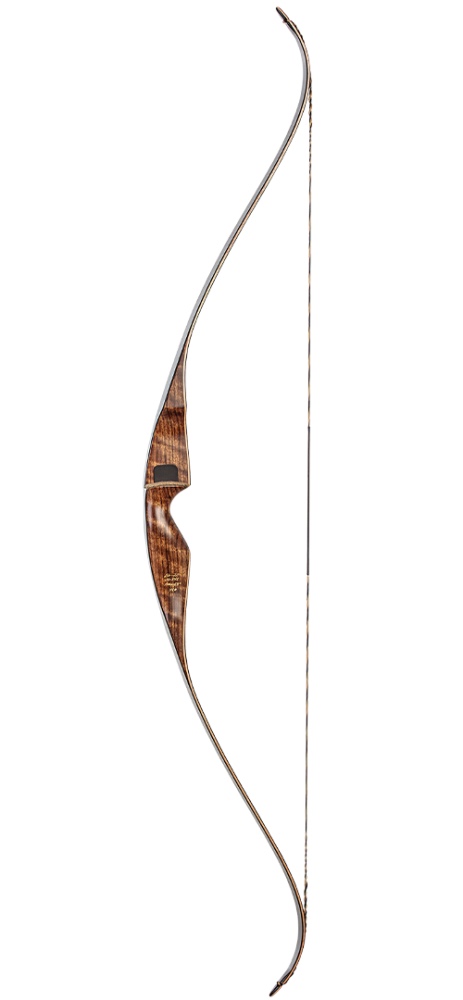
Bear Grizzly
The Bear Grizzly has been in continuous production since 1950, and the current bow is essentially the same design Bear settled on in 1964 — that heritage alone explains why it's 3Rivers' best-selling one-piece bow and the default first hunting recurve on ArcheryTalk and Tradgang. At 58 inches it splits the difference between stand maneuverability and forgiveness, with a shedua-toned hardwood riser, clear-maple-core limbs under black fiberglass, and a radiused, cut-on-center shelf with bear hair rest and leather side plate, so most well-spined arrows tune easily right off the shelf. It ships with a Dacron Flemish string, and Bear doesn't rate the tips for fast-flight material, so stay with B-55-class strings. Community sentiment is overwhelmingly warm: smooth to about 28 inches of draw, quiet once brace height is tuned, and tough enough to be knocked around a deer lease for decades — vintage Grizzlys from the 1960s are still hunted every fall. Complaints are minor: the grip feels blocky to some hands, marked weights can run a couple pounds heavy, and it stacks noticeably past 29 inches. At around $500 it remains the benchmark entry point for serious traditional bowhunting.
Bear Archery
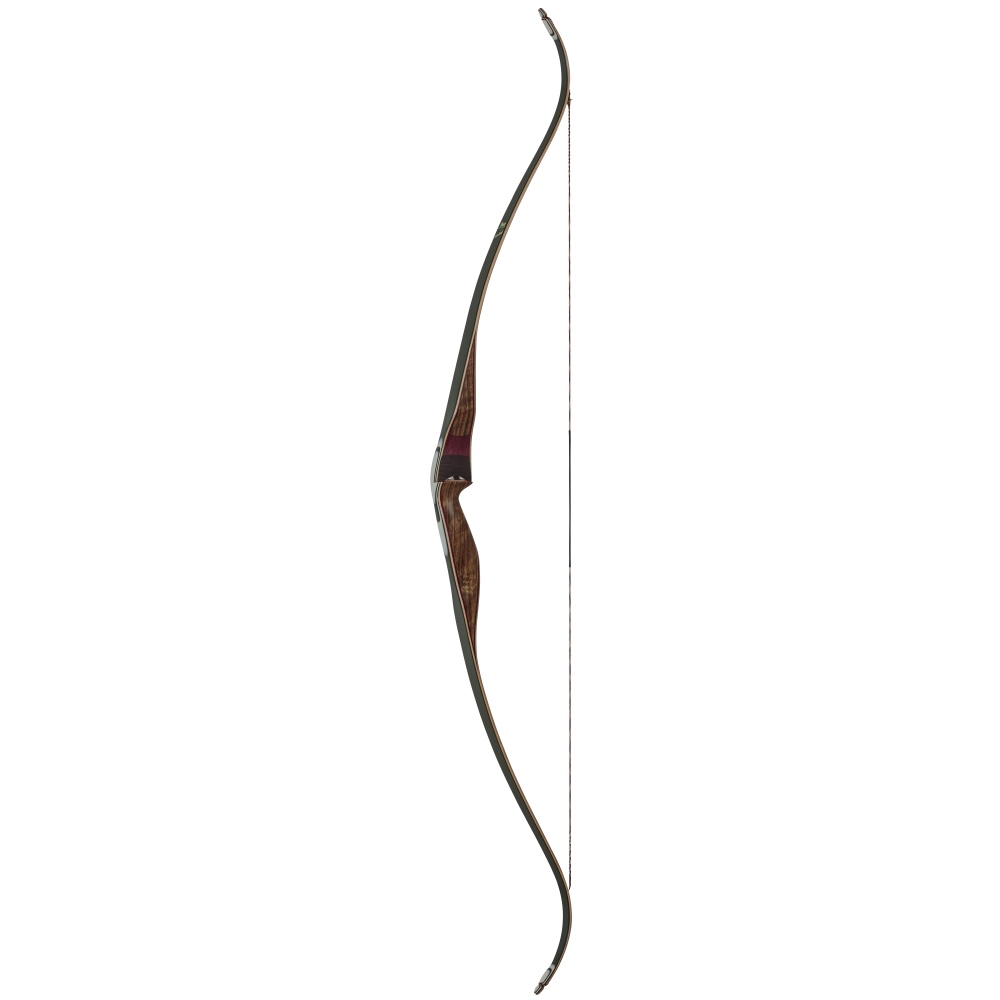
Bear Kodiak (1959 Model)
The 1959 Kodiak is arguably the most iconic recurve ever made — the bow that put Bear Archery on every bowhunter's wall and became Fred Bear's own choice after its launch. Bear's modern recreation, introduced for the model's 60th anniversary and still in the catalog in 2026, reproduces the look faithfully: a shedua riser with a purple heart I-beam running through it, green-and-white glass accents, maple-core limbs under Grayling-green fiberglass, and the signature feather arrow rest on a crowned, cut-on-center shelf with leather side plate. It's built in Gainesville, Florida and ships with a Dynaflight 97 Flemish string. On Trad Talk and Tradgang, owners praise it as smooth, quiet, and genuinely nimble for a 60-inch bow, with several comparing it favorably against semi-customs like the Toelke Chinook; the main gripes are the $730 price — Bear's most expensive one-piece — and scattered quality-control reports (finish blemishes, glass cracks) that Bear's customer service reportedly handles well. It carries 7 reviews at 3Rivers with no displayed average. If the Grizzly is the workhorse and the Super Kodiak the flagship, this is the heirloom: a hunting-ready piece of archery history rather than a budget tool.

Bear Archery
Bear Super Kodiak
Introduced in 1967 to succeed the original Kodiak, the Super Kodiak was Fred Bear's personal hunting bow for the last decades of his life — the bow in most of the famous photos from his later African and Alaskan hunts. That pedigree still drives its reputation: on Tradgang and ArcheryTalk it's routinely described as the smoothest-drawing production Bear, with a longer 60-inch AMO length that forgives sloppy releases and suits draws out to 29-30 inches better than the Grizzly. The two-piece shedua riser carries a black accent stripe and a full, palm-filling grip, and the crowned, cut-on-center shelf with bear hair rest and leather side plate shoots clean off the shelf. Unlike the Grizzly, its layered black-and-white glass tips take the included Dynaflight 97 Flemish string, so you get a modern low-stretch string's extra speed and quieter shot from the factory. The 3Rivers listing has accumulated 66 customer reviews, though no numeric average is displayed. Knocks are few: it costs $130 more than a Grizzly, left-hand weights are thin, and purists note today's Gainesville-made bow isn't hand-shaped like a Grayling original. As a do-everything hunting recurve, it's the flagship of Bear's one-piece line.
Bear Archery
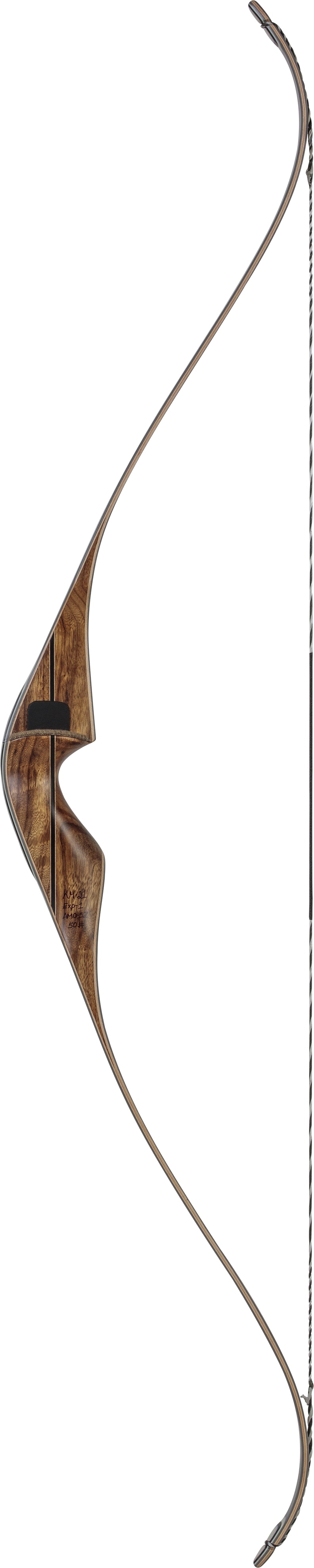
Bear Kodiak Magnum
The Kodiak Magnum first appeared in 1961 as the treestand and brush hunter's answer to full-length recurves, and the modern reissue keeps the formula: a heavily recurved 52-inch bow with a shedua riser, black accent stripe, and maple-core limbs faced in distinctive arctic-grey fiberglass. It is the shortest, lightest-in-hand bow in Bear's one-piece lineup, which is exactly why ground-blind and saddle hunters love it — it clears shooting rails and brush that a 60-inch bow won't. The radiused, cut-on-center shelf with bear hair rest and leather side plate shoots off the shelf, and the layered tips take the included Dynaflight 97 string. The honest trade-offs are well documented on ArcheryTalk and Tradgang: at 52 inches the string angle gets steep, so shooters past about 28 inches of draw report finger pinch and noticeable stacking, and many shoot it three-under to ease nock pinch. Its light mass also makes it less forgiving to aim than heavier bows. It carries 13 reviews at 3Rivers with no displayed average, and as of August 2026 stock is spotty — sold out at Bear's site with a waitlist at 3Rivers. For short-draw hunters in tight quarters, nothing in the Bear catalog is handier.