47 bows · 20 makers · $90–$2,149 · updated August 2026
Every hunting bow, and what the spec sheet leaves out
The IBO number on the sticker was shot at 70 lb and a 30-inch draw with a 350-grain arrow, which is nobody's hunting setup. This is the rest of it: draw cycles, brace heights, what the flagships cost once the shop finishes tuning them, and which $90 takedown recurves are worth shooting. Filter the list, tick three, read them in one table.
Every bow we track
Compounds, takedown and one-piece recurves, and longbows, filterable by brand, type, rated speed, and price. Tick the checkbox on up to three and they line up in one table.
47 bows found
Mathews
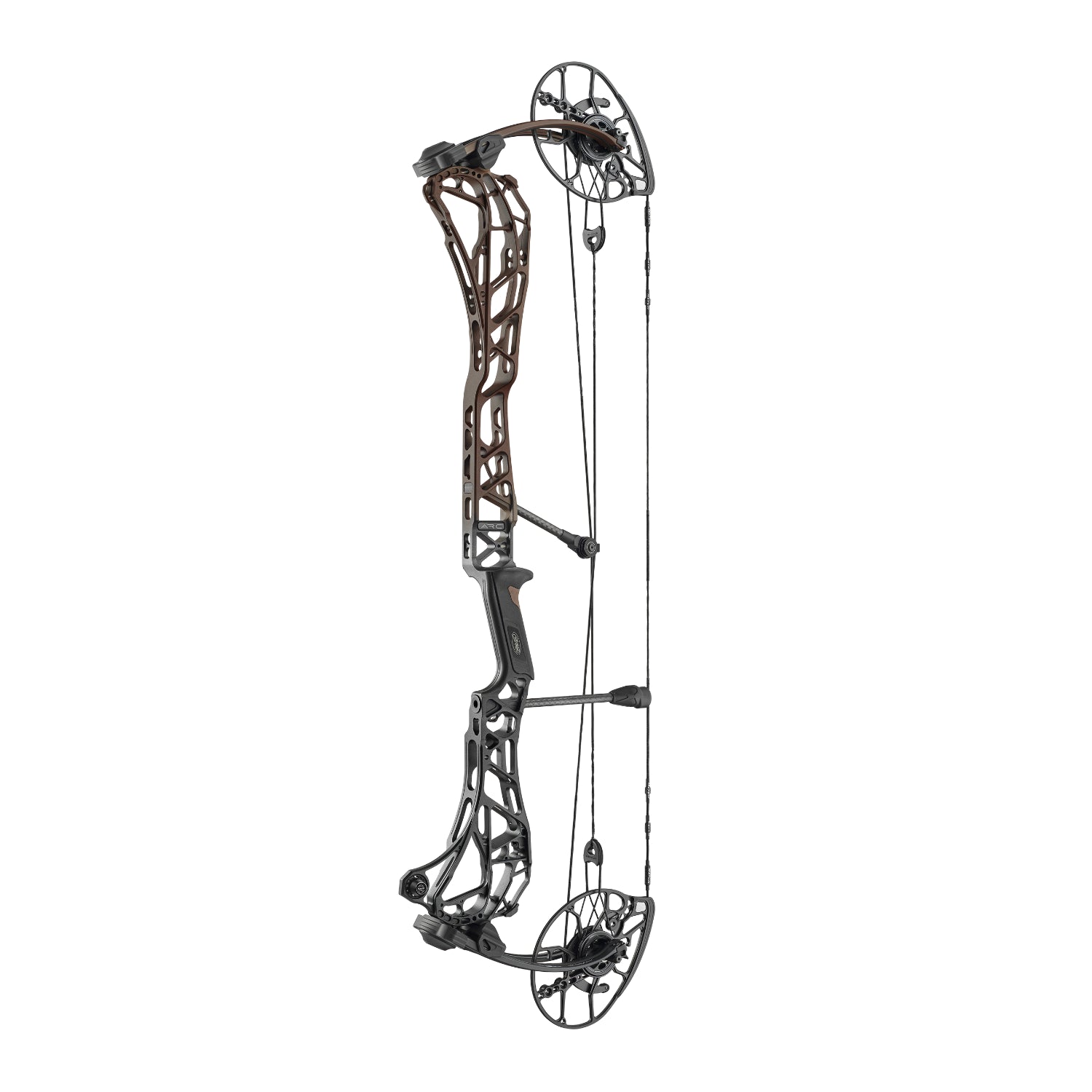
Mathews ARC 34
Mathews retired the Lift X line for 2026, and the ARC 34 is the new flagship — in Outdoor Life's 2026 test it earned the only unanimous 5/5 draw-cycle score, with testers calling it smooth as butter. That matches about half of ArcheryTalk; the other half found the first third of the draw stiff and the bow a bit jumpy off the back wall, because the valley is short and you have to keep steady pressure into the stops. The new SWX-2 cam carries perimeter weights, and mod choice matters: standard SWX mods chrono'd 289 fps in OL's 28.5"/62.5-lb rig, while the smoother SWX-Z mods gave up about 5 fps. It aims rock-steady for a 4.3-lb bow, tunes in minutes with press-free Limb Shift adjustment, and is typically Mathews-quiet and dead in the hand after the shot. The knocks: the grip remains polarizing ("the grip still hates me" is live-thread sentiment), and its 3.56" 50-yard groups trailed the Elite Varos' 2.79". At $1,469 it undercuts carbon rivals by several hundred dollars while giving up little.
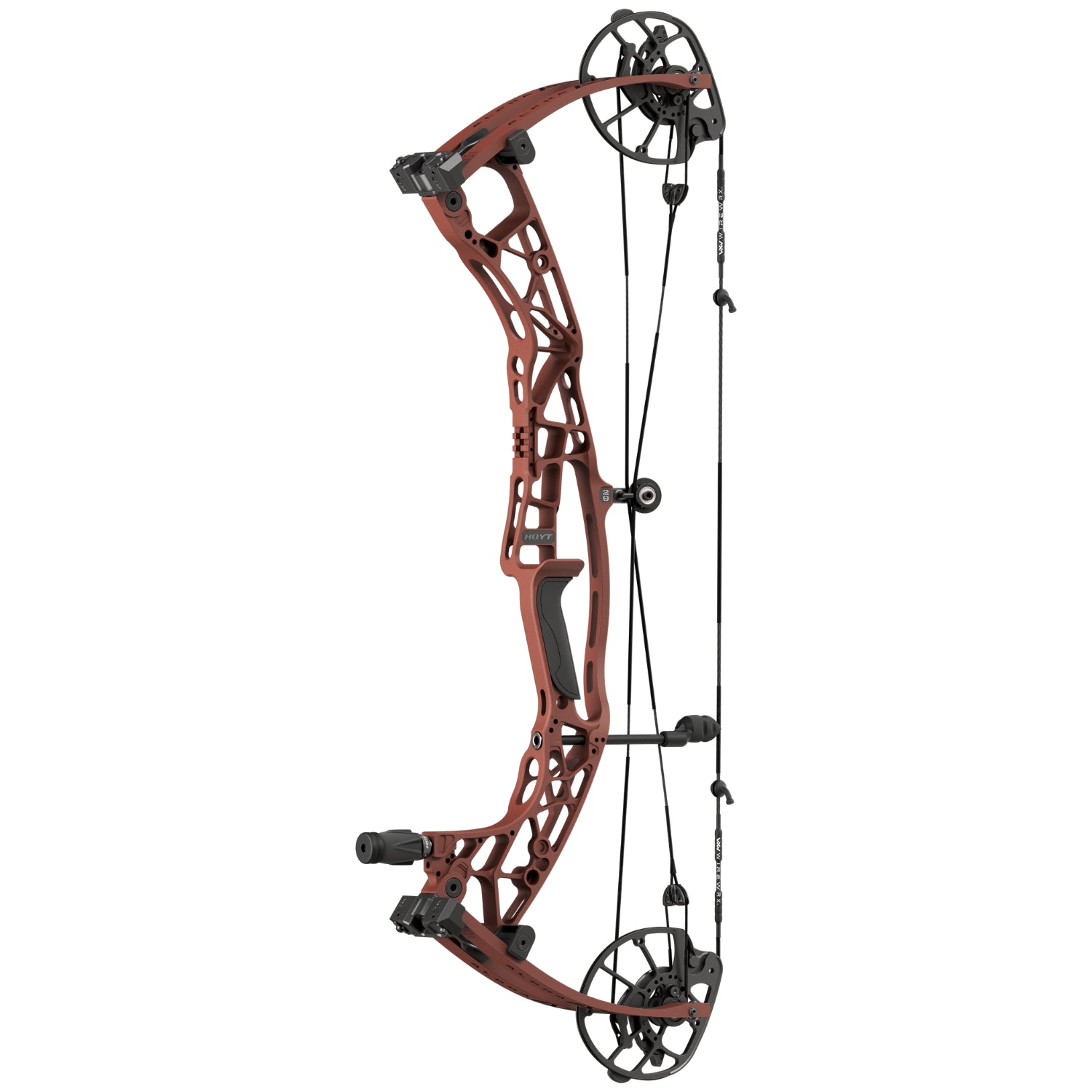
Hoyt's 2026 aluminum flagship comes in four versions; the AX-3 29 is the compact one, and it may be the most complete tuning package Hoyt has ever shipped. The new XTS Tuning System corrects both horizontal and vertical tears without a press — a first for Hoyt, whose shim-based tuning already led the industry — on what the company claims is the stiffest riser on the market. Bowhunter magazine measured it among the quietest, most vibration-free bows it has tested, crediting the In-Line accessory system that bolts sights and rests directly to the riser. It rates 340 fps ATA with the HBX Gen 4 cam's quarter-inch draw-length adjustments. ArcheryTalk head-to-heads against the Mathews ARC 30 read like a coin flip: Mathews usually wins draw feel, while the Hoyt wins the hold ("dead steady, minimal pin float"), quietness, and tuning system. The knocks: 4.4 pounds bare is nearly half a pound over the ARC 30, draw length tops out at 30 inches so longer-draw shooters need the AX-3 33, the flat Hoyt grip stays polarizing, and $1,399 is real money. The lone verified Scheels review so far is five stars.
Elite Archery
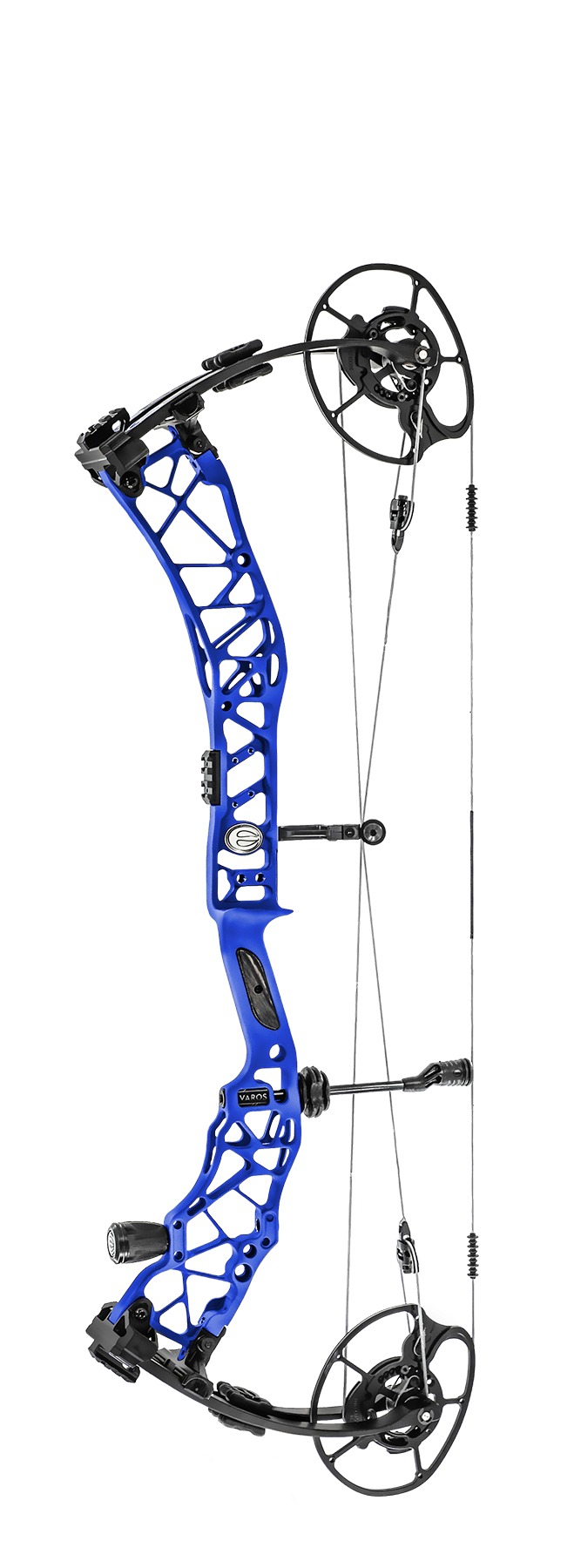
Elite Varos
The Varos is Outdoor Life's 2026 Bow of the Year, and it won on the metric that matters: accuracy. The three-shooter test team averaged 2.79" groups at 50 yards — best of the field — and in the 30-arrow shoot-off its groups ran 0.6" smaller than the Mathews ARC 34 and Hoyt AX-3 33. It also took a perfect 5/5 for post-shot behavior (dead quiet, dead still) and 5/5 for features, thanks to the new Micro Splitters that adjust cam timing with a screw turn — no press — on top of Elite's S.E.T. limb-pocket tuning. The SP2 cam runs up to 90% letoff with a meaty 7.8-lb holding weight that helps it pin on target. Owners on Elite's site (18 reviews, all 5-star) echo the 'bullet holes out of the box' story. Real knocks: at 4.75 lb it's the heaviest bow here, the transition into the valley is abrupt enough that OL scored the draw cycle just 3/5, the grip is slick (testers added tape), and 285.8 fps in standardized testing means it's no speed bow. At $1,299 it's the cheapest flagship in this group — the value is genuinely absurd.
Elite Archery
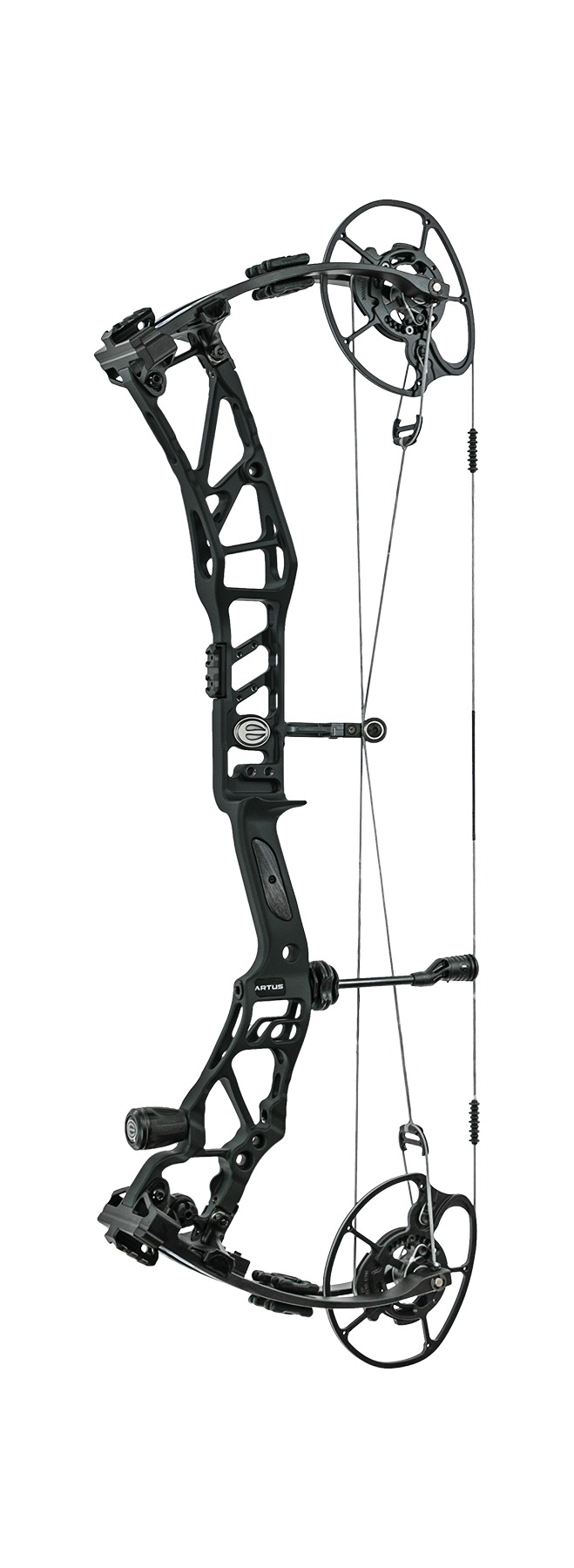
Elite Artus
With the Varos taking over as Elite's 2026 flagship, the Artus slots in as the brand's second hunting bow — the previous-generation compact flagship that stays in the line at $1,299. Its pitch is pure shootability: a huge 6.875-inch brace height, up to 90 percent let-off, and Elite's S.E.T. system that tunes left/right impact by pivoting the limb pockets with an Allen key — no press, no shims. The result is a 30-inch bow that owners on ArcheryTalk swear "holds like a 33–35-inch bow," and the 13 customer reviews on Elite's site run a perfect 5.0. With VX performance mods it rates 340 fps IBO, though standard mods give up speed, and real-world numbers land in the mid-280s with hunting arrows. The community's one loud complaint is mass: 4.7 pounds bare gets called "absurdly heavy for a short bow," with critics saying Elite risers need a half-pound diet to keep pace with Mathews. It is also an awkward buy new — the newer Varos costs the same — but as a forgiving, dead-in-hand whitetail bow with the biggest brace height in its class, the Artus still earns its spot.
Mathews
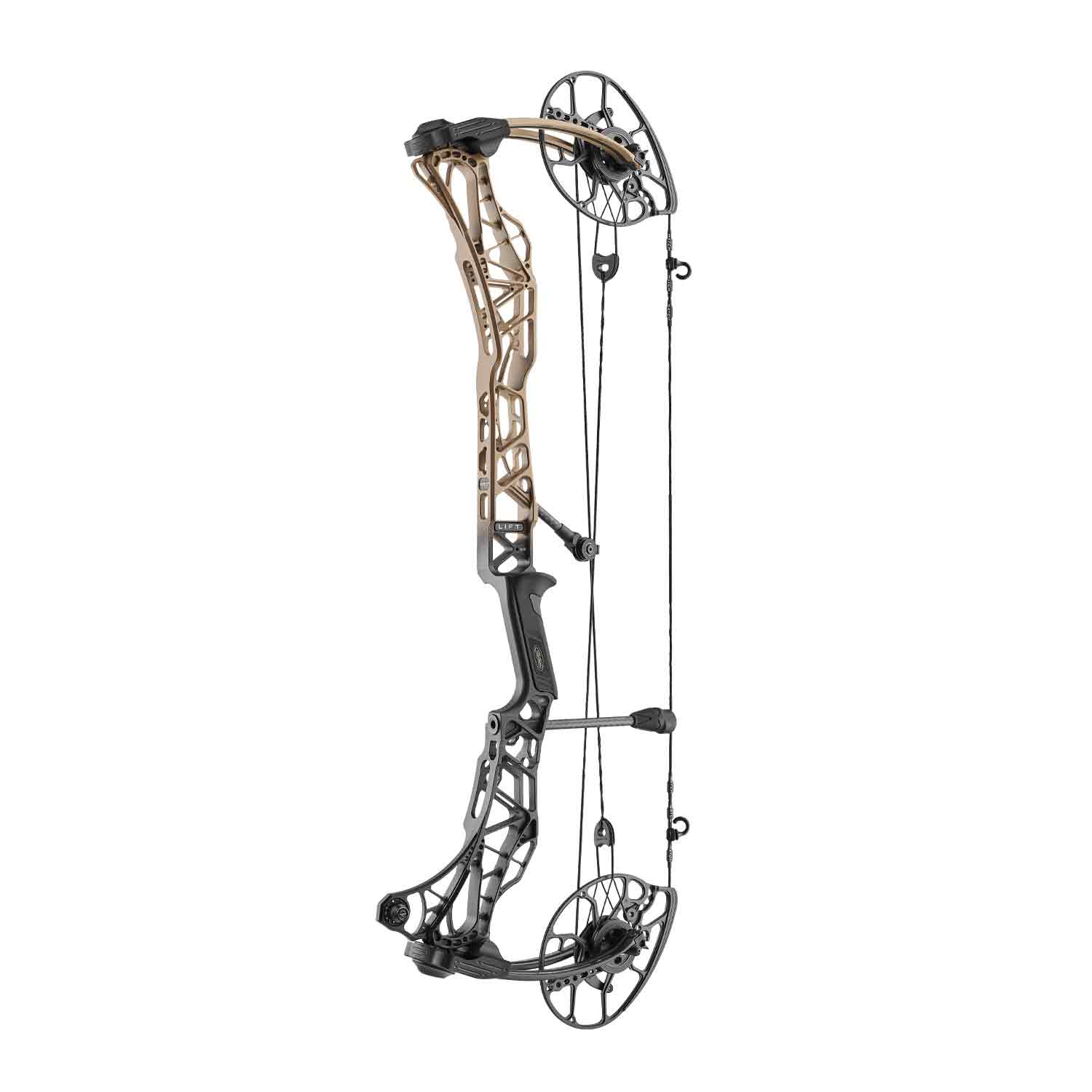
Mathews Lift X 29.5
Mathews' 2025 flagship is still on dealer racks, and now that the ARC series has replaced it, closeout pricing makes it the sleeper buy of this list — Scheels has it at $1,099, down from $1,299. On paper it's the athlete of the group: 3.99 lb bare, 348 fps IBO (the fastest-rated Mathews here), and a compact 29.5" ATA that's a treestand and blind favorite. Field & Stream measured it among the quietest bows they've tested at 67.5 dB and found it the most accurate bow in their test from 20–40 yards, and owners echo the dead-in-the-hand shot. The honest caveat is the draw: the SWX cam holds near max weight late in the cycle before dropping into a short valley, and ArcheryTalk draw-force-curve threads confirm it's more aggressive than the marketing suggests — the ARC exists partly to fix that. Limb Shift Technology handles cam-lean tuning with a wrench, no press, and the BOND grip is swappable if the stock feel isn't yours. If the price-per-performance math matters more than having the newest cam, this is the value play.
Elite Archery
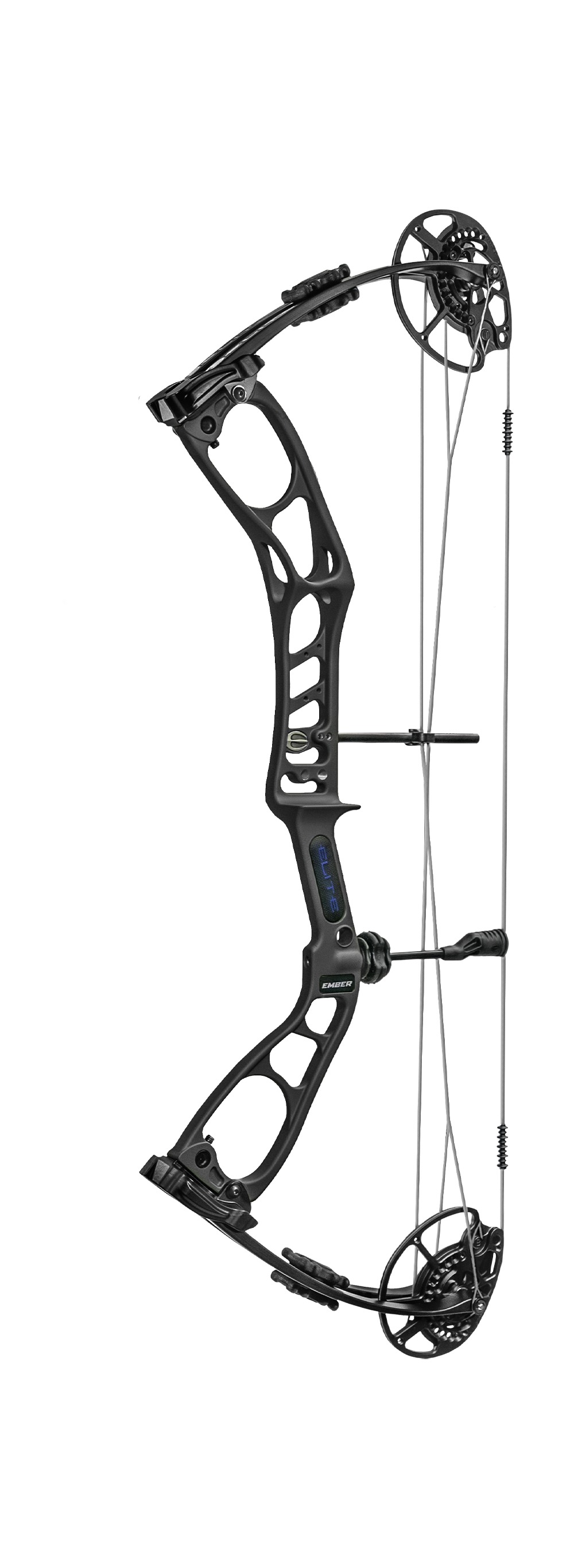
Elite Ember
The Ember is Elite's do-everything adjustable bow, and unlike most sub-$700 packages it comes from a brand better known for $1,200 flagships like the Era and Artus. The $679.99 price is for the RTS package (sold that way by Elite direct and Scheels), which bundles a CBE Tactic 3-pin sight, Arrow Mane capture rest, stabilizer, quiver and Winner's Choice strings - meaningfully nicer package parts than the Trophy Ridge or Octane kits rivals bolt on. With 10-60 lb of draw weight and 15-29 inches of draw length, it fits nearly anyone, which is why ArcheryTalk regulars call it one of the best grow-with-you buys; several report it out-holds and out-feels the Bear Legit and PSE Stinger head-to-head, with a limb-stop back wall that is unusually solid for the class. Real knocks: 310 fps IBO is modest and short-draw speeds are pedestrian; the dual-cam-with-yokes system needs occasional re-syncing where binary-cam rivals (Amplify, Deploy SB) hold tune longer; and a minority find the light 3.6 lb bare bow slightly nervous at full draw. Versus Elite's own flagships you give up SET tuning, speed and shot quietness - but not fit and finish.
Bear Archery
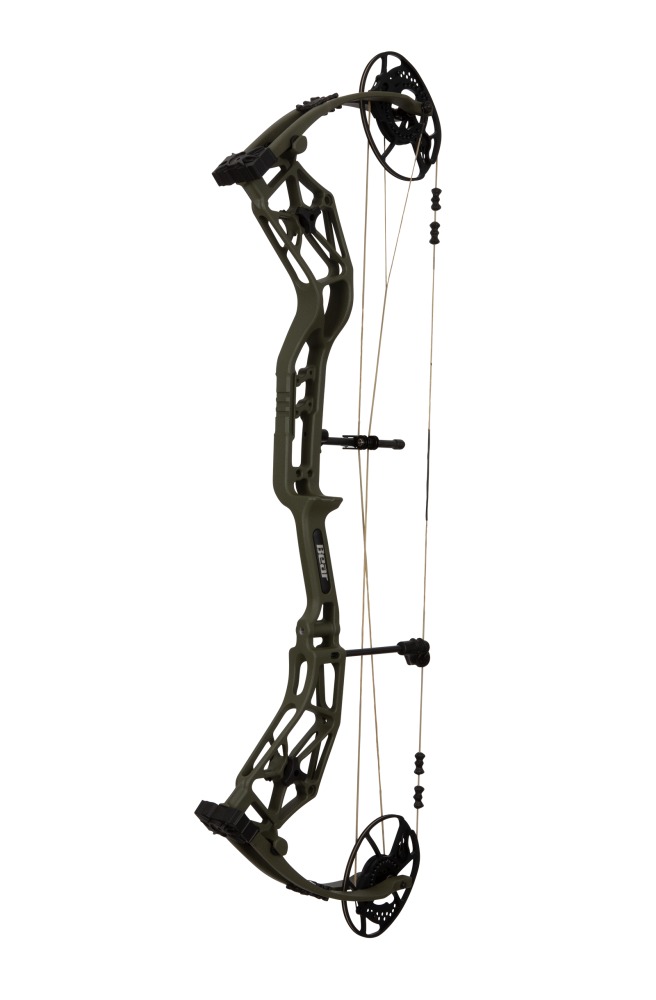
Bear Alaskan XT
Bear's Alaskan XT is the value pick of this class if you want flagship-adjacent features without a flagship bill. The price shown is the common Ready-to-Hunt package street price (about $600 at Walmart; $679.99 direct from Bear), which includes a Trophy Ridge 4-pin sight, Whisker Biscuit, quiver, stabilizer, peep and D-loop; the bare bow runs around $500-530. The spec sheet punches up: 33-inch axle-to-axle for stable aiming, 335 fps ATA from the DHC-XR cam system, an integrated Picatinny sight mount, roller cable guard, and a light 3.5 lb bare weight. ArcheryTalk threads titled 'now that's value' capture the sentiment - most owners report a surprisingly smooth draw and tight groups, and it holds 5.0/5 across 10 Pyramyd Air reviews plus 4.8/5 at Walmart. Honest knocks: there is a quick buzz at the shot that the KillerWave dampeners don't fully kill (one owner found it livelier than Bear's own Whitetail Maxx), the 25-30 inch draw range excludes very short and long-draw shooters, and the RTH accessories are entry grade - most serious hunters upgrade the sight and rest within a season.
Bear Archery
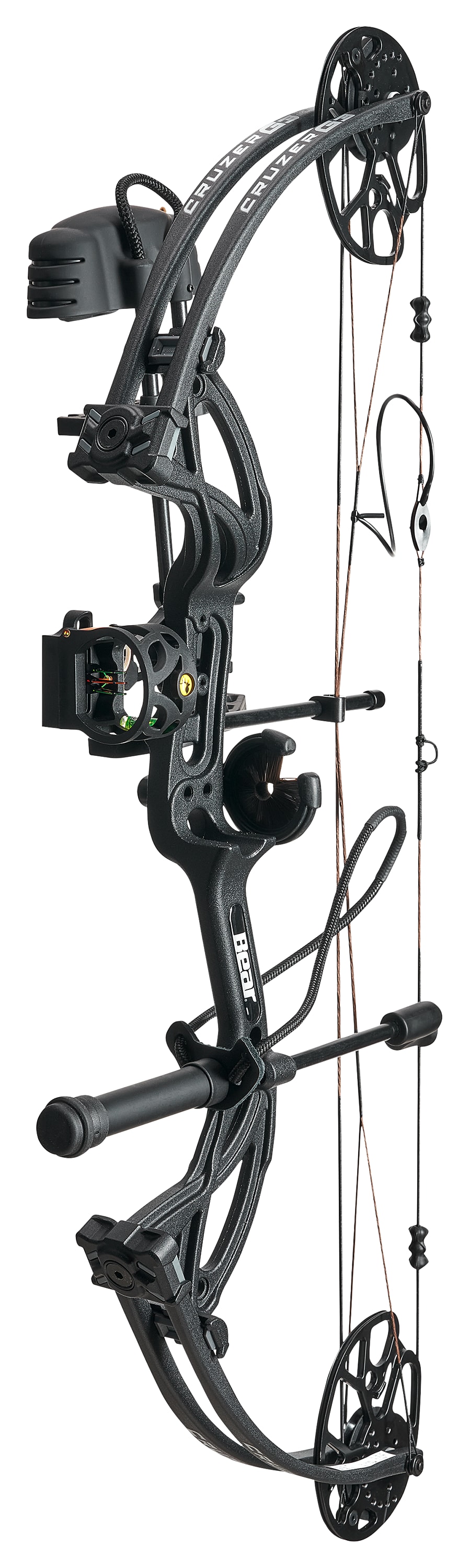
Bear Cruzer G3
The Cruzer line is the perennial rival to Diamond's Edge series, and the G3 is the fastest of the ultra-adjustables here: a dual-cam system pushing 315 fps with 10-70 pounds and 14-30 inches of adjustment, all Allen-wrench accessible. It sells as a Ready-to-Hunt package - Trophy Ridge 4-pin sight, Whisker Biscuit V, 5-Spot quiver, 6-inch stabilizer, factory-installed peep and D-loop - for roughly $350-500 depending on finish; $449 is the common price point at big-box retailers. Note that Bear released the Cruzer G4 in 2025 ($419-460, near-identical adjustability on a 29-inch frame), so the G3 is late in its retail life but still widely stocked. Testers and owners describe the draw as pleasant for a two-cam bow at hunting weights, with an honest caveat: the back wall is slightly mushy and the G3 runs a touch louder and buzzier than single-cam budget rivals - the price of its extra speed. The 3-pound bare mass is great for young shooters carrying it but amplifies hand feel. Trophy Ridge accessories are a cut above most bundled kits, and the whole package is legitimately huntable out of the box.
Bodnik Bows
Bodnik Quick Stick
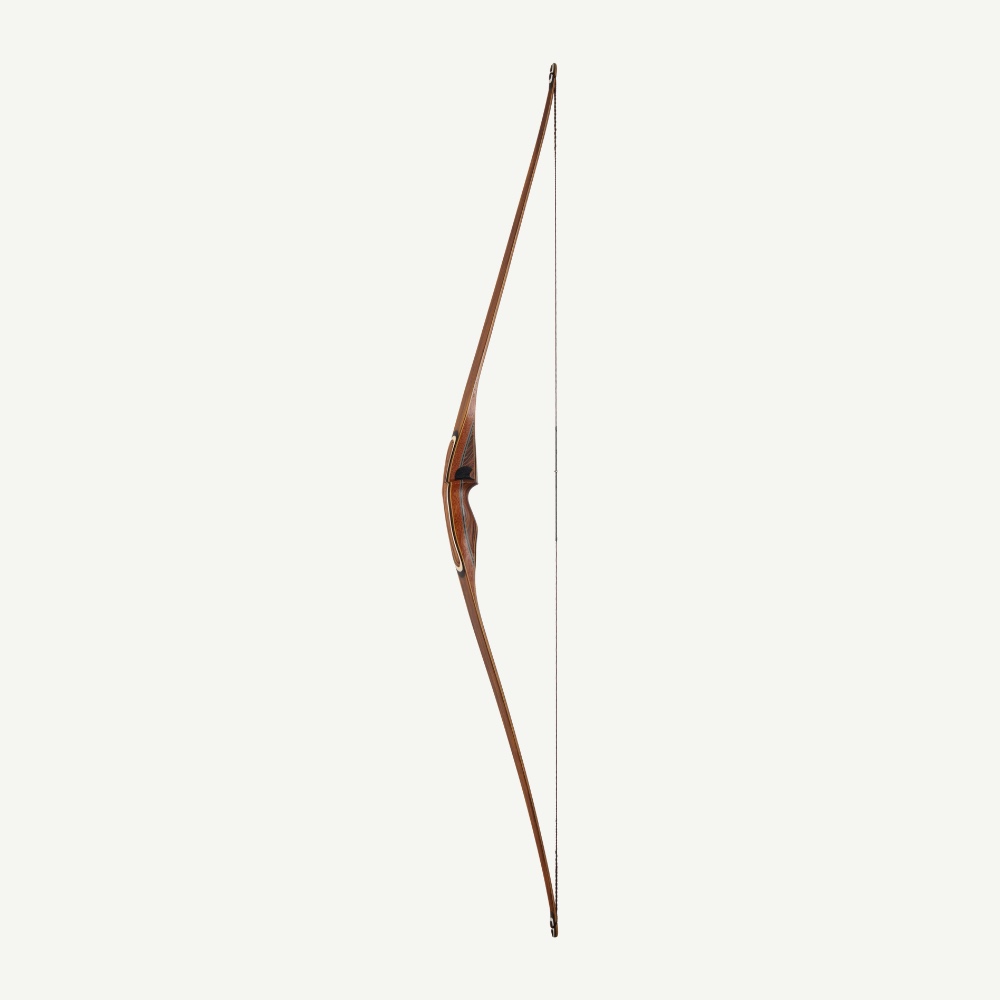
Substituted for the requested Bodnik Slick Stick, which is sold out at Bearpaw's US store with a stated 10-12 month production backlog — the Quick Stick is the same German maker's most popular hybrid and is still in retail circulation. Designed by Henry Bodnik as his personal favorite, it marries a longbow's profile and quiet manners to near-recurve performance: a 60-inch reflex-deflex hybrid with a bubinga-and-rosewood (or merbau, by run) riser, bamboo-core limbs under clear glass, multilayered Mycarta tips, and a radiused, cut-on-center shelf — a genuine rarity among longbows that makes arrow tuning almost recurve-easy. It ships with Bearpaw's Dyneema-blend Whisper string, may be stored strung, and carries an extraordinary 30-year warranty. Owners at Kustom King rate it 5.0/5, 3Rivers has logged 13 reviews, and Pete Ward's long-form test praised its dead-in-the-hand shot with essentially no hand shock — the reflex-deflex geometry sheds the thump that plagues D-shape longbows. Caveats: Bodnik weights are known to run 3-4 lb heavy, Bearpaw mandates 8 grains-per-pound minimum arrow weight, and pricing swings widely ($449 on sale at 3Rivers, $699 at Kustom King) with limited in-stock weights. As a compact, shock-free hunting longbow, it's the premium pick of this class.
PSE
PSE Uprising
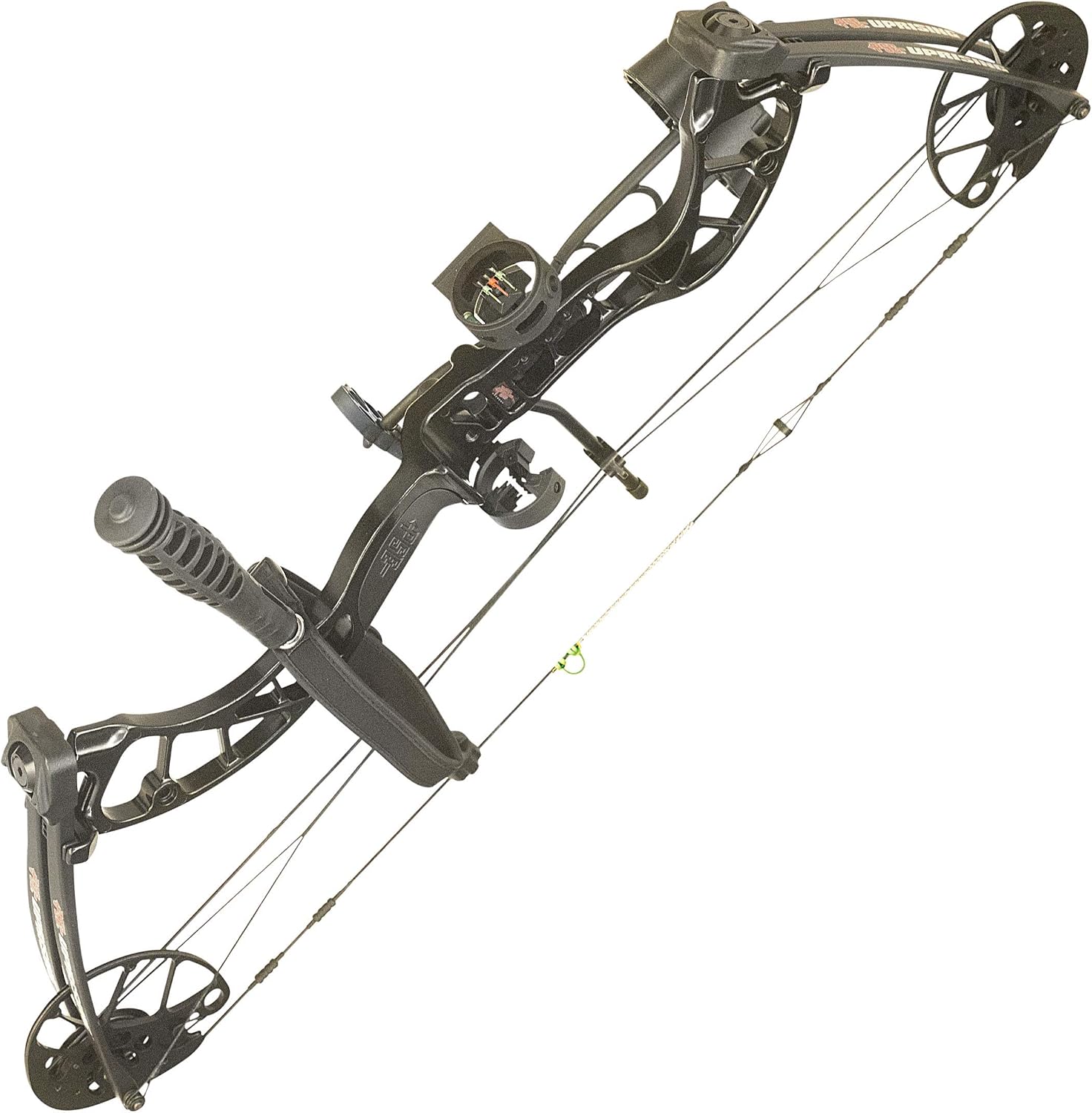
The Uprising is PSE's answer to the Edge and Cruzer, and it undercuts both on price: the Ready-to-Shoot package (3-pin sight, whisker-style rest, 5-arrow quiver, 6-inch stabilizer with sling) sells around $300 street, with sale prices dipping into the $260s. Adjustment range is legitimate - 14 to 30 inches of draw and 15 to 70 pounds, all module-based with no press - and at 310 fps ATA it out-runs the Edge XT on paper. Sportsman's Warehouse buyers rate it 4.8/5, and Women's Outdoor News praised how it grows with a shooter. The honest knocks: 70 percent let-off is the lowest in this class, so you hold roughly 18-21 pounds at full draw on a 65-70 lb setting - noticeably more than the 75-80 percent competition, which matters to new hunters waiting on a deer. The cam has a firmer hump toward the end of the cycle than the buttery Diamonds, and Amazon reviewers specifically call out the included rest as frustrating for beginners. Arrows and a release are not included. As pure bow-per-dollar, though, nothing name-brand beats it at $300, and PSE's lifetime warranty travels with a real dealer network.
Bear Archery
Bear Grizzly
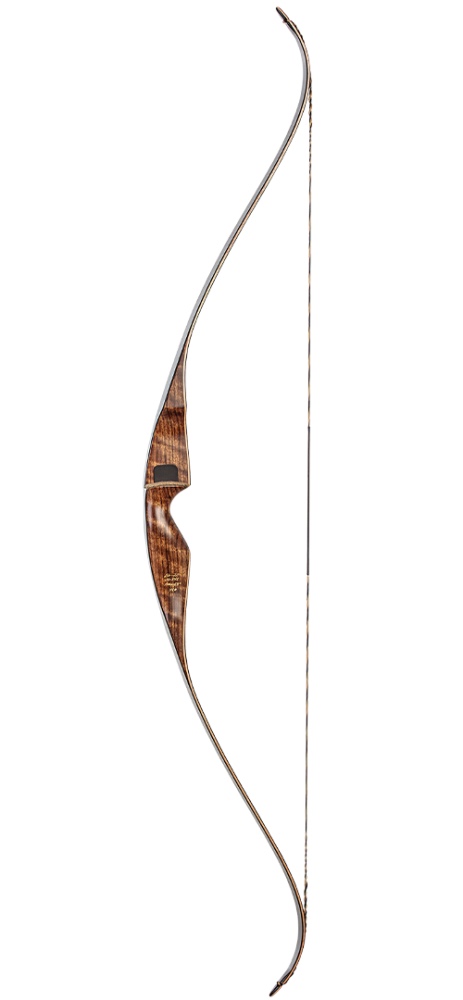
The Bear Grizzly has been in continuous production since 1950, and the current bow is essentially the same design Bear settled on in 1964 — that heritage alone explains why it's 3Rivers' best-selling one-piece bow and the default first hunting recurve on ArcheryTalk and Tradgang. At 58 inches it splits the difference between stand maneuverability and forgiveness, with a shedua-toned hardwood riser, clear-maple-core limbs under black fiberglass, and a radiused, cut-on-center shelf with bear hair rest and leather side plate, so most well-spined arrows tune easily right off the shelf. It ships with a Dacron Flemish string, and Bear doesn't rate the tips for fast-flight material, so stay with B-55-class strings. Community sentiment is overwhelmingly warm: smooth to about 28 inches of draw, quiet once brace height is tuned, and tough enough to be knocked around a deer lease for decades — vintage Grizzlys from the 1960s are still hunted every fall. Complaints are minor: the grip feels blocky to some hands, marked weights can run a couple pounds heavy, and it stacks noticeably past 29 inches. At around $500 it remains the benchmark entry point for serious traditional bowhunting.
Diamond Archery
Diamond Edge XT
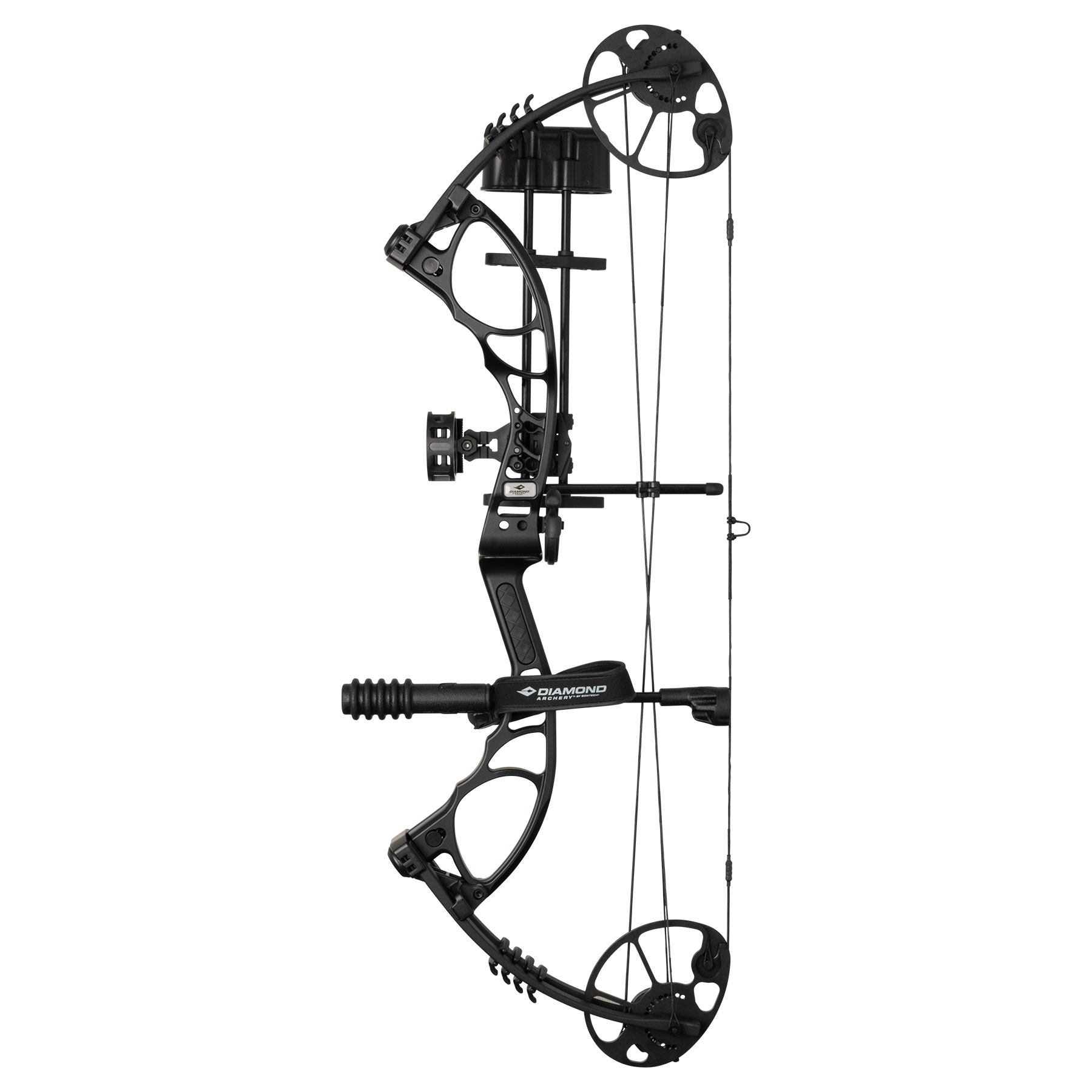
The Edge XT is the bow budget shoppers get pointed to when they insist on buying new instead of used: a Bowtech-built platform with a caged riser and ultra-wide quad limbs, sold as a complete package (3-pin Octane sight, brush rest, Furnace quiver, 5-inch stabilizer, peep, wrist sling) for about $419 street - it routinely goes on sale near $340, and $449 is Diamond's list. Rotating-module cams cover 19-31 inches of draw and 20-70 pounds with nothing but an Allen wrench, so one bow can carry a shooter from first lessons through whitetail season. The draw cycle is among the smoothest in this class - soft and unaggressive with 80 percent let-off - and the 6.75-inch brace on a 31-inch axle-to-axle frame is forgiving of sloppy form. The trade-offs are the usual budget ones: 300 fps ATA is slow next to mid-range bows, the back wall is spongier than cable-stop flagships, and the Octane accessories are serviceable rather than good - most owners upgrade the sight and stabilizer within a year. The 20-pound floor also fits teens and adults better than young kids; Diamond's Infinite and Prism go lower.
Southland Archery Supply
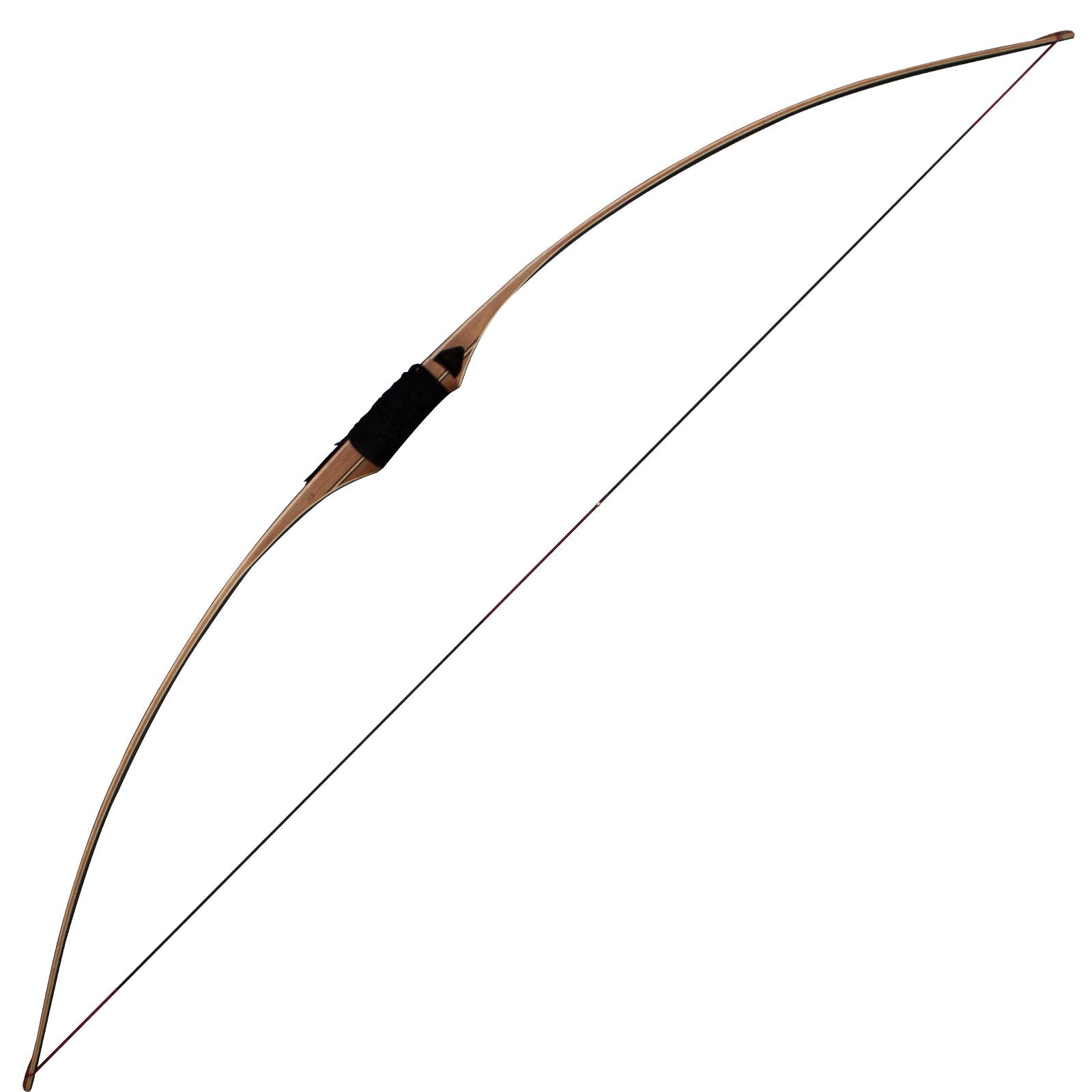
SAS Pioneer 68" Longbow
Substituted for the requested 68-inch Black Hunter: the only Black Hunter longbow verifiably sold in the US is a 60-inch takedown, so the SAS Pioneer fills the budget one-piece 68-inch slot — and it's the bow budget-minded trad forums actually recommend there. The Pioneer pairs a makore and cassia siamea hardwood riser with maple-laminated, fiberglass-faced limbs in a classic American flat-bow profile. At 68 inches it is exceptionally smooth and forgiving, with no meaningful stack at normal draws, making it a favorite first longbow on ArcheryTalk and Trad Talk. Reviewers on Southland's own store rate it 4.7/5 across 18 reviews, and the consistent refrain is 'great quality for the price.' The equally consistent advice: bin the stock endless-loop Dacron string. With a Flemish twist replacement the Pioneer picks up speed, quiets down, and sheds most of its reported hand shock. The shelf is a simple non-center-cut window with a stick-on rug, so expect to spend time on spine and brace tuning, and the fit-and-finish is honest $190 work — visible tool marks and a chunky grip some shooters sand to fit. With 40-55 lb limbs it is genuinely deer-capable, and at this price it's the cheapest legitimate hunting longbow in the class.

Samick
Samick Sage
For over a decade, "just buy a Samick Sage" was the reflexive r/Archery answer to every beginner question, and the cult status is earned: a hard-maple riser, fiberglass-laminated limbs, threaded bushings for a sight, plunger, quiver, and stabilizer, and a proprietary bolt-on limb pattern with the cheapest, most available replacement limbs in traditional archery. That limb ecosystem is the Sage's superpower for hunters — start at 25-35 lb to learn form, then swap to 45 or 50 lb limbs for around $70-90 instead of buying a new bow. It is not ILF, so you're locked to Sage-pattern limbs, but clones and spares are everywhere. Samick's global distribution has wobbled in recent years; Southland Archery Supply now produces and sells it for about $110, while Amazon third-party listings drift up toward $160, and the original design team went on to found Southwest Archery, whose Spyder is essentially the Sage 2.0. At 62" AMO it suits draws up to about 29". Thousands of deer have fallen to 45-55 lb Sages; it remains the benchmark budget hunting takedown.
BlackOut
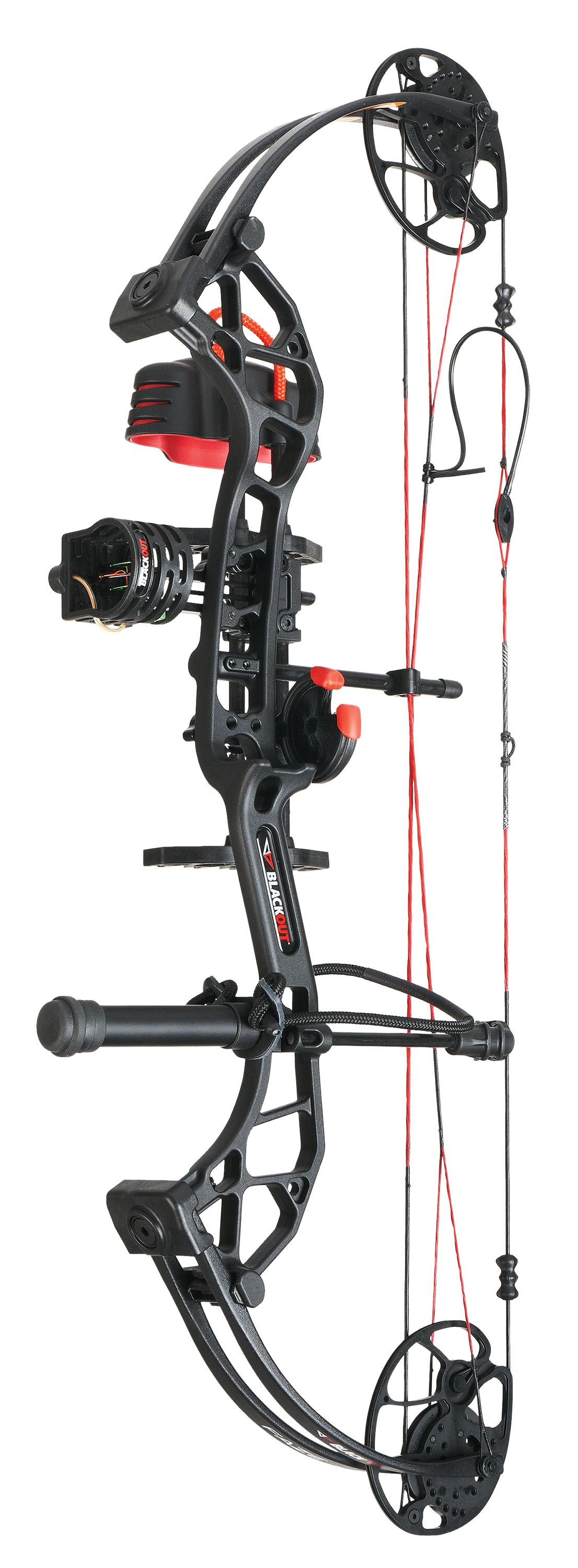
BlackOut Faze 2
The Faze 2 is Bass Pro's house-brand take on the ultra-adjustable starter bow, and it earns its slot here over the Topoint M1 on review data: Bass Pro shows a consolidated 4.5/5 across 31 customer reviews, where Topoint's Amazon listings fragment the same bow across color-variant ASINs (4.3/5 from just 12 on the main one). The $329.99 price is for the complete package - BlackOut 3-pin sight, Biscuit rest, quiver, stabilizer with sling, TruPeep, and D-loop. BlackOut bows are built on risers licensed from Bear and Diamond with house cams and limbs, so the underlying engineering is name-brand adjacent at a house-brand price. Adjustment is the story: 5 to 60 pounds and 13 to 28 inches with an Allen wrench, no press, on a compact 29.25-inch frame firing up to 300 fps. Bass Pro pitches it for smaller-framed hunters and growing kids, and that is the honest framing - the 28-inch draw cap excludes most adult men, and the 60-pound ceiling trails the 70-pound rivals. Other trade-offs: the 6.25-inch brace is less forgiving than the Diamonds, the bundled accessories are the weakest kit in this batch after Sanlida's, and parts or warranty service exist only inside the Bass Pro/Cabela's ecosystem, with resale value to match.
Bear Archery
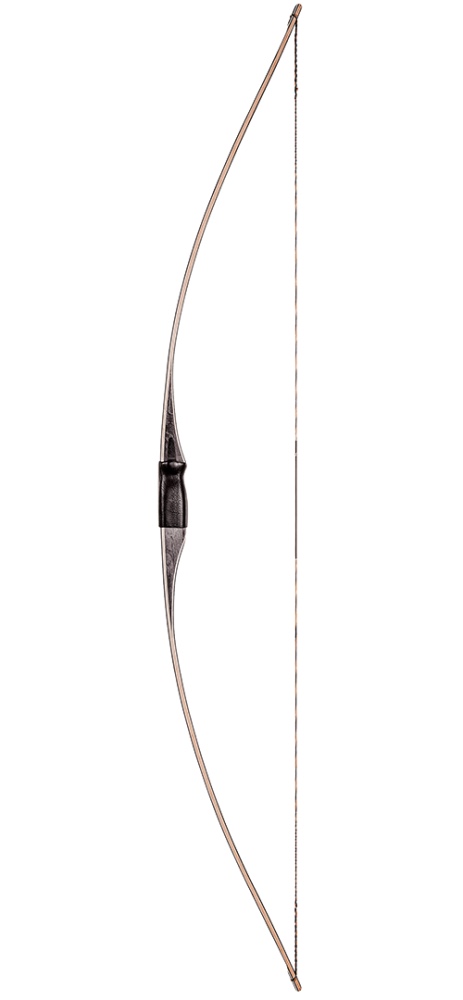
Bear Montana
In the Bear lineup since the late 1990s, the Montana is the longbow most American trad hunters start with — a 64-inch, slightly reflexed D-shape design with a hard-rock maple riser, white maple limbs under black or grey fiberglass, and a supple leather grip with matching leather shelf rug and side plate for shooting off the shelf. The slight reflex and tapered limb laminations give it more zip than a straight-limbed Hill-style bow, and the 64-inch length keeps finger pinch and stacking away for draws up to about 29 inches. Lancaster calls it a longbow that 'performs well above its price-point,' and Amazon buyers rate it 4.4/5. Community feedback on ArcheryTalk and Trad Talk is largely positive but honest about longbow realities: there is some hand shock — mild by longbow standards, and mostly tamed with a properly tuned brace height, heavier arrows, and the included Dynaflight 97 string — and the sight window is not cut past center, so arrow spine selection matters more than on Bear's recurves. At $460-530 street it undercuts custom longbows by hundreds while delivering a genuinely huntable, quiet, lightweight package that carries all day.
Bear Archery
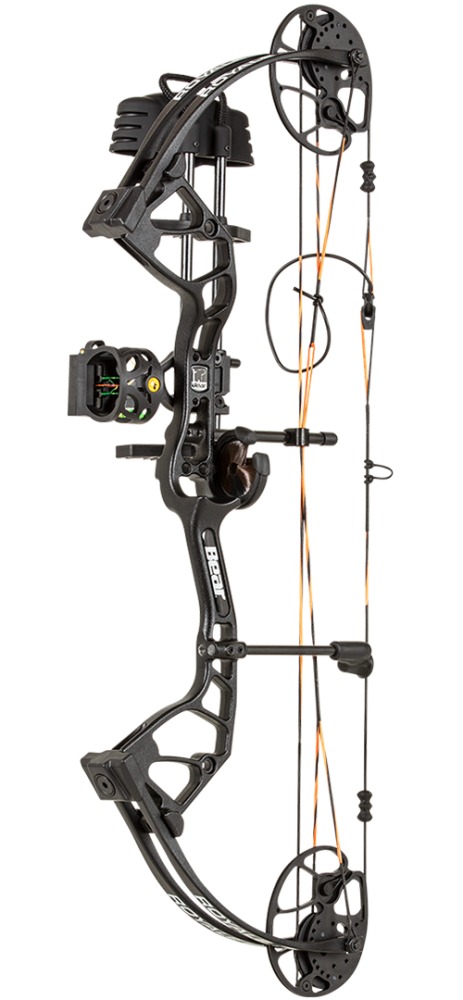
Bear Royale
The Royale is the small-frame specialist of Bear's adjustable line: 5 to 50 pounds and 12 to 27 inches of draw on a 27-inch axle-to-axle frame weighing just 2.7 pounds bare (about 3.3 with accessories). The $299.99 price is for the Ready-to-Hunt package - Trophy Ridge 3-pin sight, Whisker Biscuit, 5-arrow quiver, Fletcher no-tie peep, and D-loop - and Bass Pro buyers rate it 4.2/5 across 35 reviews, the biggest verified review base in this batch. EnduraFiber split limbs and rotating modules make every adjustment Allen-wrench simple, and RockStops string suppressors keep the shot civil for its size. Understand what it is, though: this is the bow for kids, small-framed women, and short-draw adults, not a growth path to full-size hunting. The 50-pound ceiling is adequate for whitetail at moderate range (with heavier arrows and sharp broadheads) but leaves no margin for larger game, the 27-inch draw cap excludes most adult men, and 290 fps IBO means real-world speeds in the low 200s at typical settings. The short frame and 6-inch brace also punish form errors more than the 31-32 inch Diamonds. Within its niche - a genuinely light, genuinely huntable small-frame rig - it is the best-reviewed option under $300.
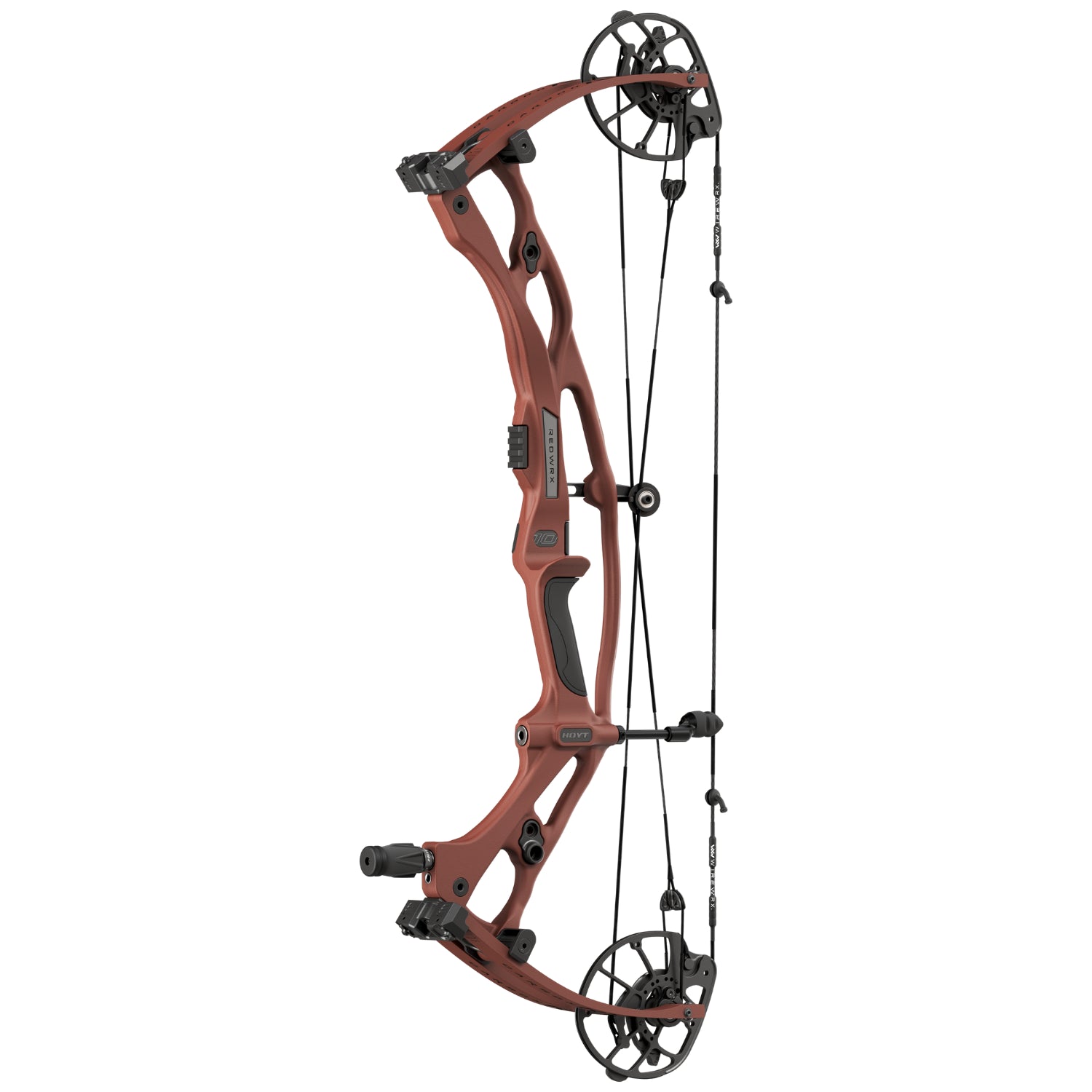
Hoyt's 2026 carbon flagship is really about one thing: the patent-pending XTS Tuning System, which adjusts for both left/right AND high/low paper tears without a press — something no other production system fully does. Reviewers who've lived with it (Born Hunting, Nock On) say it works and doesn't move your center shot, but the ArcheryTalk reality check matters: multiple owners report that two of three RX-10s they set up still needed traditional cam shimming to finish the job, so XTS narrows the gap rather than eliminating the press. The bow itself earns real praise — absurdly stable at full draw, surgically quiet, and the hollow carbon riser carries lighter than its 4.1 lb suggests while staying warm to the touch in late-season cold. The HBX Gen 4 cam gives quarter-inch draw adjustments plus customizable letoff and back-wall feel. The catch is value: $2,149 is $550 over the aluminum Alpha AX-3 that shares the same cam and tuning system, and the RX-10 didn't make Outdoor Life's 2026 podium while the AX-3 33 did. You're paying carbon money for carbon feel.
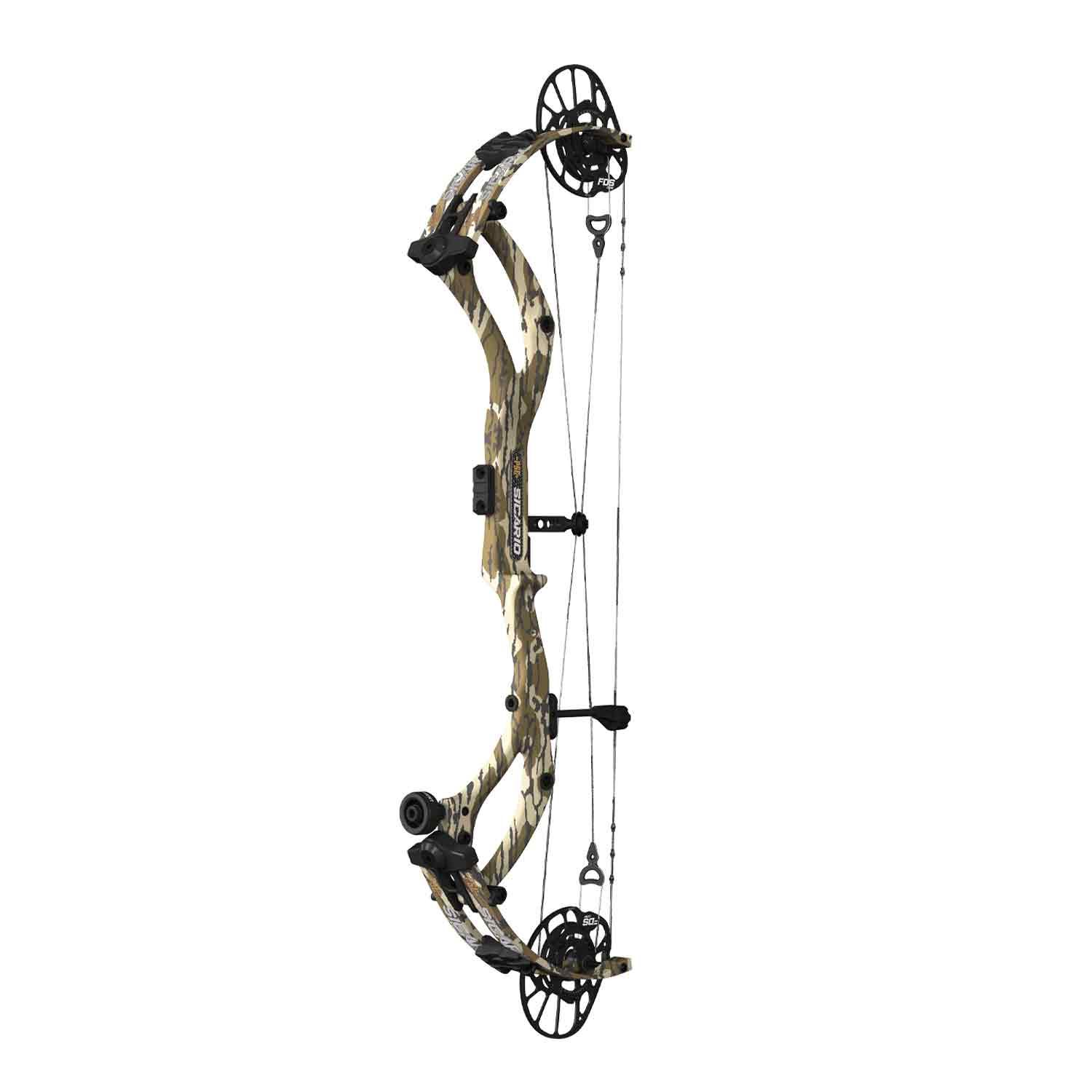
PSE calls the Sicario the fastest carbon bow ever built, and the numbers back the swagger: 357 fps IBO, and in Outdoor Life's standardized 2026 test it chrono'd 305 fps — about 20 fps clear of every other flagship. One ArcheryTalk tester ran 353 fps with a 350-grain arrow at 70 lb/30.25". The surprise is how civilized it is. The FDS cam's geometry gives an effective 6.5" brace from a nominal 5.25", and the community consensus is a draw that's stiff but linear and smooth — 'speeds that don't make sense' for the cycle — with a decent valley and very little vibration from the Dead Frequency Carbon riser at just 3.9 lb. Now the honest part: Outdoor Life scored its features 2/5 because, unlike every rival here, real tuning still means a bow press (the EZ.220 spacer system helps but doesn't replace one), its draw cycle scored lowest in the test, and accuracy trailed at 4.04" average groups — a short-brace speed bow still punishes sloppy form. At $1,999 street it's priced against the RX-10 with fewer convenience features but a huge speed edge.
Prime Archery
Prime Divide 33
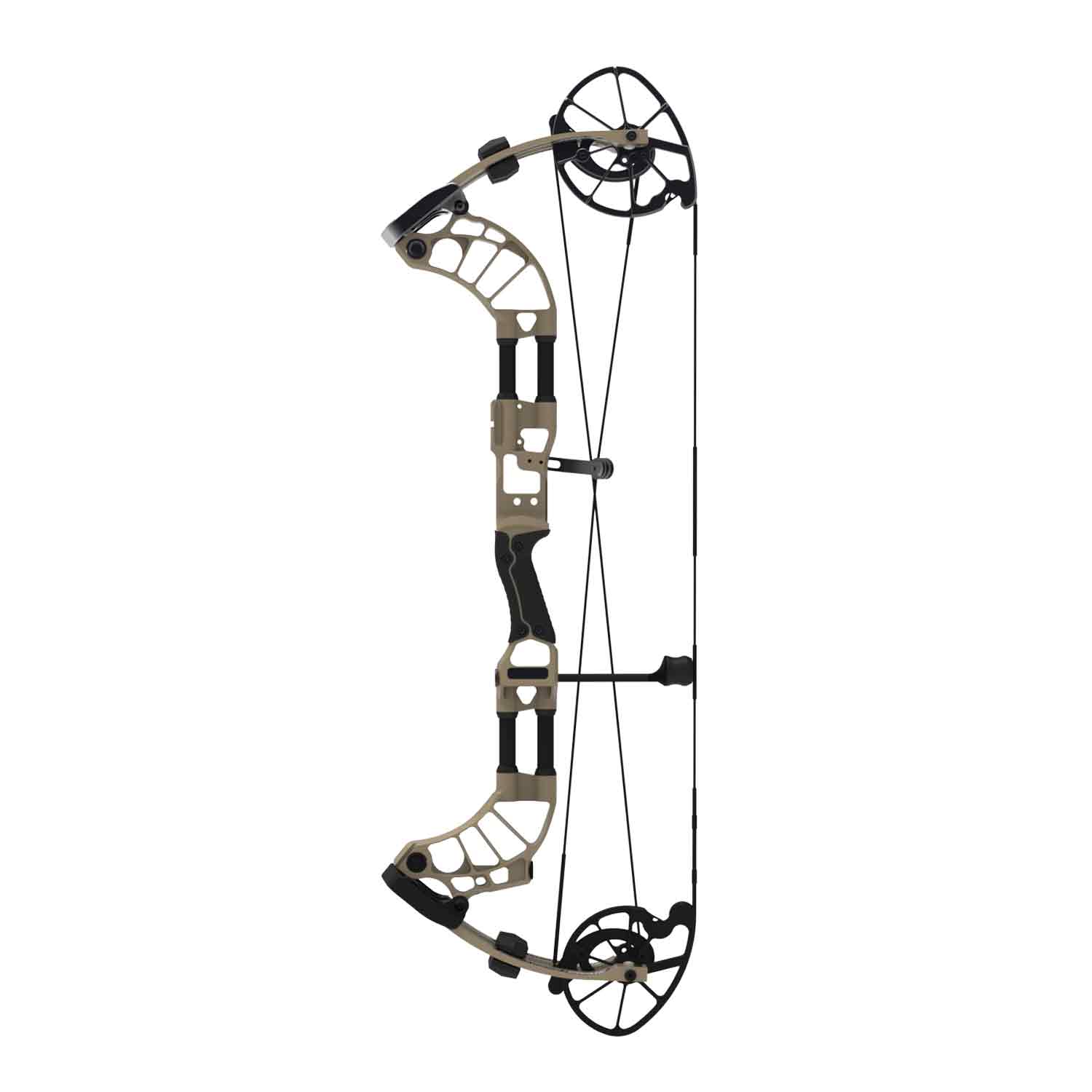
Prime's 2026 flagship isn't one bow, it's a menu: the Divide comes in 31, 33, 35, and 37" axle-to-axle lengths, each with a 6" or 7" brace-height option and standard or performance mods — eight hunting configurations before you pick a color. The 33/6 profiled here is the volume pick at 339 fps and 4.1 lb. The Divide keeps what Prime loyalists buy the brand for: the Center Grip riser puts your hand at the balance point, and reviewers (Rokslide, Field & Stream) consistently rank it among the steadiest-aiming, most accurate hunting bows made, with a Core Cam draw so smooth that even PSE Sicario reviewers use 'almost as smooth as the Prime core cam' as the benchmark. New Quik Tune tech shifts the cam laterally without pulling axles, and the Nano-Grip's aerogel core genuinely stays warmer in cold stands. ArcheryTalk sentiment is warm — 'the first bow from any manufacturer to get me to think of upgrading' — with grumbles: the price jumped to $1,699 (Prime historically undercut the big two), 339 fps is modest, early owners needed Prime's special shim tool for cam-spacing changes, and the dealer network is thinner than Mathews' or Hoyt's. Registration gets you free strings for life, which no rival matches.
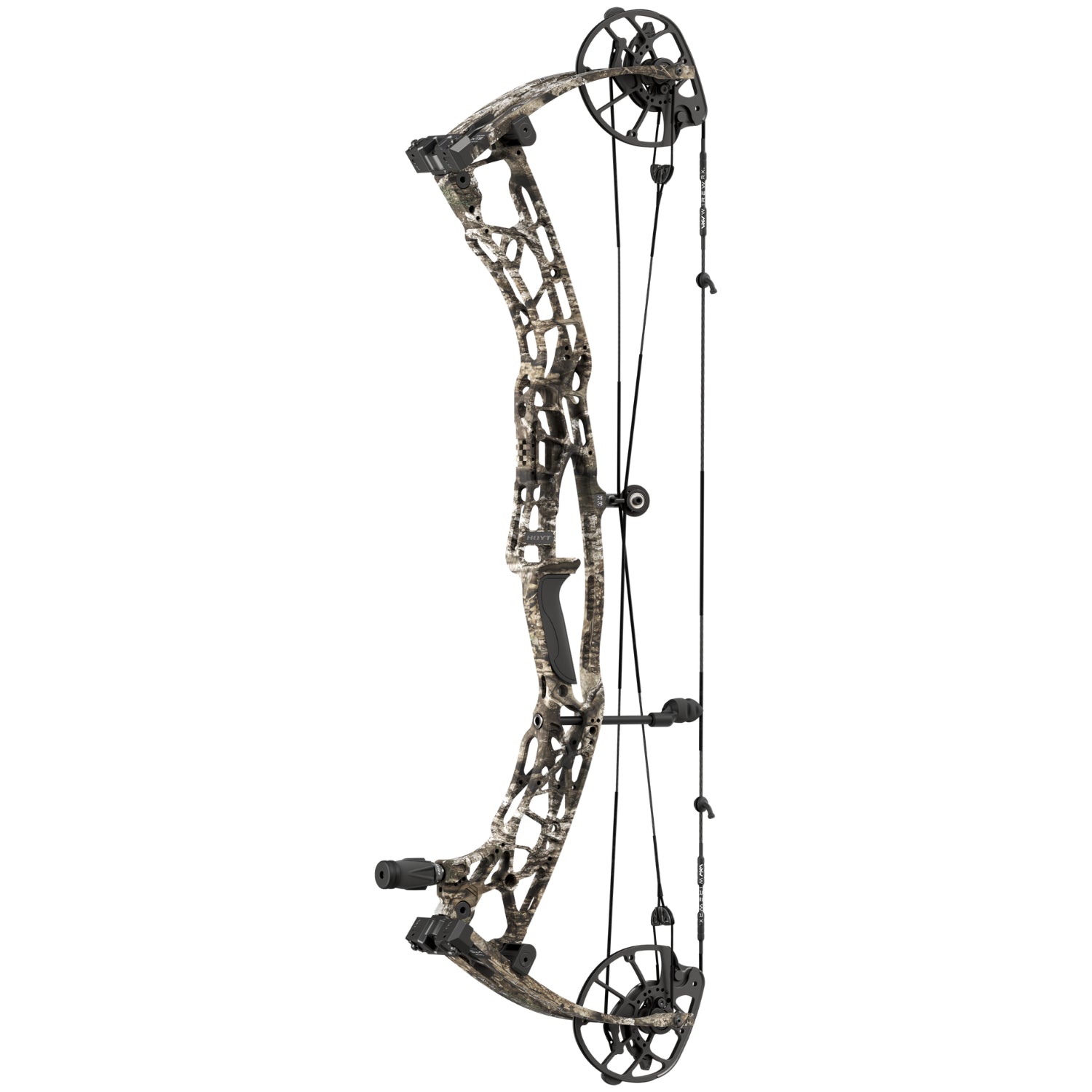
The aluminum Alpha AX-3 33 was the quiet overachiever of 2026: runner-up in Outdoor Life's bow test at 20.2 points, where it posted the best back wall of any bow (4.6/5) and the only unanimous 5/5 grip score — testers' favorite grip, hands down. Groups averaged 3.64" at 50 yards, just behind the Mathews ARC 34. The HBX Gen 4 cam draws with less perceived weight up front, and you can adjust back-wall feel and letoff; one tester's 73-lb bow 'drew like silk.' The honest knocks from ArcheryTalk and Field & Stream: there's a bigger hump into the break-over than the Mathews, and some shooters feel a bit of jump and vibration at the shot, so it's not the deadest bow here. It also weighs a legitimate 4.75 lb on Hoyt's own spec sheet — heavier than early press materials suggested — and the price crept from a $1,499 launch MSRP to $1,599 on Hoyt's site mid-year. It shares the RX-10's XTS press-free tuning at $550 less, which is exactly why a lot of Hoyt guys are skipping carbon this year.
Xpedition Archery
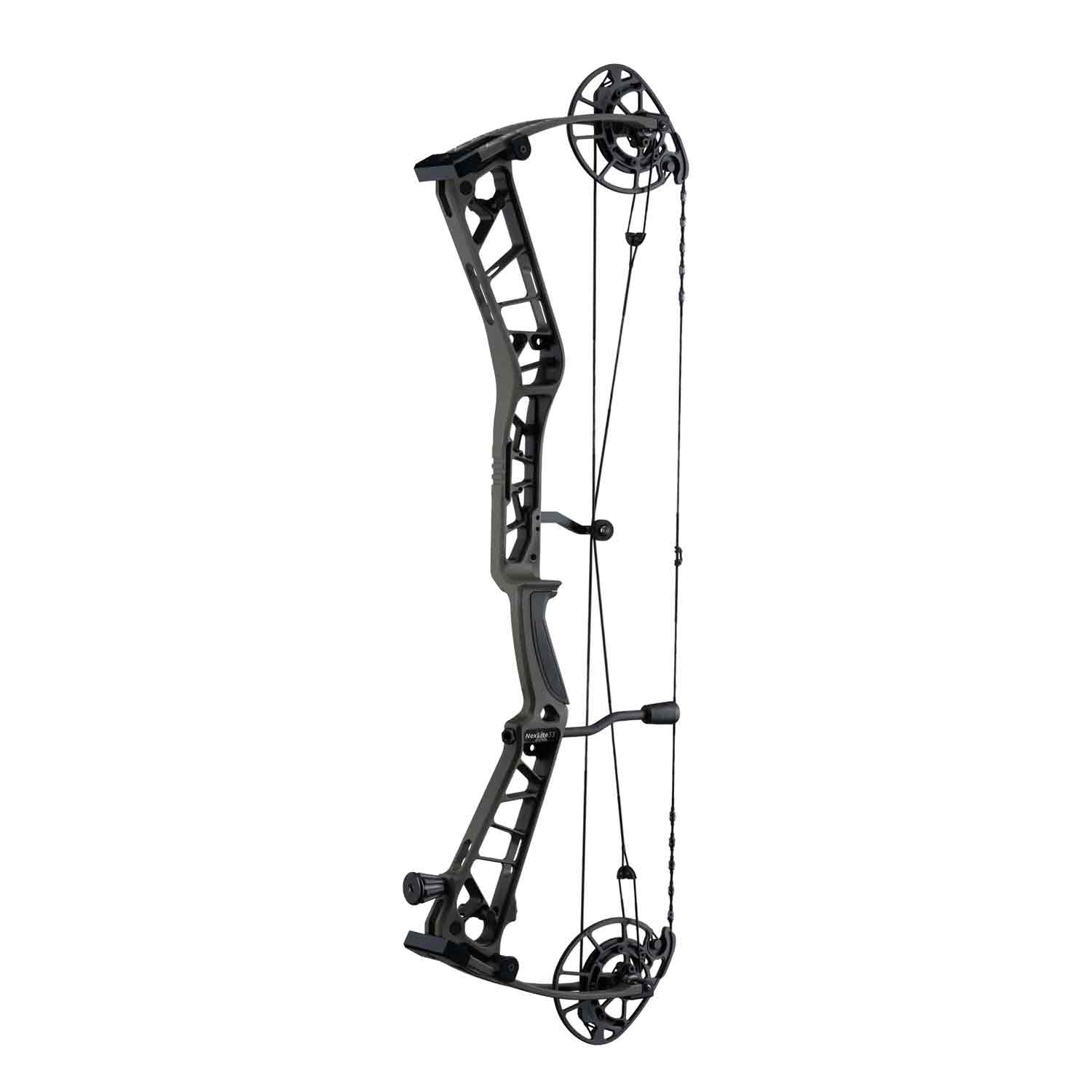
Xpedition NexLite 33
Xpedition has always built stiff, dead-in-hand risers; the problems were tuning them and finding a dealer. The 2026 NexLite 33, the brand's new flagship, attacks the first complaint head-on. Its Nano Ceramic Magnite riser drops the bow to a class-lightest 3.75 pounds — the lightest bow in Field & Stream's flagship test — while the new NXB cam adds quarter-inch draw-length adjustments and the XLok shim system lets you correct tears without a press, the exact missing feature ArcheryTalk shooters said kept them off previous Xpeditions. The 330 fps IBO rating is honest but modest; a Mathews ARC 30 or PSE Decree FDS is meaningfully faster on paper. At $1,599 it is the most expensive bow in this group, though longtime followers note Xpedition actually lowered pricing for 2026. The knocks: a featherweight bow holds less steadily in wind than 4.5-pound rivals until you add stabilizer weight back, the boutique dealer network makes try-before-you-buy difficult, and resale is soft. For mountain hunters counting ounces on multi-day pack-ins, nothing else in the flagship class matches the carry weight.
Bowtech
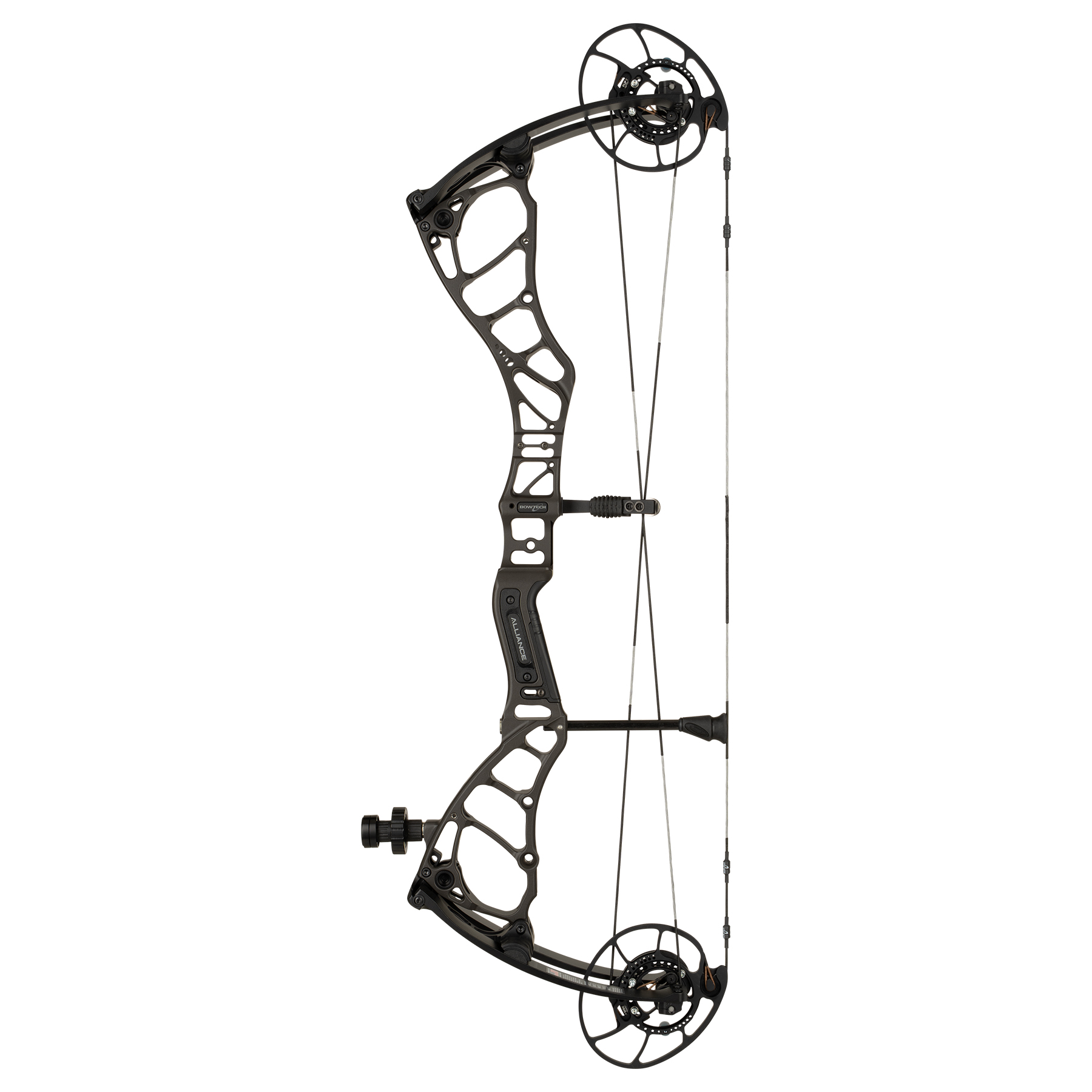
Bowtech Alliance
The Alliance is Bowtech's 2026 flagship and it won Best New Bow at the ATA Show — then Outdoor Life's test team scored it at the bottom of their seven-bow field (13.8 points), which tells you how split opinion is. The core idea is still Bowtech's best trick: DeadLock cams slide on the axle for press-free left/right tuning, now with bigger screws, finer clicks, and laser-etched reference marks that finally take the guesswork out, plus FlipDisc mods that flip between Comfort and Performance draw cycles. Fans (Archery Business, Born Hunting) call the Comfort setting silky smooth and say it's far more dead in the hand than the outgoing Proven; OL's testers hit it for a soft, spongy back wall and a thin, deep grip nobody liked — and at 280.5 fps it was the slowest bow they chrono'd. The truth is FlipDisc splits the personality: Comfort mode is soft everywhere, Performance mode firms the wall with the classic Bowtech dump. The adjustable GripLock angle helps some hands, and 4.09 lb is respectably light. A 33" Alliance 33 exists for stability-first shooters at the same $1,499.
Mathews
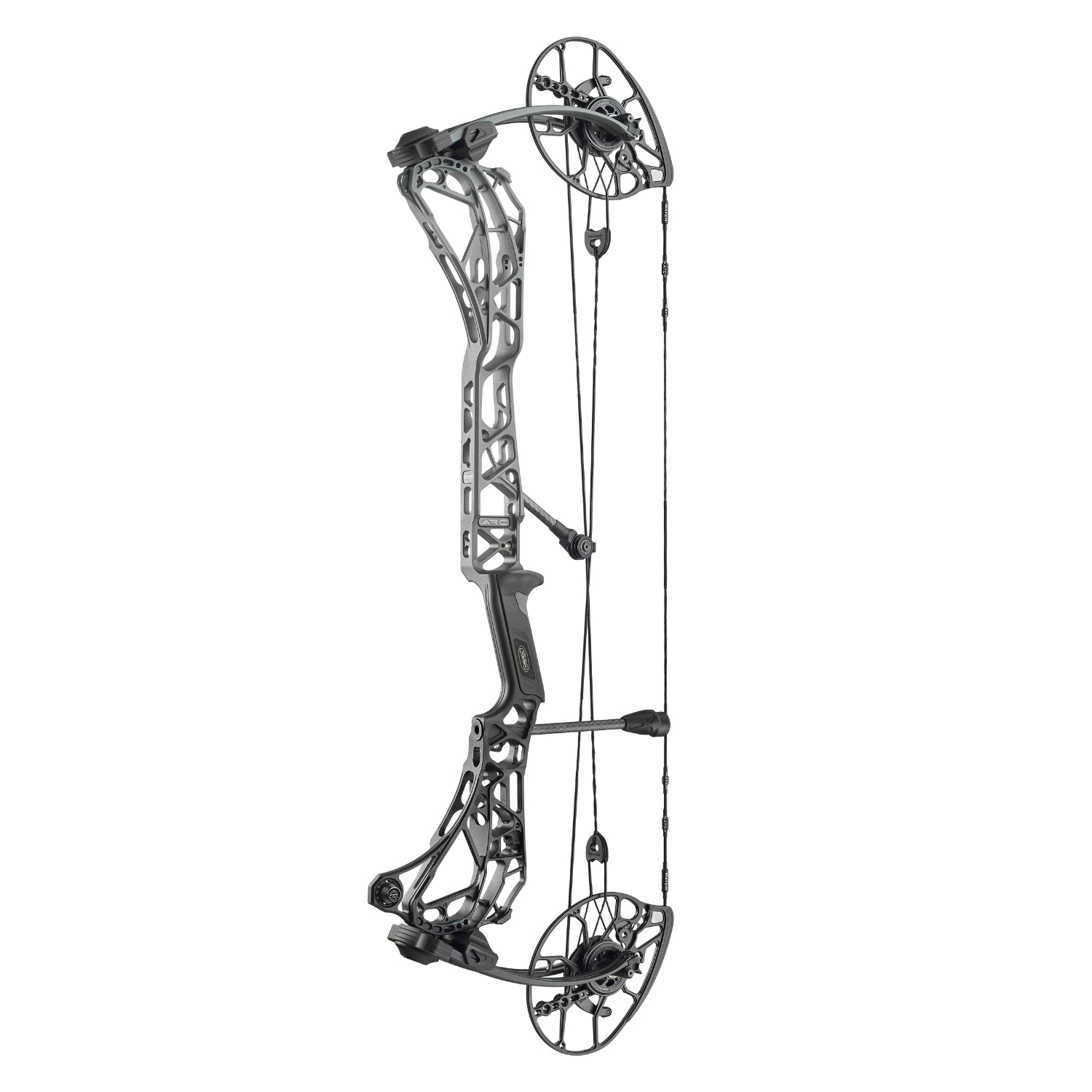
Mathews ARC 30
The ARC 30 headlines Mathews' 2026 lineup alongside the ARC 34, and it is the fastest short hunting bow Mathews has built: 348 fps IBO from a 30-inch, sub-four-pound aluminum chassis. The SWX-2 cam adds Perimeter Weight Technology to keep felt recoil down once accessories go on, and Field & Stream chronographed 328 fps with a 350-grain arrow at 30 inches and 70 pounds — real speed, independently verified. Optional Z mods trade speed for a noticeably softer cycle. Community reception is more divided than a typical Mathews launch; an ArcheryTalk thread literally titled "Is the ARC really that bad??" captures the mood. Fans call it the most pleasant-drawing Switchweight Mathews yet, while detractors find the back wall aggressive and report shakier pin float than on a Hoyt AX-3, and $1,459 continues Mathews' steady price creep. Owner head-to-heads against the AX-3 29 usually give Mathews the draw feel and Hoyt the hold, quietness, and tuning system. Dealer-only distribution means no online discounts, but Switchweight mods (55–80 lb) and a 25–30.5-inch draw range make it easy to configure. For whitetail rigs where compactness and speed rule, it remains the benchmark.
Darton Archery
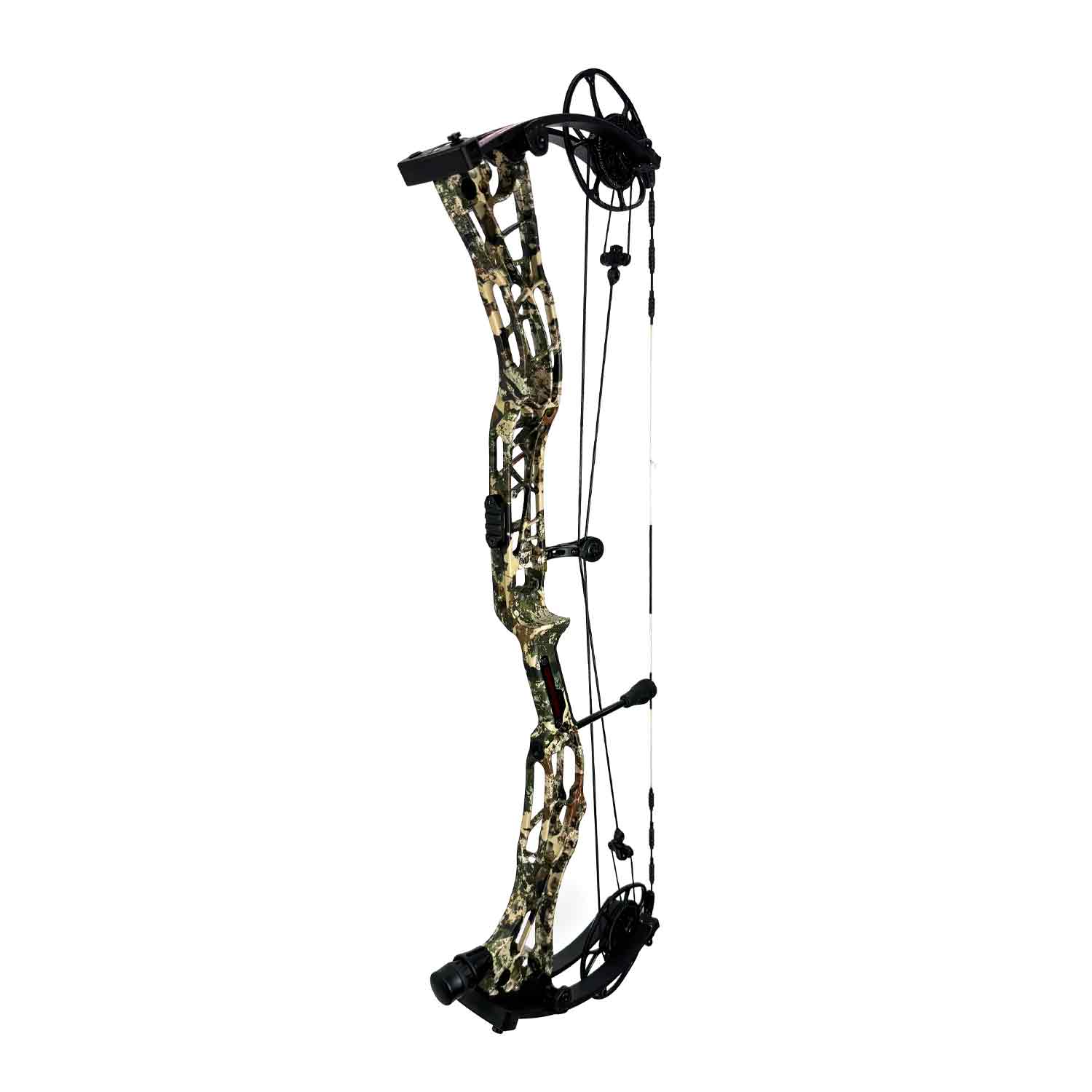
Darton TriTech 33
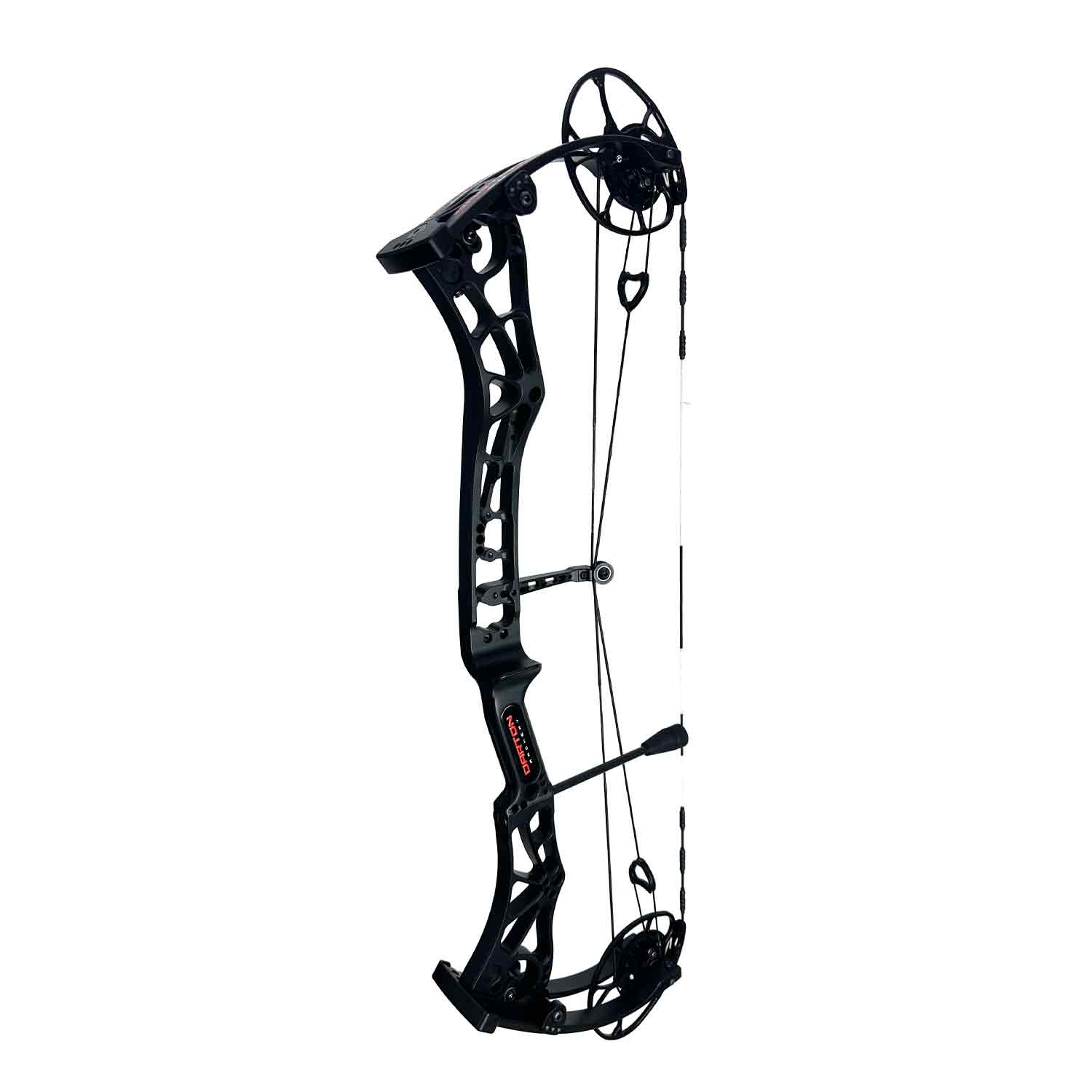
Darton doesn't advertise much, but the Michigan company that invented cam systems half the industry licenses builds arguably the best-value flagship in archery. The TriTech 33 is the middle of Darton's 2026 flagship trio (31/33/35), pairing the BBS dual-sync cam with three patent-pending tuning systems: Perfect Tune adjustable limb pockets, Perfect Timing yoke hangers, and a dual-function micro-adjust roller guard that moves arrow flight without a press. Uniquely, Darton publishes actual measured speeds rather than optimistic IBO math — 334–335 fps standard, 339–341 fps with the included speed mod — and ArcheryTalk chrono threads consistently back the numbers up, with owners calling it "the smoothest drawing 70 lb bow I've had." At $1,349 it undercuts a Mathews ARC 30 or Hoyt Alpha AX-3 by $100–$300 while giving up nothing in tunability. The catches: 4.6 pounds bare is portly, the dealer network is thin so test-drives are hard to arrange, resale values trail the big brands, and the styling is more machine shop than marketing department. For shooters who care about engineering over badge, it is the sleeper pick of 2026.
Bear Archery
Bear Redeem
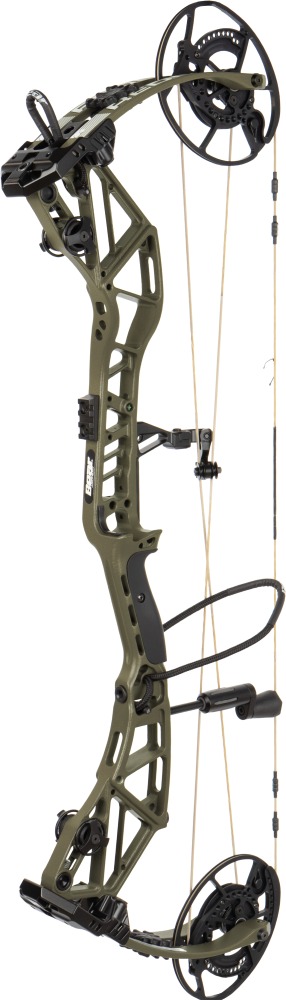
The Redeem replaces the Persist 33 as Bear's 2026 flagship, and it is the brand's most serious run yet at the Mathews/Hoyt tier: a 30-inch, 340 fps IBO platform with the EKO2 cam, a diagonally pivoting roller cable guide that ArcheryTalk owners credit for a genuinely buttery draw, and QPC quad-pocket rockers that micro-adjust limb loading for tuning. Reviewers at Grand View Outdoors and Bowhunter Planet found it exceptionally stable for a 30-inch bow, holding well even in wind. The honest problems: at a measured 4.89 pounds bare it is the heaviest bow in its class — nearly a full pound over an ARC 30 — Grand View noted buzz in the grip and string twang out of the box, and the recurring ArcheryTalk gripe is that at $1,299 Bear priced it "almost as much as a Lift" when the brand's traditional edge was value. Draw weight comes in adjustable 45–60 and 55–70 lb ranges rather than discrete peak weights, which suits shooters who de-tune or build up more than 80-pound speed chasers. It is USA-made, with Bear's typically excellent factory grip.
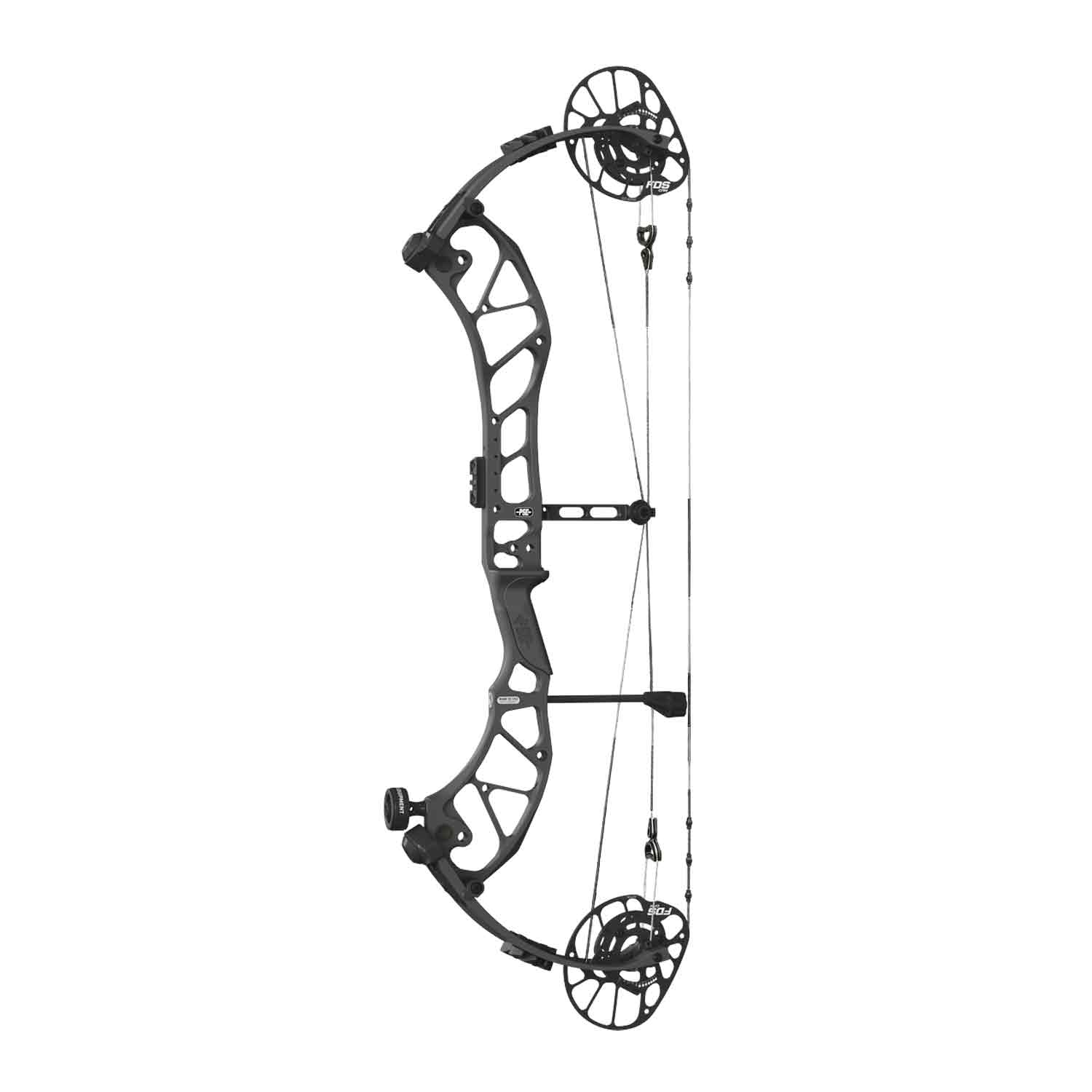
For 2026 PSE pushed the entire Mach flagship family to carbon (the Mach 34 is gone, succeeded by the carbon Mach 33 and 35 DS) and left one aluminum bow carrying the new FDS cam: the Decree FDS. That makes it the value play in PSE's premium line — the same 347 fps IBO cam system as the $1,800-plus carbon Machs, on a 31.5-inch machined riser for $1,299. The FDS cam adds roughly 10 fps over the 2025 Decree's EC2 while gaining effective brace height, and the platform picked up accuracy honors in Outdoor Life's bow testing. Real-world chronographs run about 282 fps with a 465-grain arrow at 28.5 inches and 70 pounds. Community reception of the Decree line is genuinely mixed on ArcheryTalk: fans call it unbelievably fast, stable, and easy to tune; critics call 4.65 pounds porky for its length, miss a 50-pound limb option (FDS runs 60/70/80 only), and felt the revived "Decree" name promised more than an aluminum mid-flagship. The 70–85% adjustable let-off and Full Draw Stability riser geometry hold well on target. If you want PSE's flagship shot without carbon prices, this is the only door in.
Darton Archery
Darton Consequence 31
Darton is the quiet engineering house of archery - founder Rex Darlington's cam patents have been licensed across the industry - and the Consequence 31 is its current mid-range hunting bow at $799.99 bare. It was added to the 2026 line specifically because dealers wanted a longer axle-to-axle bow 'without breaking the bank' below the $1,349 TriTech flagships. The BBS dual-sync cam system rates 325 fps (331 with the included performance mod) from a forgiving 7-inch brace, and you get features rivals skip at this price: quarter-inch draw-length adjustments from 26 to 31.5 inches, adjustable let-off via dual draw-stop posts, and a Picatinny sight mount. Community sentiment on Rokslide and ArcheryTalk is that Dartons out-draw and out-hold bows costing hundreds more - the related Sequel ST2 earned one of Rokslide's most glowing long-term reviews, with testers preferring its draw cycle to a Mathews - and the Consequence line is called very comfortable and smooth. The honest downsides: a small dealer network means you may never shoot one first, resale value trails the big brands, there is no factory package, the 26-inch minimum draw and 50 lb minimum peak exclude smaller shooters, and 4.3 lb mass is on the heavy side.
Hoyt
Hoyt Enduro
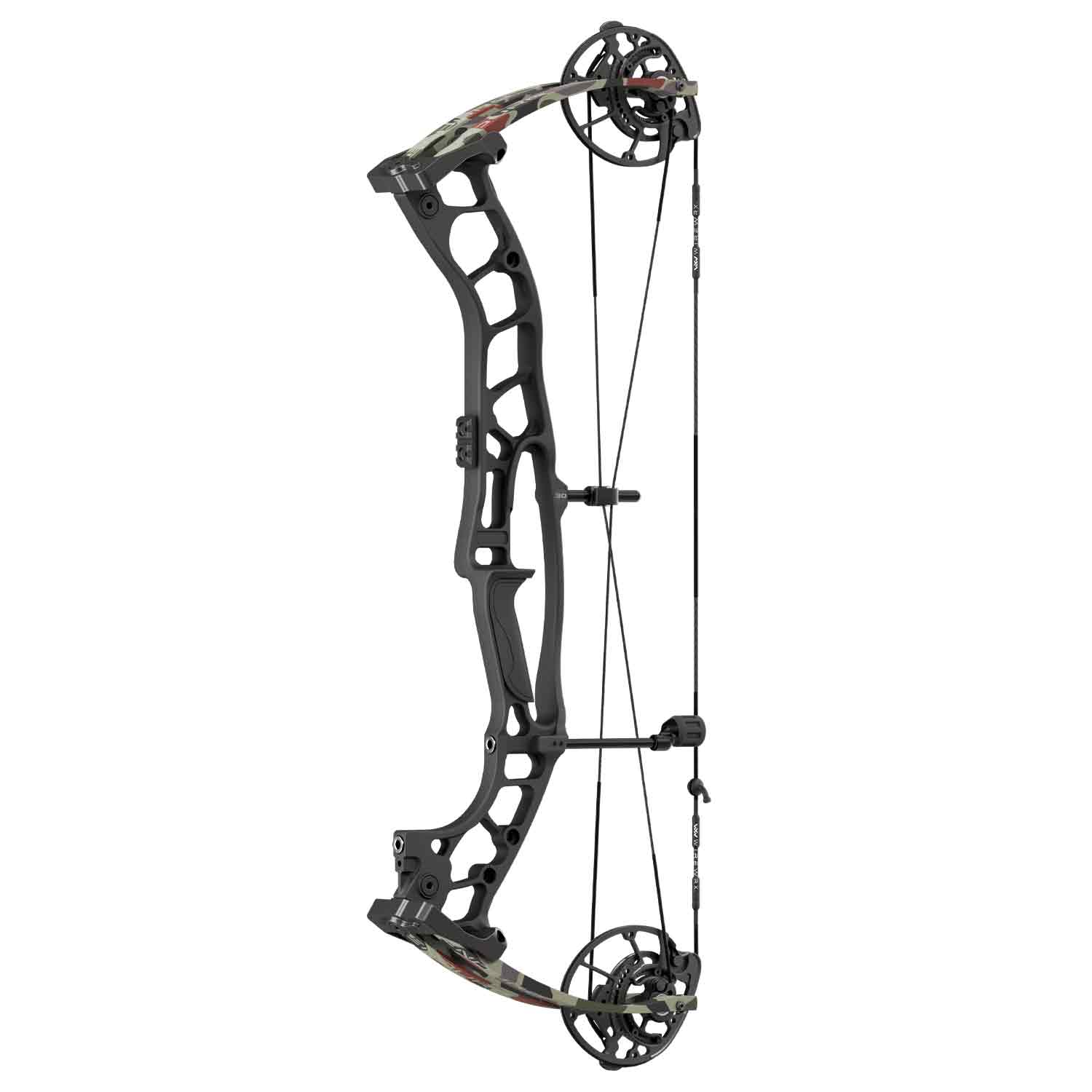
Hoyt discontinued the long-running Torrex line for 2026; the Enduro is its direct replacement and the only way into a current Hoyt for under $1,000 ($749 bare, $899 ready-to-hunt). Price shown is the bare bow. It is a genuine trickle-down play: the HBX Enduro cam (from the flagship RX/Alpha family), an in-line Picatinny sight rail, Integrate rest dovetail, and press-free shim tuning that replaces the Torrex's old yoke system. Rated 328 fps ATA with a forgiving 7-inch brace on a compact 30-inch frame, it tested at real-world speeds in the high 280s with hunting-weight arrows at 29 inches - typical honesty gap for the class. Community verdict on ArcheryTalk is 'a decent evolution of the Torrex, nothing spectacular': refined draw, firm wall, but a crisp post-shot twang that wants a stabilizer. Early-production bows had draw stops that could slip past the cable and Picatinny spacer fitment issues - both free fixes at Hoyt dealers, worth checking on used or early stock. At 4.65 lb it is the heaviest bare bow here, and you are paying some brand premium versus a Bear Alaskan XT that rates faster for $150 less.
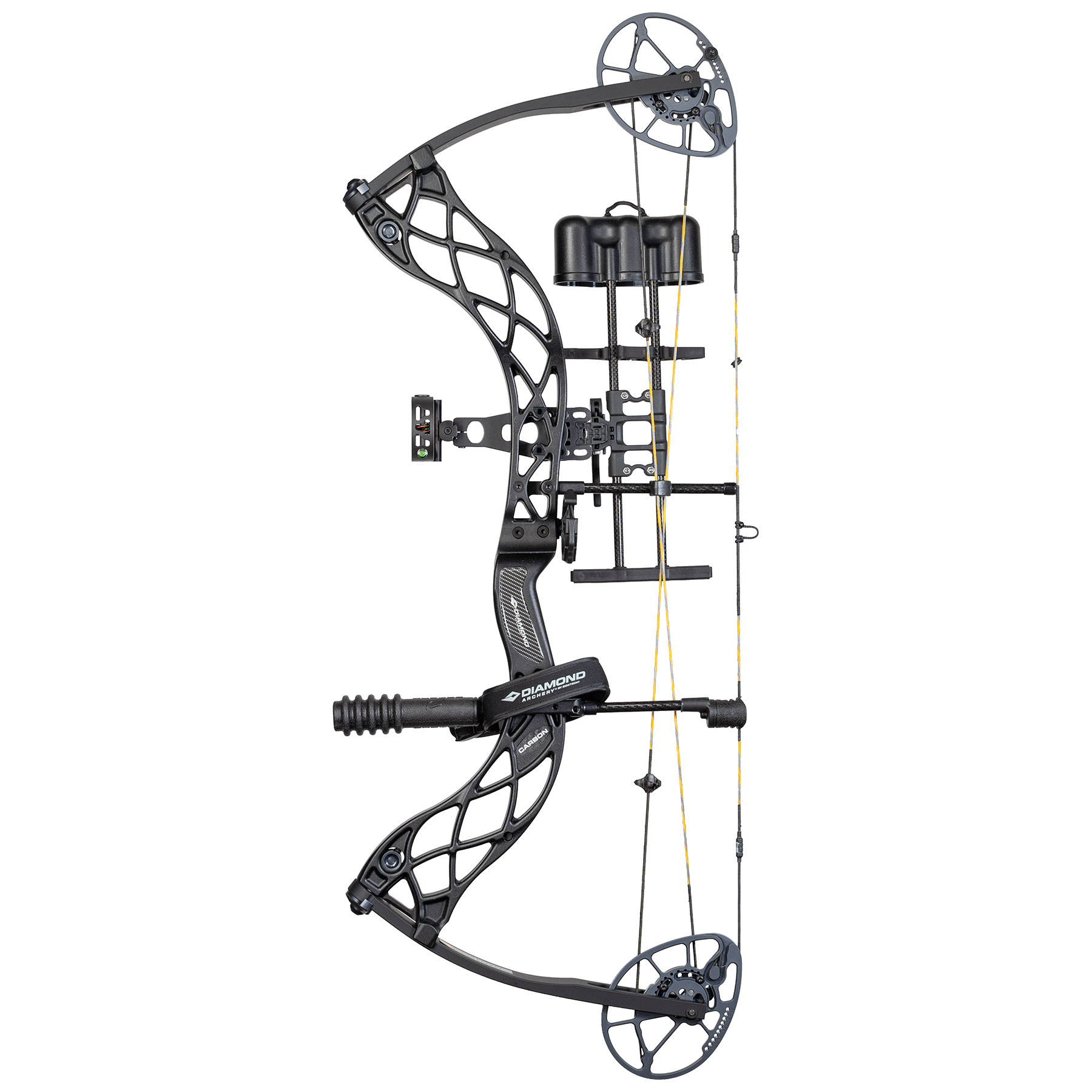
Diamond Archery
Diamond Deploy SB
Still current in Diamond's 2026 lineup, the Deploy SB is the lightest bow in this class by a wide margin - 3.2 lb thanks to its aerospace-inspired carbon-composite riser - while its synchronized Binary Cam system (shared DNA with parent company Bowtech) rates a class-leading 330 fps. Price shown is the R.A.K. package MSRP of $749, which includes an eight-piece kit: 4-pin Apex sight, Hostage XL rest, Octane DeadLock Lite quiver, 5-inch stabilizer, sling, loop, peep and dampers; street prices dip to the low $600s and clearance units have gone under $550. Community sentiment is among the warmest of any budget bow: TexasBowhunter and ArcheryTalk owners say it 'draws like a dream,' sits dead in the hand, and is 'flagship-quality without the sky-high cost.' The knocks are consistent too: it is so light that it drifts in wind and hand-torques easily without a stabilizer, the 26-inch minimum draw excludes shorter archers entirely, real-world speeds with hunting arrows land far below 330, and the R.A.K. accessories are serviceable rather than good. If you carry far and shoot inside 40 yards, this is arguably the most bow-per-dollar in the segment.
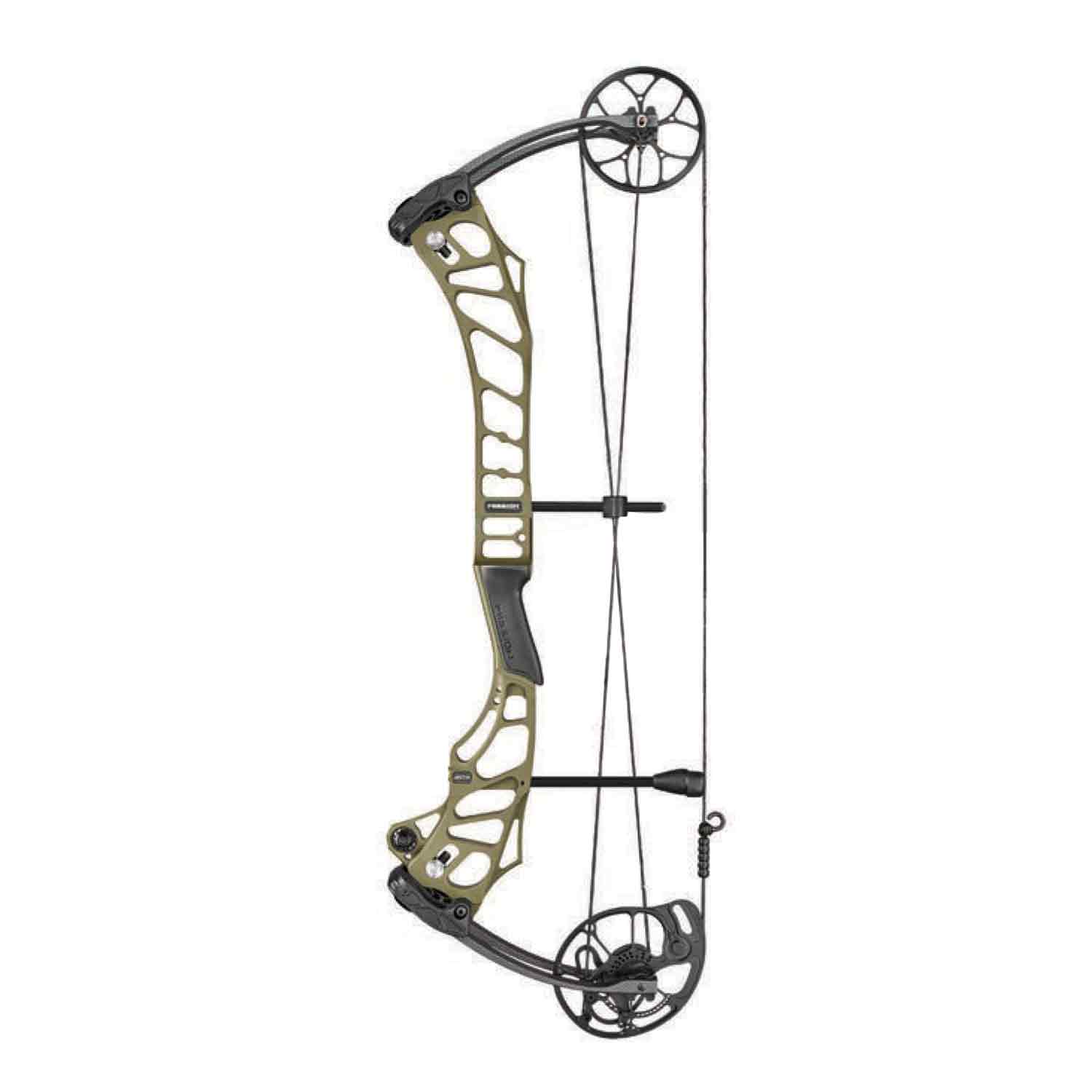
Mission Archery
Mission Stryde 30.5
Mission is Mathews' value brand, built in the same Sparta, Wisconsin factory, and the Stryde - new for 2026 in 28-inch and 30.5-inch versions - is its current flagship hunting model, resurrecting the Solocam single-cam system that made Mathews famous. Price shown is the bare 30.5-inch bow at $649.99; there is no factory package, so budget another $150-250 for accessories. The pitch is simplicity: one cam means fewer sync issues, a buttery draw, and easy 22-30 inch length changes via rotating mod. Outdoor Life's test bow ran 316.9 fps against the 323 rating with impeccable arrow flight to 40 yards, and reviewers consistently land on 'performs well above its price tag.' Concessions at this price are real: composite limb pockets instead of machined aluminum, a split-yoke tuning system that requires a press, a shallow valley that punished the OL tester until he dropped from 70 to 62 lb, and a faint hand shock plus audible blip at release. It launched in June 2026, so long-term community records are thin - but Mathews' build quality, a true lifetime warranty and dovetail compatibility with the UltraRest R1 make it a low-risk buy against the Elite Ember and Hoyt Enduro.
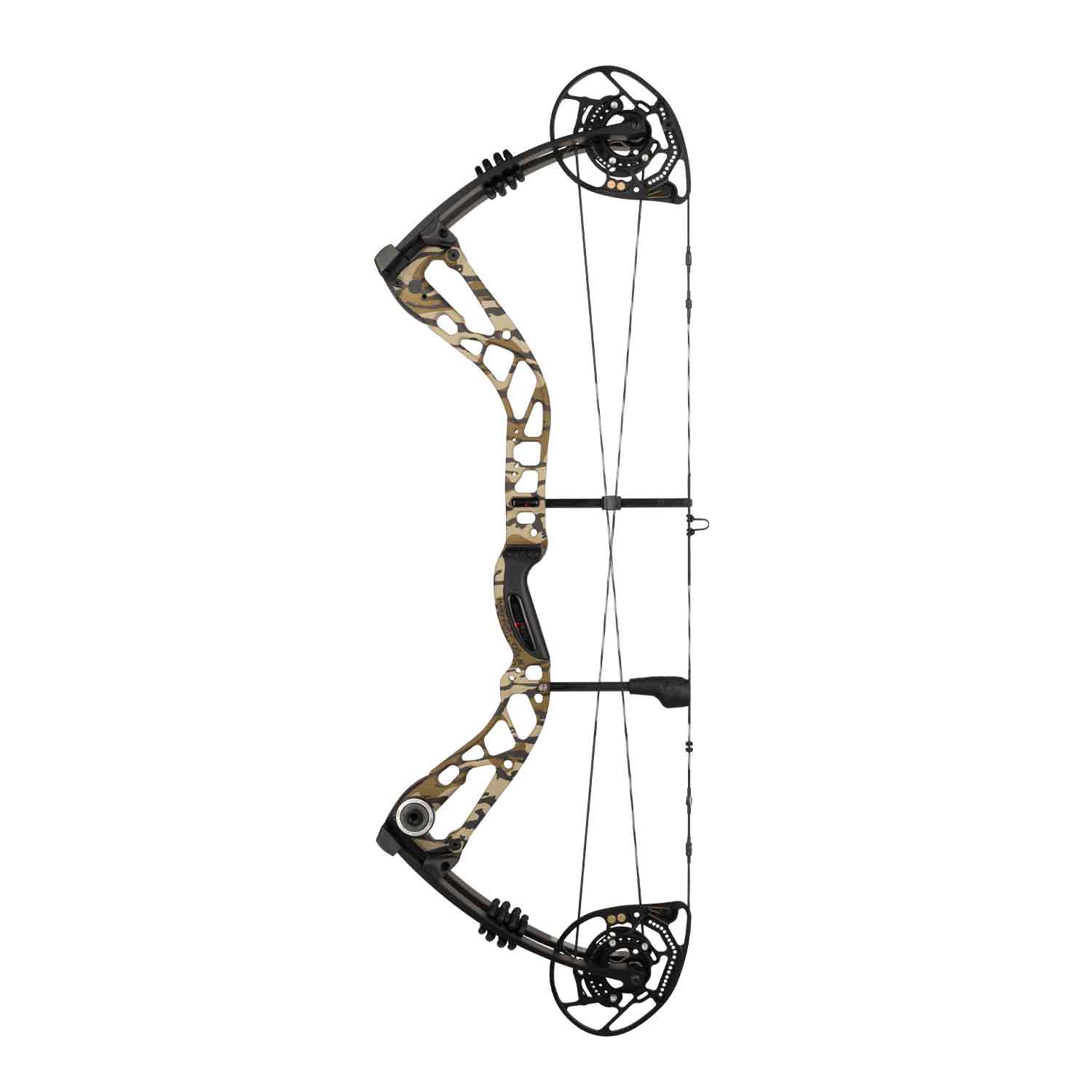
Bowtech
Bowtech Amplify
Verified still current in Bowtech's lineup for 2026, the Amplify is the adjustability king of this class: 8-70 lb of draw weight and 21-30 inches of draw length on one set of limbs, no swaps needed. It sells only as the R.A.K. (Ready Aim Kill) package - price shown reflects the $599-699 street spread at Sportsman's Warehouse and independent shops - with a 4-pin sight, Octane rest, quiver, 7-inch stabilizer, sling and peep. The headline tech is the synchronized Binary Cam plus Bowtech's PowerShift flip disc, which lets you choose Comfort or Performance draw cycles with a hex key and no press. At full settings it rates 335 fps, tying the Bear Alaskan XT for fastest here. Community sentiment is positive-with-caveats: budget-minded ArcheryTalk and Reddit owners love that one bow covers a growing family, but the 6-inch brace height is the least forgiving in the group, the grip polarizes (some shooters report contact with fletching or knuckle creep), speeds at mid-range settings are far below the rating, and there are scattered reports of peep serving unraveling and tune drift after high volume. Think of it as a Diamond Deploy SB trading weight and brace comfort for ultimate adjustability.
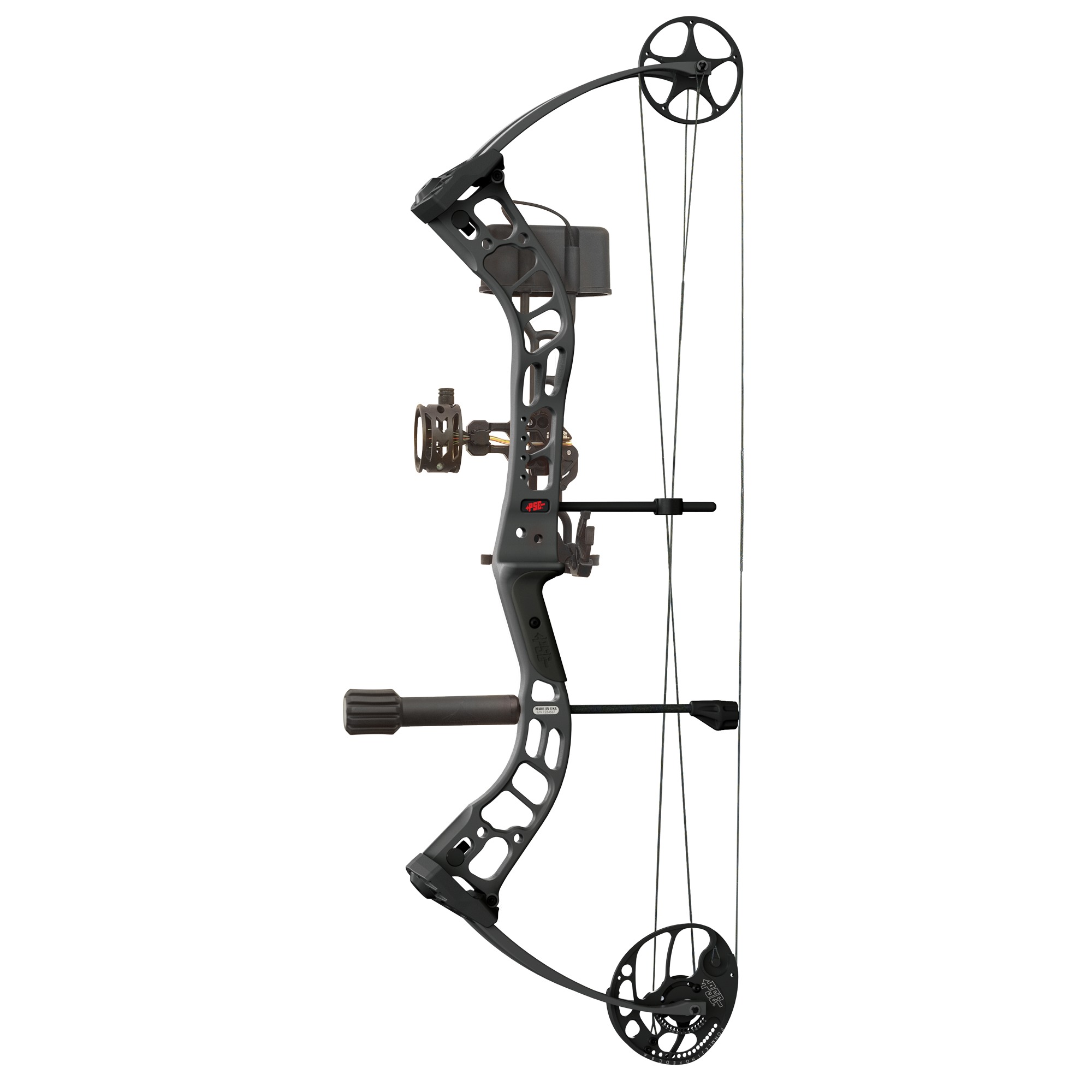
The Stinger has been PSE's budget workhorse for over 15 years, and the current ATK generation - refreshed with the wide-range 'Grow With You' SS Cam - keeps it the default recommendation for a first serious hunting rig. The price shown is the ready-to-shoot package (Sierra Lite sight, TruGlo EZ rest, Hunter Lite quiver, FX4 stabilizer, peep and loop) that typically runs $450-500; the bare SS Cam bow is $449 at Lancaster, and discounters have blown packages out in the high $300s. The ATK riser is noticeably more rigid than the old Stinger Max platform, the 32-inch axle-to-axle and 6-5/8-inch brace make it forgiving, and the SS Cam covers 21.5-30 inches of draw with no bow press. ArcheryTalk owners routinely call it the best bow in its price range - quiet, low-vibration, with multiple 'killed deer with it both years' testimonials. The trade-offs are honest ones: 312 fps is slow next to the 335 fps Alaskan XT and Amplify, 4.0 lb mass is porky for the class, the package accessories are bare-bones, and grip and finish feel a tier below the Elite Ember. As a durable, tunable do-everything platform, it is hard to beat at the price.
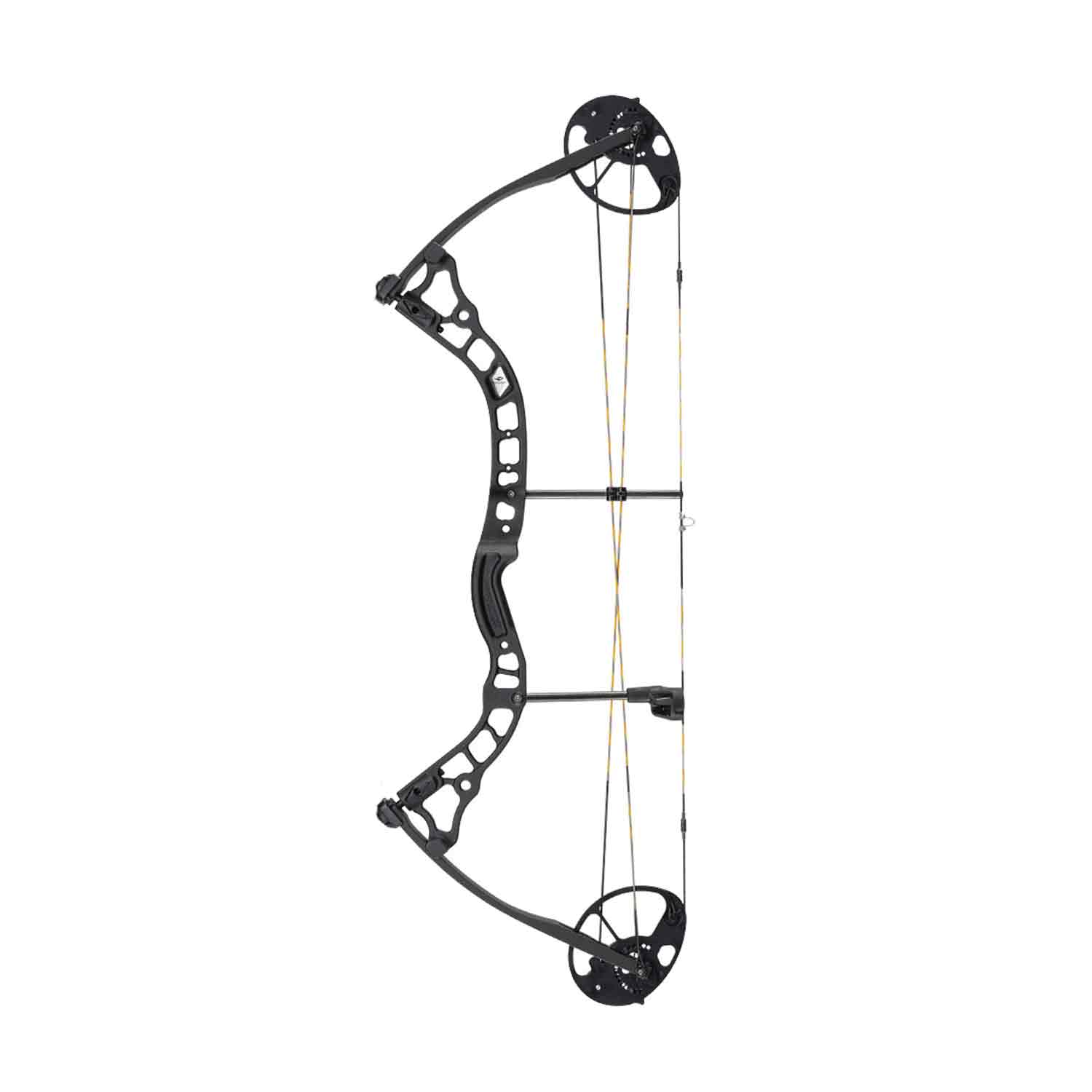
Diamond Archery
Diamond Infinite 305
The Infinite 305 is the most adjustable full-size bow Diamond has made - 7 to 70 pounds and 19 to 31 inches of draw on rotating modules, no press required - sold as an Octane-accessorized package (Stryker 3-pin sight, Octagon brush rest, Furnace quiver, Boost stabilizer) for about $379 at Walmart and similar money at Cabela's and Sportsman's Warehouse. Note the lineup status: Diamond's own site has moved on to the Pro 305 at $549, so the Infinite 305 is now sell-through retail stock rather than a promoted current model, though it remains widely available in Aug 2026. On the string it is a classic Diamond: light 3.3 lb mass, long 32-inch axle-to-axle that holds steady, a generous 7.25-inch brace, and a soft draw with 77 percent effective let-off. ArcheryTalk owners like it as a do-everything family bow. Where it falls short of mid-range bows is familiar territory - 305 fps IBO means modest real-world speed at typical settings, the back wall is mushy, and the Octane kit (especially the stabilizer and rest) is entry-grade gear most hunters replace. At its price, few packages match the range of shooters it fits.
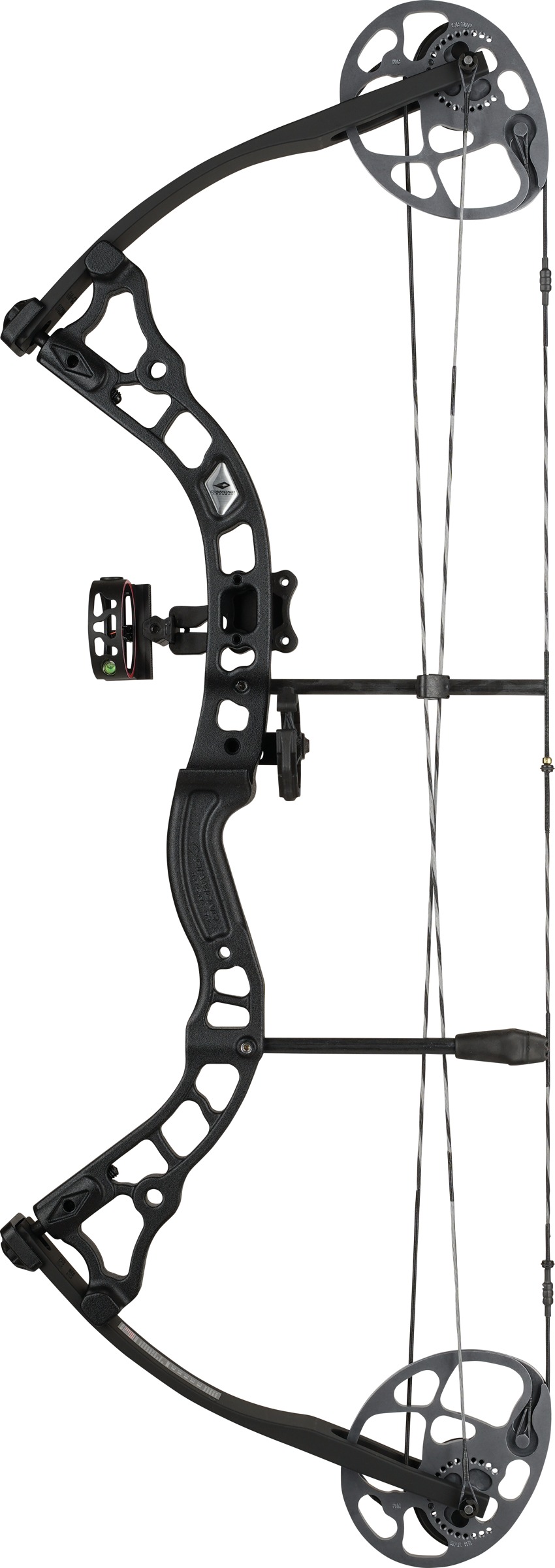
Diamond Archery
Diamond Prism
The Prism is the Edge platform scaled down for developing archers: 5 to 55 pounds and 18 to 30 inches of draw on a 31-inch frame at 3.2 pounds, with a genuinely forgiving 7-inch brace and 80 percent let-off. Its standout technical feature at this price is the synchronized binary cam system - both cams are slaved together, which means better nock travel and easier tuning than the single-cam bows that dominate the budget tier; BowAddicted's hands-on review called it a well-rounded pick for youth and small-framed adults alike. The roughly $299 price buys a package, but a slimmer one than its rivals: 3-pin Octane sight, arrow rest, peep, and nock - no quiver, no stabilizer, no arrows, so the true kit-out cost lands closer to $400. Be aware of its lineup status: the Prism no longer appears in Diamond's promoted range in 2026, making it a legacy model, though it remains widely stocked at Sportsman's Warehouse, Bass Pro, and Amazon in multiple colors. Against mid-range bows it gives up speed (295 fps IBO is sedate), the 55-pound ceiling is fine for deer but marginal for elk, and the bare-bones kit undercuts its value versus a Cruzer or Royale RTH. As a tuning-friendly trainer that can still kill a whitetail, it holds up.
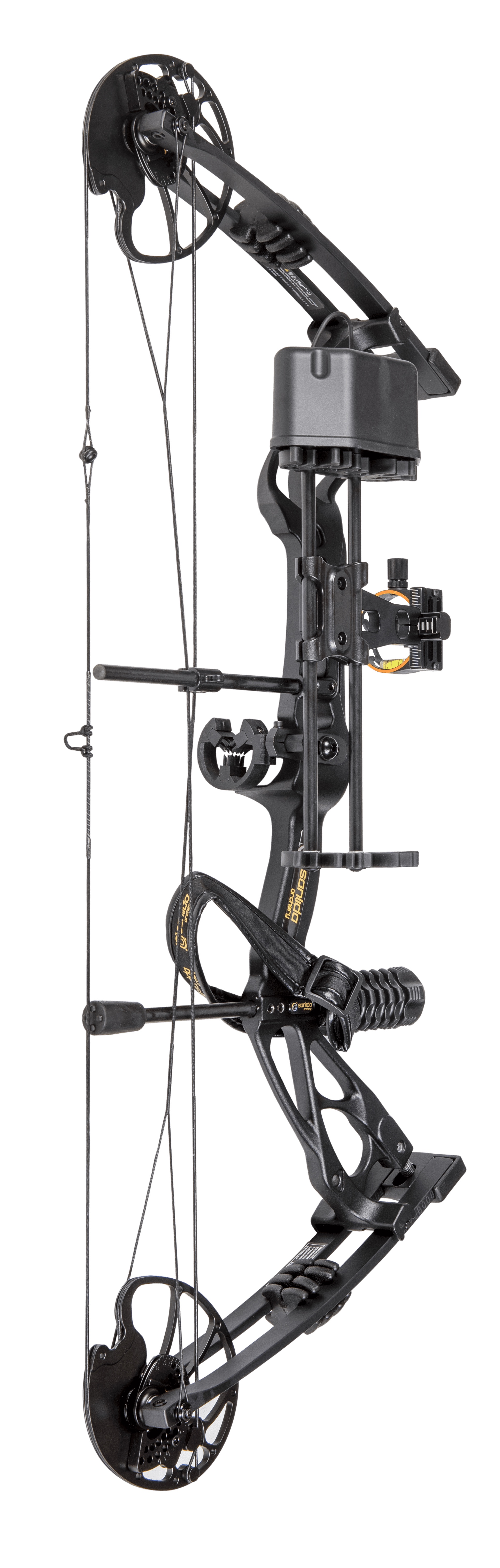
Sanlida Archery
Sanlida Dragon X8
The Dragon X8 is the direct-import bow that made ArcheryTalk regulars eat their words: threads on the forum describe being 'stunned' at the quality for roughly $200, and Island Archery's hands-on review called the machining and fit-and-finish nearly flawless for the price - the package price, since the X8 ships as a complete RTH kit with a 5-pin sight, rest, stabilizer, sling, peep, quiver, release aid, 12 arrows, arrow puller, bow stand, and a case. That is the whole cost of entry. Specs are competitive: 0-70 pounds (a true zero floor - a child can draw it), 18-31 inches, 310 fps IBO, and USA-made Gordon Composites limbs with BCY string material. Owners report a surprisingly quiet shot with little vibration and a pleasant draw cycle. Where it falls short of mid-range (and even name-brand budget) bows: 4-pound bare mass is the heaviest here, D97-class strings stretch faster than modern 452X, the bundled accessories are usable but clearly entry-grade, there is no US dealer network - warranty work happens by registration and email - and resale value is near zero. Some in the community also side-eye Sanlida's marketing and design-copying reputation. As a sub-$250 all-in starter, nothing else includes this much.

Bear Archery
Bear Archery Take-Down
This is Fred Bear's own 1969 latch takedown, still built with the signature heel-down horn grip and still commanding heirloom money — about $750 for the riser and $470 for limbs, or roughly $1,220 complete at 3Rivers. Instead of ILF hardware it uses Bear's proprietary flush latch system: pop the lever, seat the limb, done, with no bolts to lose. The A riser builds a 56-60" bow with #1-#3 limbs; the B riser builds 60-64", letting one set of Dymondwood/Fascor-core limbs serve multiple lengths. Forum consensus (TradTalk, ArcheryTalk, Rokslide) is that these draw remarkably smoothly — owners report no stack past 29" — and they're fast and quiet with the heavy arrows a hunter should shoot anyway. Criticisms are real too: some latches develop small clicks and pops, and value opinions run about 50/50 given that $500 ILF setups shoot as well on paper. You're partly paying for Michigan-bred history, the bubinga and black maple woodwork, and limbs up to 70 lb, which almost no modern takedown offers. For traditional bowhunters who want the bow Fred himself hunted with, nothing else scratches the itch.
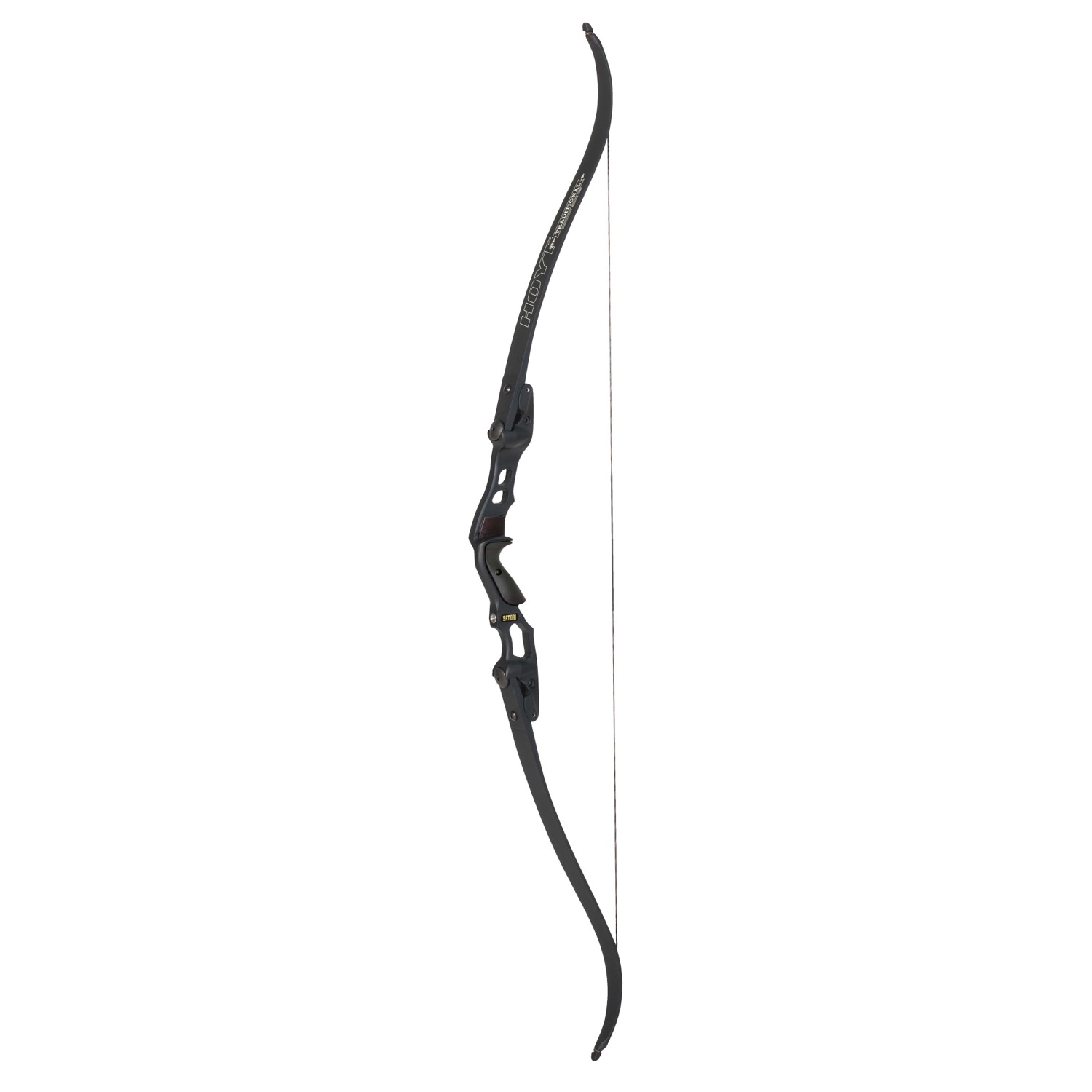
Hoyt
Hoyt Satori
The Satori is the modern benchmark for ILF hunting recurves — ArcheryTalk regulars call it "the Glock of trad bows": unglamorous, reliable, and a flat-out shooter. The machined aluminum riser comes in 17", 19", and 21" lengths (2.4 lb for the 19") with Hoyt's Grand Prix ILF pockets, micro limb alignment, and an adjustable side plate over a radiused shelf, so it tunes like a target bow but carries like a hunting rig. Because it's true ILF, you can hang Hoyt's own carbon/maple Satori limbs (35-65 lb, rated on the 21" riser) or any of hundreds of ILF limbs from $180 budget sets to $1,000 carbon-foam blades — the upgrade path is the whole sport. Complete bows run about $1,100 at 3Rivers ($520 riser + $580 limbs; watch for package deals nearer $900). Community gripes are specific: the ILF fitting can creak on a cold first draw (owners pre-draw once on stand), the metal riser is louder than wood if untuned, and there's only one rest hole. Find the quiet sweet spot around 8-8.125" brace and it's arguably the most accurate hunting recurve sold today.
Galaxy Archery
Galaxy Ember 60"
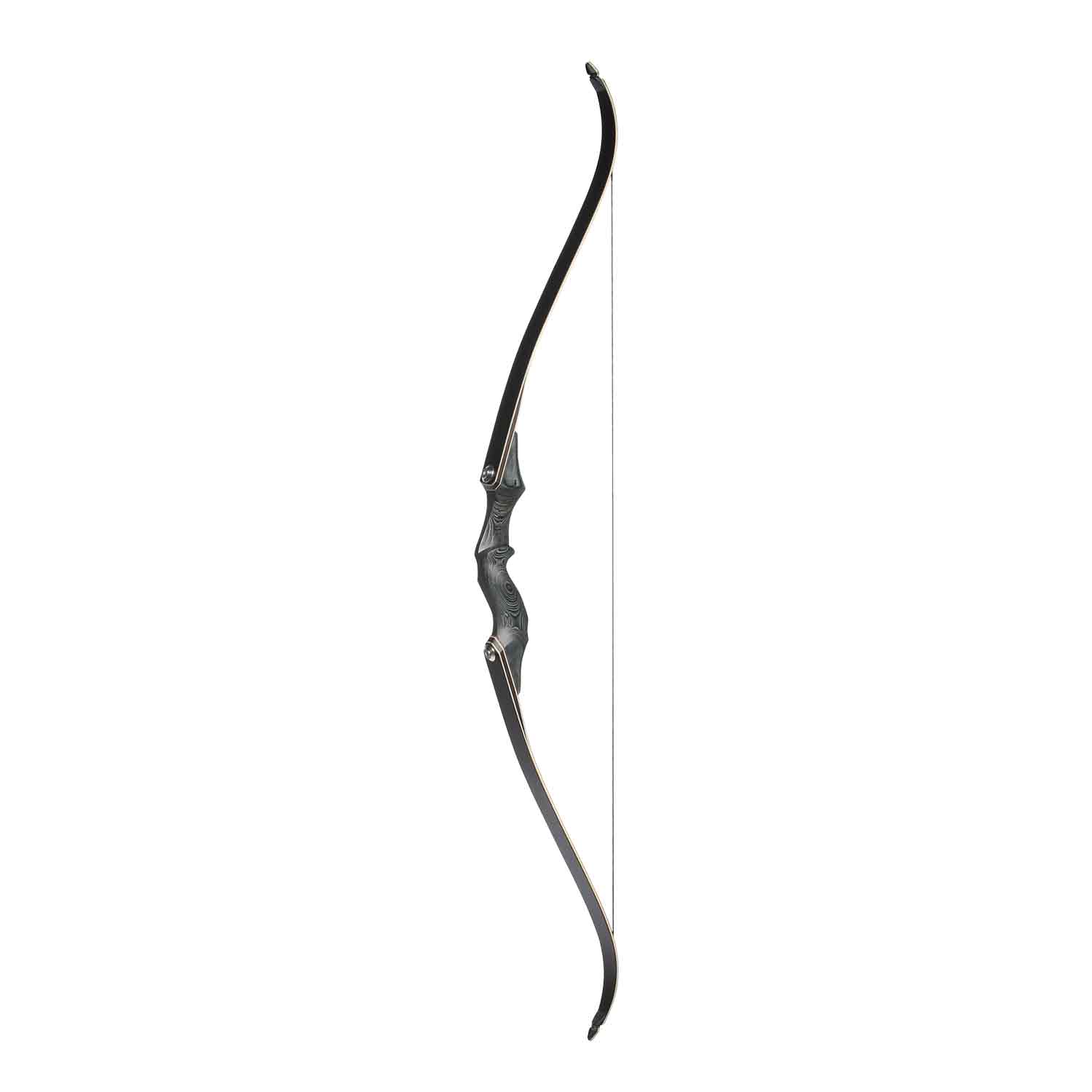
Galaxy is Lancaster Archery Supply's house brand, and the Ember is its hunting-weight star — a genuinely pretty 60" takedown with a 15" hardwood riser and bamboo-core limbs faced and backed in black fiberglass, currently $199.98 and flagged as a Lancaster Staff Pick (chosen here over the PSE Nighthawk, whose limbs stop at 50 lb and which is aimed more at recreational shooters). Hunting forums like Rokslide and SaddleHunter treat the Ember as the step-up budget recurve: owners call it "an excellent little budget recurve... tough as nails" with limbs that feel quick for the class, and the trad crowd likes that it comes in honest hunting weights of 30-55 lb in 5 lb steps. The trade-offs are inherent to the format: a 60" bow with a 15" riser is less forgiving than a 62-64" rig, so it rewards decent form and properly spined arrows, and TradTalk threads note marked draw weights can run off from a few suppliers, making a known dealer like Lancaster the smart buy. Fittings are proprietary bolt-on (not ILF), but replacement Ember limbs are sold separately, so you can move up in weight without rebuying. Backorders of 2-3 weeks are common — it sells.

Samick
Samick Journey 64"
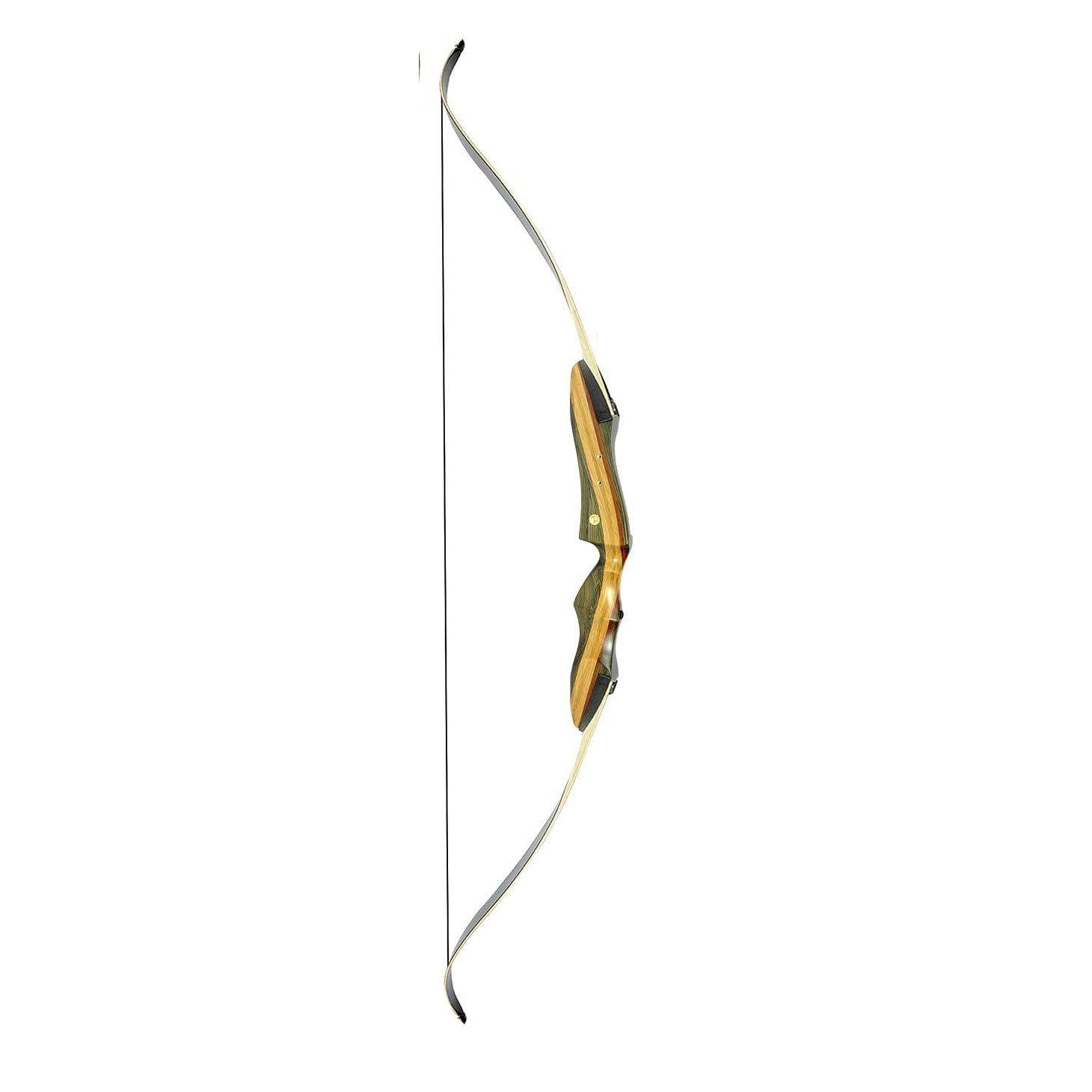
The Journey is the Samick Sage's long-armed sibling: the same multi-laminate hard-maple riser concept and bolt-on limb system stretched to 64" AMO with longer limbs, built for archers around 6 feet and taller or anyone drawing past 29" where the 62" Sage stacks. Lancaster's review pegged it as a do-everything bow for hunting, recreational shooting, and 3D, with limbs in 5 lb increments from 30-60 lb — meaning every configuration except the lightest is already at or near hunting weight, and the 55-60 lb options outreach most budget takedowns. The grip is cut to index your hand consistently, and the extra length makes it noticeably more forgiving of release errors than shorter hunting bows. The big caveat in 2026 is availability: Lancaster and Southland no longer stock it, so you're buying through Amazon (where sizes blink in and out), eBay, or small shops like Raptor Archery, and long-term parts support leans on the shared Sage limb-bolt pattern rather than Samick's wobbly US distribution. If you can't find one, the Southwest Archery Spyder XL is the community's like-for-like substitute. Found in stock at hunting weight, it's still a smooth, tall-archer bargain.
Southwest Archery
Southwest Archery Spyder XL
The Spyder line was designed by the same team behind the original Samick Sage, and the community treats it as the Sage 2.0 — same basic architecture with rounded riser edges, cleaner finish, and tool-free limb bolts. The XL is the one hunters with long arms should care about: the same riser as the 62" Spyder wearing longer limbs for a 64" AMO length that keeps the draw cycle smooth past 29", where the standard Sage and Spyder start to stack. The riser is white oak, Dymondwood, and padouk with threaded bushings for sights, plunger rests, quivers, and stabilizers; the hard-maple/fiberglass limbs get reinforced tips that are Fast Flight and Flemish string compatible. Draw weights run 25-55 lb (including an odd 29 lb step), so 45-55 lb hunting configurations are available off the shelf. Southwest sells it directly for $164 with 107 store reviews, and the Amazon listing has years of positive feedback. Like the Sage, the limb fitting is proprietary — Spyder and Sage-pattern limbs interchange, but ILF limbs do not. A 1-year warranty (with online registration) is unusual at this price.
Black Hunter
Black Hunter 60" Takedown
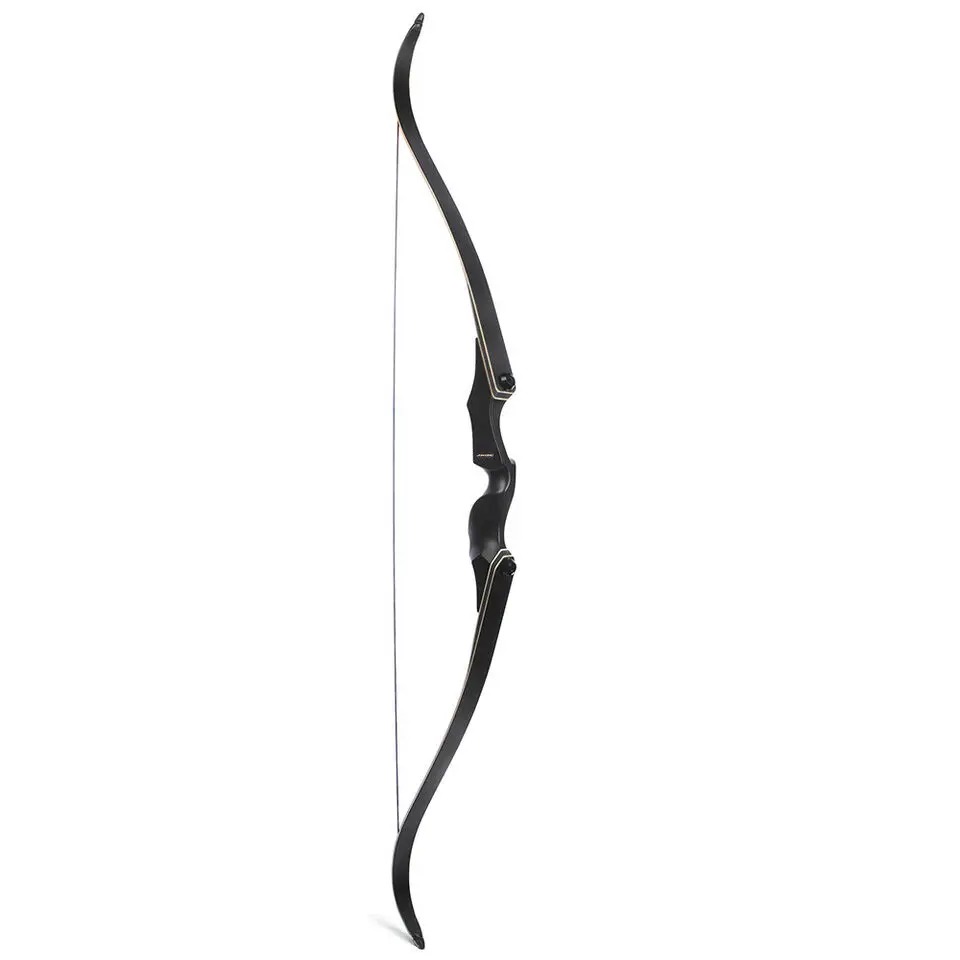
The Black Hunter is the trad forums' worst-kept secret: a Chinese-made 60" takedown with a Dymondwood-style riser and bamboo-core, fiberglass-laminated limbs that TradTalk and ArcheryTalk veterans keep admitting shoots like bows costing three times more. At roughly $99-130 depending on storefront (it's sold under Obert, OBTOUTDOOR, Mandarin Duck, and others — same bow, different boxes), reviewers flatly say it "can't be beat" for the money. The ergonomic grip points naturally, the 2.2 lb mass carries all day, and the phenolic-tipped limbs safely run modern low-stretch strings — which matters, because the number-one community mod is binning the stock string for a $25 D97 Flemish twist, which owners report makes it noticeably faster, quieter, and softer in the hand. With limbs from 20-60 lb in 5 lb steps it's a genuine budget hunting rig at 45-55 lb, and spare limbs are cheap. The honest caveats: marked draw weights can run a few pounds off, quality varies slightly between the storefronts cloning it, no stringer is included, and there's no real warranty — just marketplace return windows. As a first hunting recurve or a beater truck bow, it's the value king.
KESHES
KESHES 62" Takedown
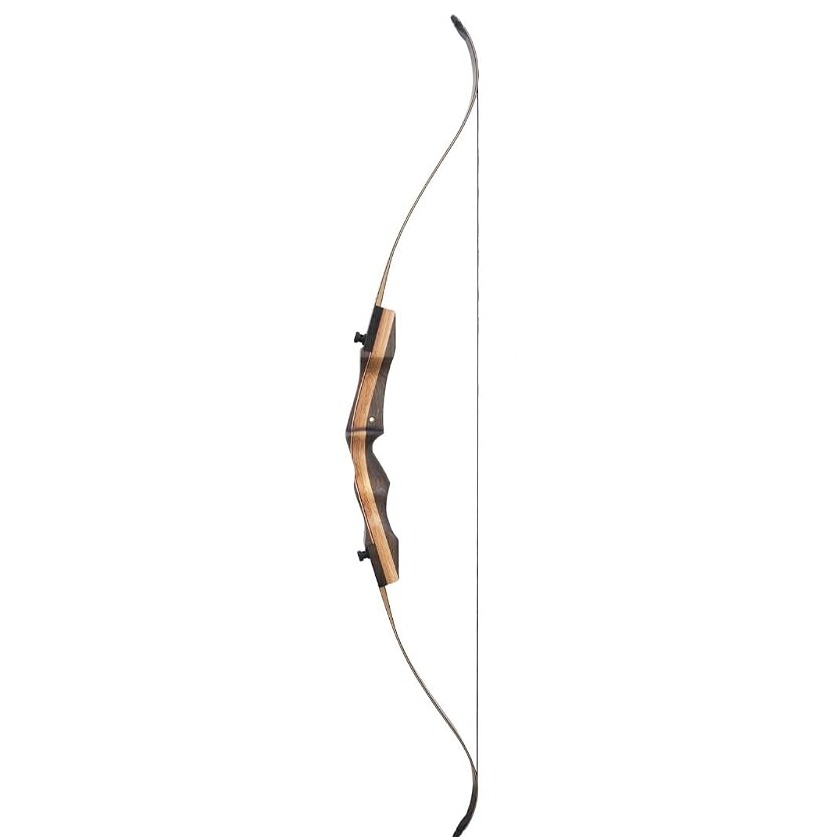
The KESHES 62" is one of Amazon's perennial best-selling takedown recurves, chosen here over the TopArchery alloy-riser bows because its review base is far deeper and its wood-riser, Sage-pattern format is better suited to traditional hunting. KESHES leans on the claim that it's built in the same factory as the Samick Sage, and the bow backs that up in the hand: hardwood riser, fiberglass-laminated limbs, pre-installed brass bushings for a sight, stabilizer, plunger, or bowfishing reel, and a 14/16-strand Dacron string. The kit adds a stick-on rest, stringer tool, and basic sight for around $90, undercutting the Sage itself. Limbs run 15-60 lb in 5 lb steps — the 15-25 lb options make it a family/trainer favorite, while 40-55 lb limbs turn the same riser into a legitimate deer bow, though reviewers note the manual is rough for true beginners and the accessories are throwaway grade. At roughly 2 lb it carries easily, and a 29" max draw suits average frames. Community sentiment (Amazon reviewers, archery blogs) is consistent: shockingly good wood and finish for the price, reliable customer service with a money-back guarantee, but budget for a real string and rest before hunting season.
Bear Archery
Bear Kodiak (1959 Model)
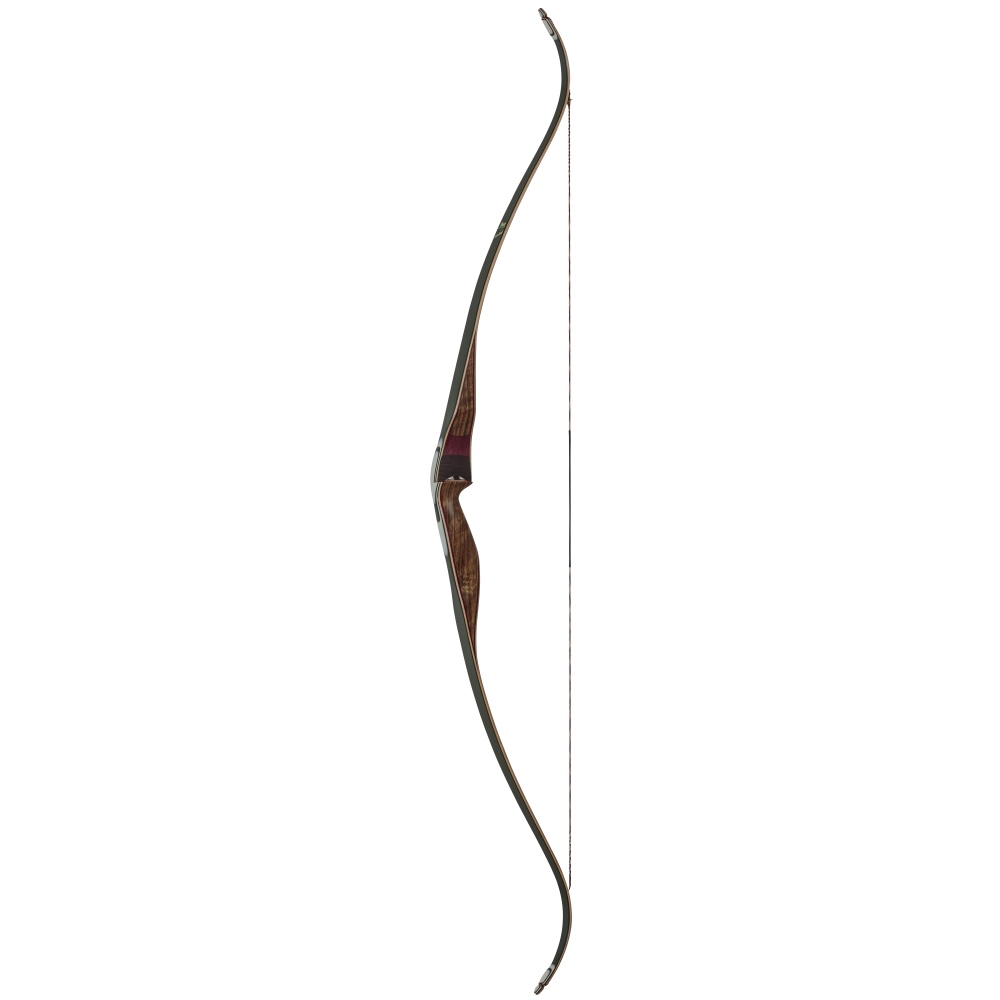
The 1959 Kodiak is arguably the most iconic recurve ever made — the bow that put Bear Archery on every bowhunter's wall and became Fred Bear's own choice after its launch. Bear's modern recreation, introduced for the model's 60th anniversary and still in the catalog in 2026, reproduces the look faithfully: a shedua riser with a purple heart I-beam running through it, green-and-white glass accents, maple-core limbs under Grayling-green fiberglass, and the signature feather arrow rest on a crowned, cut-on-center shelf with leather side plate. It's built in Gainesville, Florida and ships with a Dynaflight 97 Flemish string. On Trad Talk and Tradgang, owners praise it as smooth, quiet, and genuinely nimble for a 60-inch bow, with several comparing it favorably against semi-customs like the Toelke Chinook; the main gripes are the $730 price — Bear's most expensive one-piece — and scattered quality-control reports (finish blemishes, glass cracks) that Bear's customer service reportedly handles well. It carries 7 reviews at 3Rivers with no displayed average. If the Grizzly is the workhorse and the Super Kodiak the flagship, this is the heirloom: a hunting-ready piece of archery history rather than a budget tool.

Bear Archery
Bear Super Kodiak
Introduced in 1967 to succeed the original Kodiak, the Super Kodiak was Fred Bear's personal hunting bow for the last decades of his life — the bow in most of the famous photos from his later African and Alaskan hunts. That pedigree still drives its reputation: on Tradgang and ArcheryTalk it's routinely described as the smoothest-drawing production Bear, with a longer 60-inch AMO length that forgives sloppy releases and suits draws out to 29-30 inches better than the Grizzly. The two-piece shedua riser carries a black accent stripe and a full, palm-filling grip, and the crowned, cut-on-center shelf with bear hair rest and leather side plate shoots clean off the shelf. Unlike the Grizzly, its layered black-and-white glass tips take the included Dynaflight 97 Flemish string, so you get a modern low-stretch string's extra speed and quieter shot from the factory. The 3Rivers listing has accumulated 66 customer reviews, though no numeric average is displayed. Knocks are few: it costs $130 more than a Grizzly, left-hand weights are thin, and purists note today's Gainesville-made bow isn't hand-shaped like a Grayling original. As a do-everything hunting recurve, it's the flagship of Bear's one-piece line.
Bear Archery
Bear Kodiak Magnum
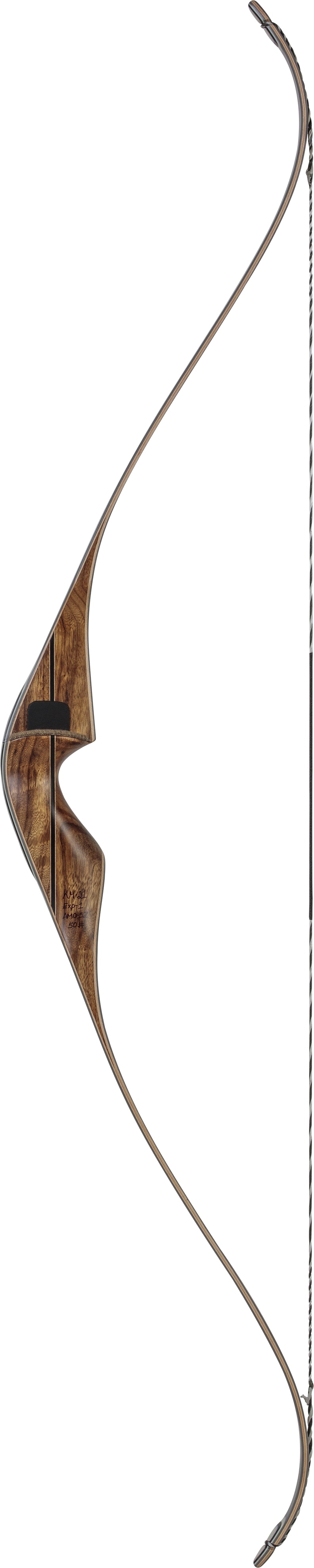
The Kodiak Magnum first appeared in 1961 as the treestand and brush hunter's answer to full-length recurves, and the modern reissue keeps the formula: a heavily recurved 52-inch bow with a shedua riser, black accent stripe, and maple-core limbs faced in distinctive arctic-grey fiberglass. It is the shortest, lightest-in-hand bow in Bear's one-piece lineup, which is exactly why ground-blind and saddle hunters love it — it clears shooting rails and brush that a 60-inch bow won't. The radiused, cut-on-center shelf with bear hair rest and leather side plate shoots off the shelf, and the layered tips take the included Dynaflight 97 string. The honest trade-offs are well documented on ArcheryTalk and Tradgang: at 52 inches the string angle gets steep, so shooters past about 28 inches of draw report finger pinch and noticeable stacking, and many shoot it three-under to ease nock pinch. Its light mass also makes it less forgiving to aim than heavier bows. It carries 13 reviews at 3Rivers with no displayed average, and as of August 2026 stock is spotty — sold out at Bear's site with a waitlist at 3Rivers. For short-draw hunters in tight quarters, nothing in the Bear catalog is handier.
Southwest Archery
Southwest Archery Scorpion
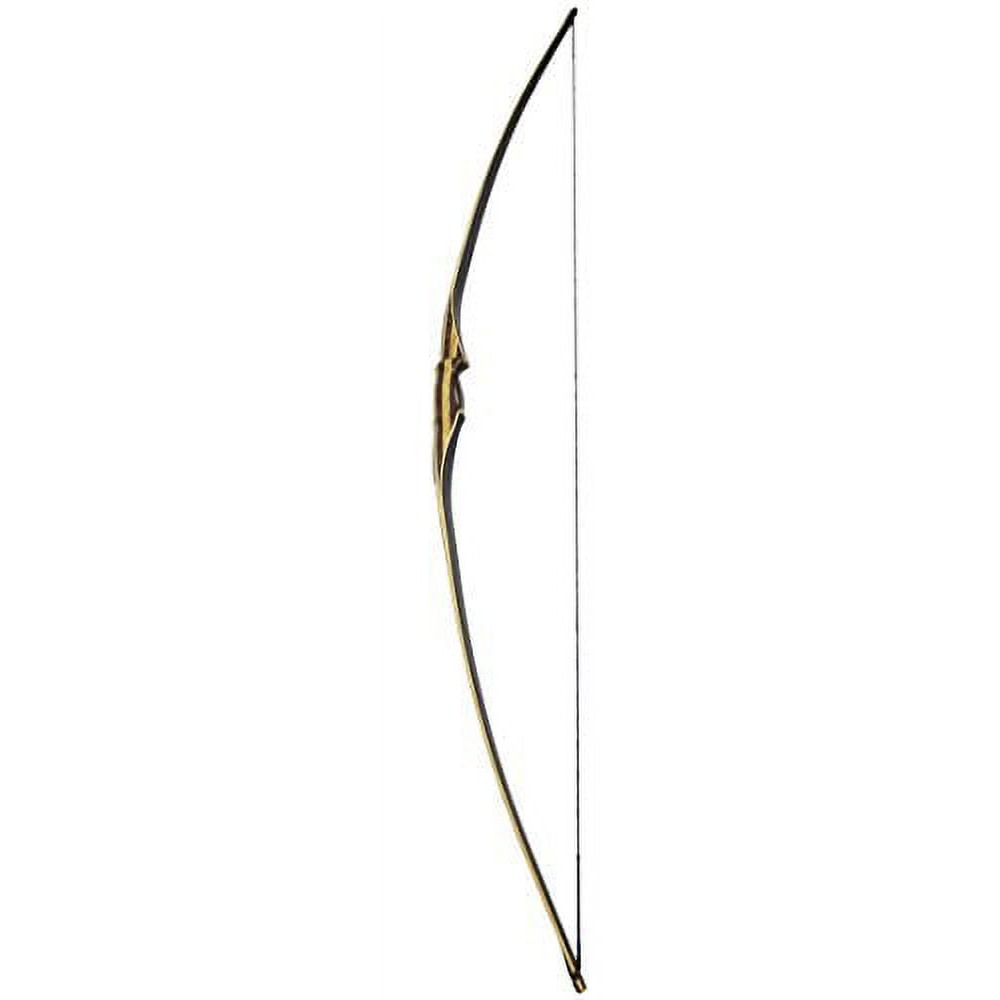
Southwest Archery — the California outfit founded by people behind the ubiquitous Samick Sage — applies the same value formula to a traditional longbow with the 68-inch Scorpion. The one-piece riser layers dymondwood, tigerwood, white oak, and padauk into something that looks far more expensive than its roughly $280 street price, and the limbs carry reinforced tips, so unlike most budget longbows it is rated for Fast Flight and Flemish strings. It ships with a 16-strand Dacron string, a pre-installed shelf pad, and instructions; an optional kit adds a stringer. At 68 inches it draws smoothly well past 28 inches with no stack, and the ArcheryTalk owner thread is notably positive — 'shot well, seemed very stable,' with reviewers remarking how little negative feedback exists. Tradgang and Trad Talk posters treat it as the step up from an SAS Pioneer: cleaner finish, better hardware, one-year warranty. Like most American-style longbows the shelf window is not cut past center, so spine tuning takes patience, and there is mild hand shock with light arrows that a Flemish string and 10 gpp arrows mostly cure. Amazon and Walmart carry it, but their rating widgets could not be verified at research time, so no number is reported here.
Questions that come up before a first bow season
Asked constantly in archery shops and on ArcheryTalk. Answered here the way an experienced shooter would answer them, not the way a catalog would.
What draw weight do I need to hunt deer?
Most states set the legal floor at 35-45 lb, and a modern compound at 40 lb with a sharp fixed-blade broadhead will pass through a whitetail. That said, most adult men hunt 60-70 lb compounds and most women 45-55 lb — not because deer require it, but because the extra energy buys forgiveness on marginal shots and more margin for elk-sized game. The real rule: hunt the heaviest weight you can draw slowly, smoothly, and while cold, seated, and twisted in a saddle harness. If you have to sky-draw at the range, you're overbowed for a treestand. Full draw weight guide →
Compound or recurve for hunting — which should I start with?
If your goal is filling a tag next season, a compound: let-off means you hold a fraction of the peak weight at full draw, sights and a release make 30-40 yard accuracy achievable in months, and the learning curve is measured in weeks. A recurve is a deliberate choice to make it harder and more personal — practical range shrinks to about 20 yards and proficiency takes daily practice for a year. Plenty of hunters run both: compound for the freezer, trad bow for the season after you're consistent. Start where you'll actually practice. Compound vs recurve, honestly →
How much does a hunt-ready bow setup really cost?
The bare-bow price is the small number. A $1,400 flagship compound needs a sight, rest, quiver, stabilizer, release, and a dozen arrows with broadheads — figure $400-$700 more, plus a pro-shop tune. This is why the $450-$600 ready-to-hunt packages (Bear Cruzer, Diamond Edge, PSE Stinger) are the honest sweet spot for a first bow: the included accessories are basic but functional, and the bow itself will kill deer exactly as dead as a Mathews. Trad is cheaper up front — a $170 Samick Sage plus $150 of arrows and a glove — but you pay in practice time instead. Full cost breakdown →
What do IBO and ATA speed ratings actually mean?
Both measure a bow shooting a 350-grain arrow at 70 lb and a 30-inch draw — a setup almost nobody hunts. Drop to a 28-inch draw at 60 lb with a sensible 450-grain hunting arrow and that 340 fps flagship is really launching arrows in the 270s. Speed still matters — flatter trajectory forgives range-estimation errors — but the differences between modern bows are smaller than the brochures imply, and brace height, draw cycle, and how the bow balances at full draw decide more hunts. Never pick a bow off the speed number alone. Bow specs, decoded →
Why can't I buy a Mathews or Hoyt online?
The flagship brands — Mathews, Hoyt, Elite, Bowtech, Prime, PSE's top line — sell only through authorized pro shops, and it's not pure gatekeeping: a compound needs to be fitted to your draw length, have the peep tied in, and be paper-tuned, and the shop's press and experience are part of what you're buying. The practical consequences: sticker prices are firm, you should budget for the shop relationship, and the used market (ArcheryTalk classifieds, Facebook groups) is where flagship performance gets affordable — last year's flagship at 40% off is the best value in archery.
Are the cheap Amazon bows (Sanlida, Topoint, Black Hunter) junk?
Mostly no — and the trad ones are genuinely excellent value. The Black Hunter recurve and longbow punch far above their price and have real followings among experienced trad shooters. Chinese budget compounds like the Sanlida Dragon X8 have closed most of the gap too: real 30-fps-class performance, honest adjustability, and thousands of positive reviews. What you give up is the dealer network — warranty means emailing an importer, replacement mods and limbs can take weeks, and resale value is near zero. For a first bow or a backup, they're a rational buy; know what you're trading.
Is a recurve really enough bow to kill a deer?
Yes — hunters killed everything in North America with recurves and longbows before compounds existed in 1969, and thousands still do every fall. The requirements are unforgiving, though: 40+ lb of draw weight at your actual draw length, a razor-sharp fixed-blade broadhead, a heavy arrow, and the discipline to pass every shot beyond your honest accuracy range, which for most trad hunters is 15-20 yards. The bow is enough; the question is whether your practice is. A deer-per-season trad hunter shoots more or less daily from summer on.