Hoyt
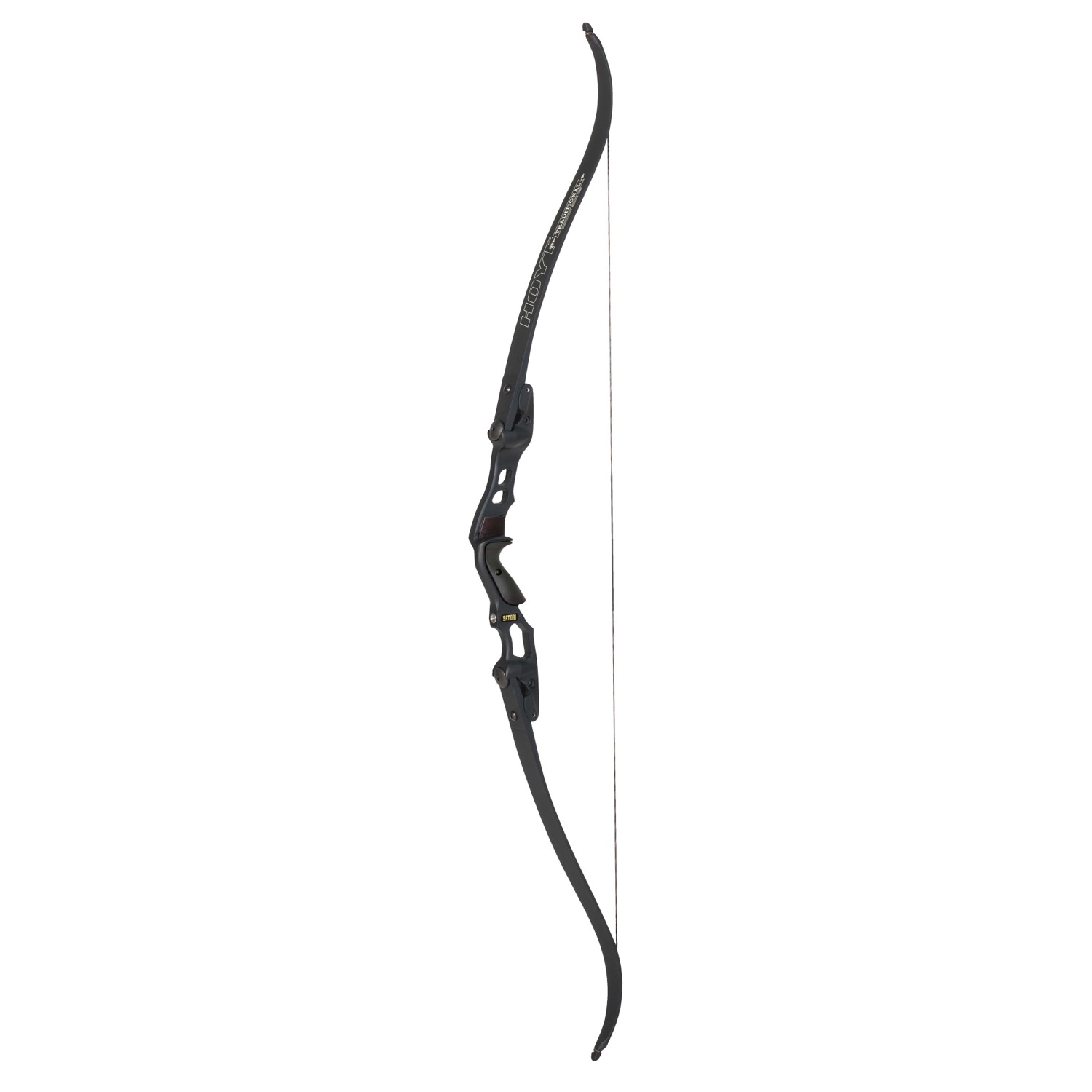
Hoyt Satori
The Satori is the modern benchmark for ILF hunting recurves — ArcheryTalk regulars call it "the Glock of trad bows": unglamorous, reliable, and a flat-out shooter. The machined aluminum riser comes in 17", 19", and 21" lengths (2.4 lb for the 19") with Hoyt's Grand Prix ILF pockets, micro limb alignment, and an adjustable side plate over a radiused shelf, so it tunes like a target bow but carries like a hunting rig. Because it's true ILF, you can hang Hoyt's own carbon/maple Satori limbs (35-65 lb, rated on the 21" riser) or any of hundreds of ILF limbs from $180 budget sets to $1,000 carbon-foam blades — the upgrade path is the whole sport. Complete bows run about $1,100 at 3Rivers ($520 riser + $580 limbs; watch for package deals nearer $900). Community gripes are specific: the ILF fitting can creak on a cold first draw (owners pre-draw once on stand), the metal riser is louder than wood if untuned, and there's only one rest hole. Find the quiet sweet spot around 8-8.125" brace and it's arguably the most accurate hunting recurve sold today.
Specifications
Highlights
Pros
- ✓Standard ILF fitting accepts limbs from dozens of brands at every price point
- ✓Micro limb alignment and adjustable side plate allow true centershot tuning
- ✓Widely described as the most accurate, forgiving hunting recurve on the market
- ✓Three riser lengths and three limb lengths build anything from 58" to 66"
- ✓Aluminum riser shrugs off rain, drops, and truck-bed abuse that kills wood bows
- ✓Limbs available to 65 lb (67+ lb effective on shorter risers)
- ✓Limited lifetime riser warranty from a major manufacturer
- ✓Strong resale value — Satoris hold price on classifieds
Cons
- ✗Roughly $1,100 complete at street price — a steep trad entry
- ✗ILF pockets can creak on first draw in the cold, a real hunting concern
- ✗Bare metal riser is noisier than wood until damped and tuned
- ✗Only one rest/plunger hole, limiting elevated-rest setups
- ✗Heavier in hand than wood-riser takedowns of the same length
Owner Insightssummarized from ArcheryTalk, Reddit, and owner reviews
The Satori is the modern benchmark ILF hunting recurve, and the community's nickname says everything about the vibe: 'the Glock of trad bows' — nothing romantic, everything functional. It's the bow compound converts and Sage graduates land on when they decide they're serious, and the recurring theme in upgrade threads is surprise at how much calmer it is at the shot; one ArcheryTalk poster who agonized over spending $650 on the riser reported zero regrets within a week, citing the feel, adjustability, and dramatically reduced hand shock versus his Sage. Not everyone's a believer — a vocal minority insists it's a fine riser priced on the Hoyt name when DAS and TradTech do the same job cheaper — but nobody argues with how it shoots.
Practically, this is as close as hunting trad gets to target-bow tunability: micro limb alignment, an adjustable side plate over a radiused shelf, and ILF pockets that click limbs in without tools. The quirks are specific and well-documented. The ILF fitting can creak on a cold first draw — stand hunters pre-draw once to purge it before legal light. The bare aluminum riser is louder than wood until damped, and owners converge on an 8 to 8.125" brace height as the quiet spot. Remember the riser-length math: a 45 lb limb pulls about 47 lb on the 19" riser and 49 lb on the 17", which is exactly how people end up over-bowed by accident.
Buy it if you're an experienced archer or a compound hunter converting to trad who wants a riser you'll never outgrow — the ILF ecosystem means your $1,100 setup can wear $180 starter limbs today and carbon-foam blades in five years. Against the Bear Take-Down at similar money it trades heritage for adjustability and a lifetime warranty; against a Samick Sage it's a different sport entirely. It's hunting-first (that radiused shelf, riser lengths down to 17") but tunes precisely enough to moonlight at 3D and field rounds, and resale is strong enough that trying one is nearly free.
What owners like
- +True ILF Grand Prix fitting — everything from $180 budget limbs to $1,000 carbon-foam blades clicks straight in
- +ArcheryTalk regulars call it 'the Glock of trad bows': unglamorous, reliable, and flat-out accurate
- +Sage upgraders consistently report dramatically less hand shock and a more solid, planted feel at the shot
- +Micro limb alignment plus an adjustable side plate lets you tune centershot like a target bow
- +Three riser lengths (17"/19"/21") build anything from a 58" brush bow to a 66" smooth-draw rig
- +One of the only 21" metal ILF risers sold with a radiused shelf
- +Machined aluminum shrugs off rain, drops, and truck-bed abuse that kills wood bows — backed by a limited lifetime riser warranty
- +Holds resale value unusually well; used Satoris move fast on classifieds
Common complaints
- −Roughly $1,100 complete — critics on ArcheryTalk argue DAS, TradTech, and even the Junxing F261 deliver most of it for half the money
- −ILF pockets can creak on the first cold draw, a real problem when a deer is at 15 yards — owners pre-draw once on stand
- −Bare metal riser runs noisier than wood until you damp it and find the 8-8.125" brace sweet spot
- −Only one rest/plunger hole, which limits elevated-rest setups
- −Noticeably heavier in hand than wood takedowns of the same length — stable at anchor, but stalk hunters feel the mass
- −Limb ratings shift with riser length (+2 lb on the 19", +4 lb on the 17"), a math trap for first-time ILF buyers
- −It's an ILF gateway drug — budget now for the second and third limb sets you will inevitably buy
Common Questions
Is the Satori worth it as an upgrade from a Samick Sage?
Do I have to use Hoyt limbs on it?
What's the cold-weather creak people mention?
Which riser length should I get for hunting?
Is it too loud to hunt with?
Satori vs. Bear Take-Down — both are four figures, which one?
Compare the Hoyt Satori
Related bows
More from Hoyt →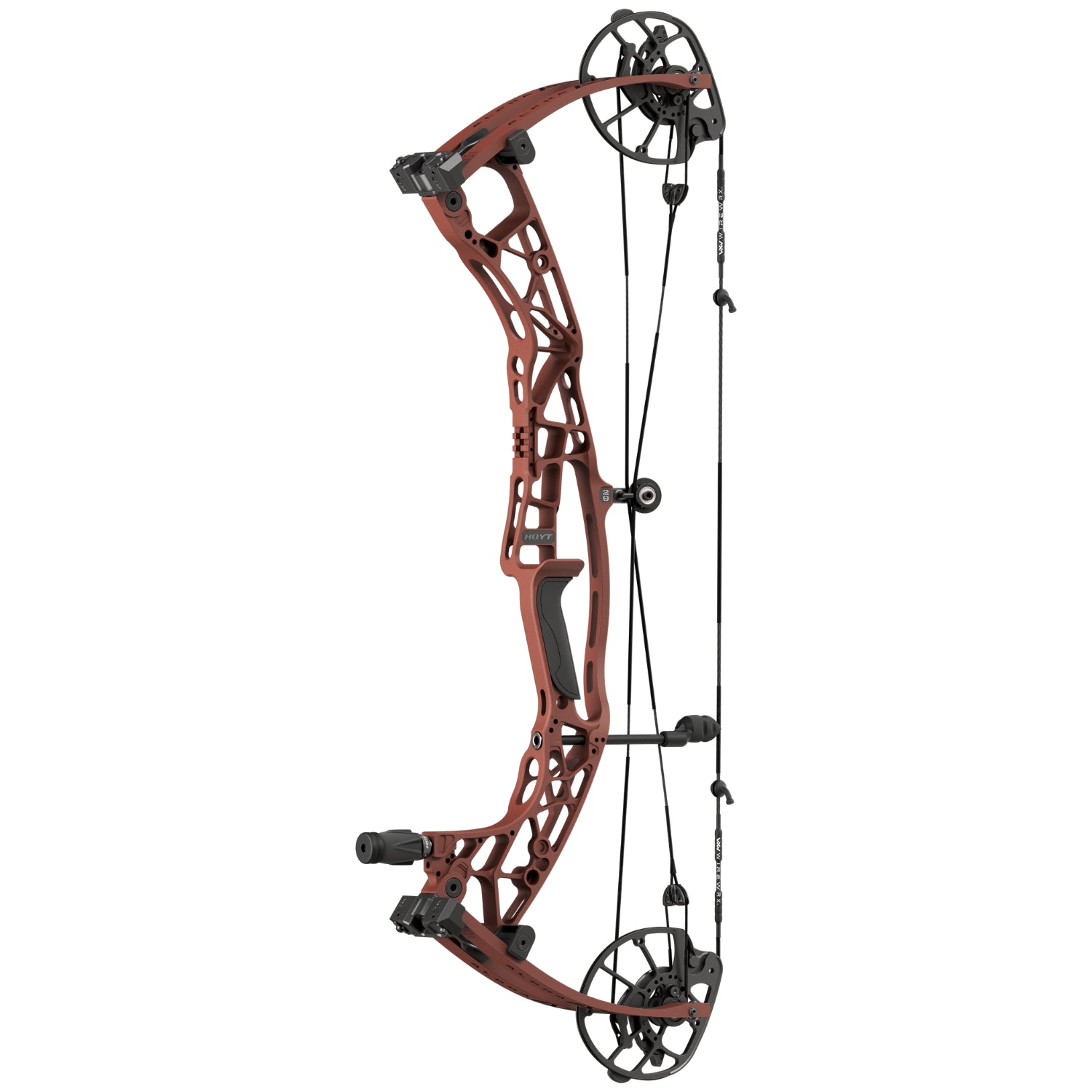
Hoyt's 2026 aluminum flagship comes in four versions; the AX-3 29 is the compact one, and it may be the most complete tuning package Hoyt has ever shipped. The new XTS Tuning System corrects both horizontal and vertical tears without a press — a first for Hoyt, whose shim-based tuning already led the industry — on what the company claims is the stiffest riser on the market. Bowhunter magazine measured it among the quietest, most vibration-free bows it has tested, crediting the In-Line accessory system that bolts sights and rests directly to the riser. It rates 340 fps ATA with the HBX Gen 4 cam's quarter-inch draw-length adjustments. ArcheryTalk head-to-heads against the Mathews ARC 30 read like a coin flip: Mathews usually wins draw feel, while the Hoyt wins the hold ("dead steady, minimal pin float"), quietness, and tuning system. The knocks: 4.4 pounds bare is nearly half a pound over the ARC 30, draw length tops out at 30 inches so longer-draw shooters need the AX-3 33, the flat Hoyt grip stays polarizing, and $1,399 is real money. The lone verified Scheels review so far is five stars.
Hoyt
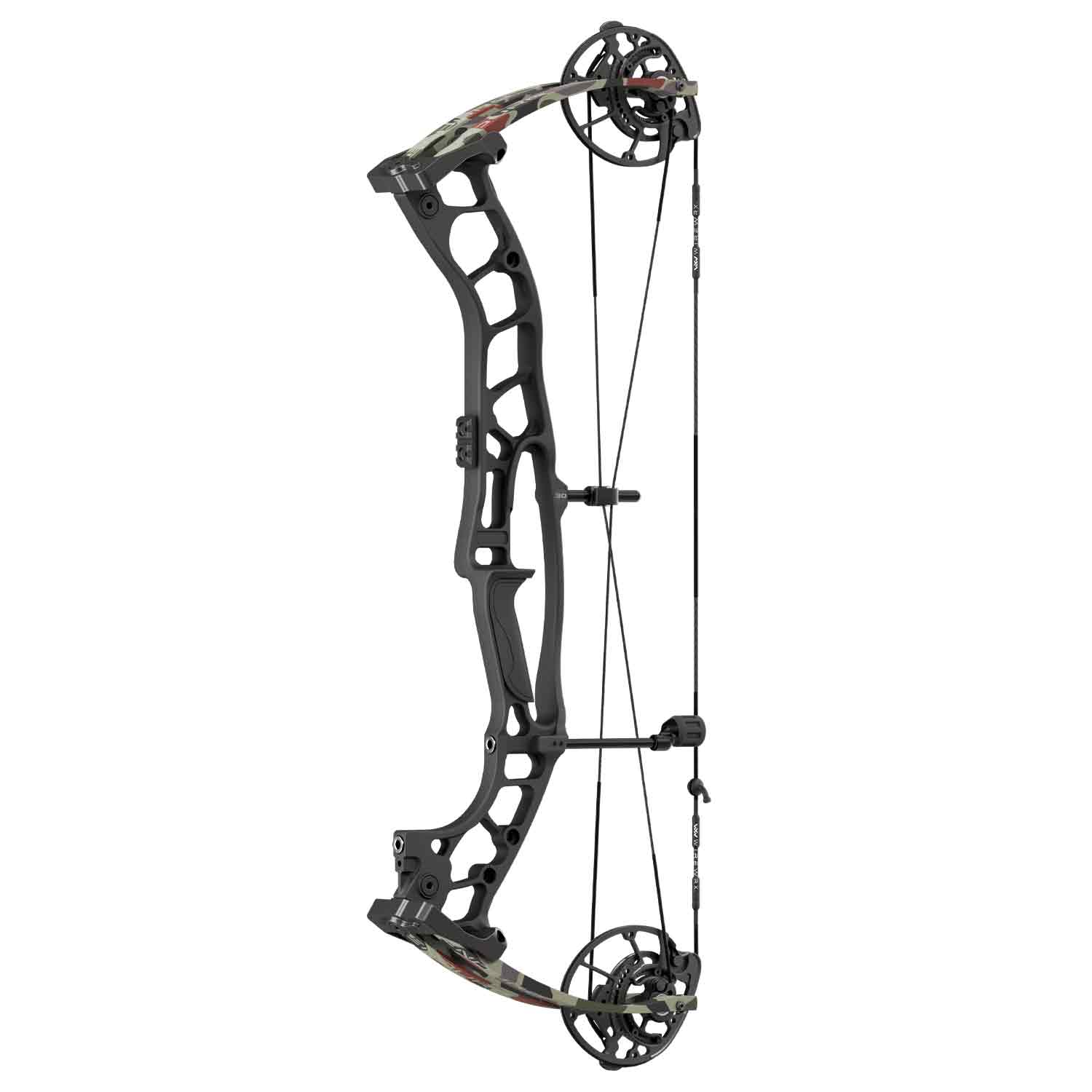
Hoyt Enduro
Hoyt discontinued the long-running Torrex line for 2026; the Enduro is its direct replacement and the only way into a current Hoyt for under $1,000 ($749 bare, $899 ready-to-hunt). Price shown is the bare bow. It is a genuine trickle-down play: the HBX Enduro cam (from the flagship RX/Alpha family), an in-line Picatinny sight rail, Integrate rest dovetail, and press-free shim tuning that replaces the Torrex's old yoke system. Rated 328 fps ATA with a forgiving 7-inch brace on a compact 30-inch frame, it tested at real-world speeds in the high 280s with hunting-weight arrows at 29 inches - typical honesty gap for the class. Community verdict on ArcheryTalk is 'a decent evolution of the Torrex, nothing spectacular': refined draw, firm wall, but a crisp post-shot twang that wants a stabilizer. Early-production bows had draw stops that could slip past the cable and Picatinny spacer fitment issues - both free fixes at Hoyt dealers, worth checking on used or early stock. At 4.65 lb it is the heaviest bare bow here, and you are paying some brand premium versus a Bear Alaskan XT that rates faster for $150 less.
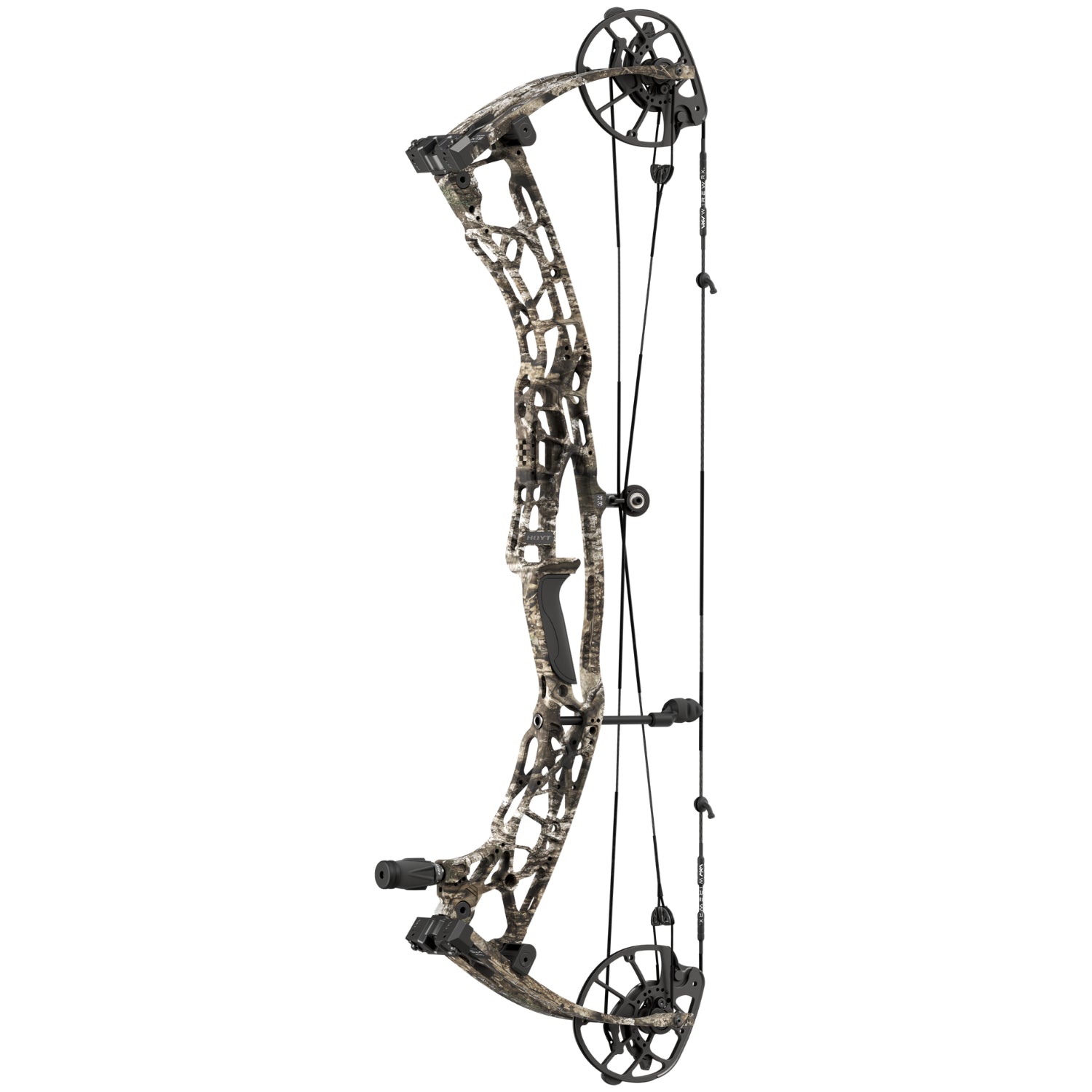
The aluminum Alpha AX-3 33 was the quiet overachiever of 2026: runner-up in Outdoor Life's bow test at 20.2 points, where it posted the best back wall of any bow (4.6/5) and the only unanimous 5/5 grip score — testers' favorite grip, hands down. Groups averaged 3.64" at 50 yards, just behind the Mathews ARC 34. The HBX Gen 4 cam draws with less perceived weight up front, and you can adjust back-wall feel and letoff; one tester's 73-lb bow 'drew like silk.' The honest knocks from ArcheryTalk and Field & Stream: there's a bigger hump into the break-over than the Mathews, and some shooters feel a bit of jump and vibration at the shot, so it's not the deadest bow here. It also weighs a legitimate 4.75 lb on Hoyt's own spec sheet — heavier than early press materials suggested — and the price crept from a $1,499 launch MSRP to $1,599 on Hoyt's site mid-year. It shares the RX-10's XTS press-free tuning at $550 less, which is exactly why a lot of Hoyt guys are skipping carbon this year.
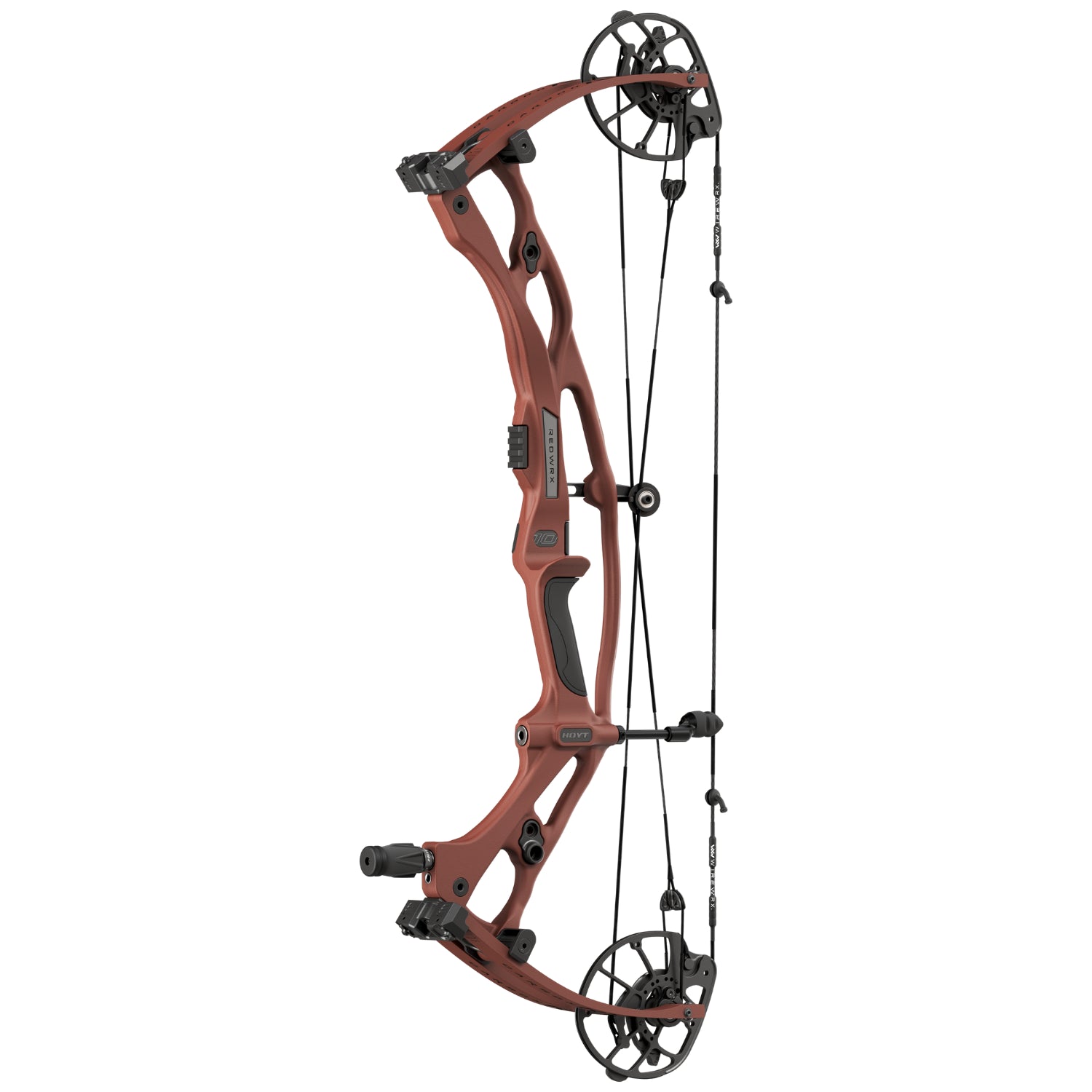
Hoyt's 2026 carbon flagship is really about one thing: the patent-pending XTS Tuning System, which adjusts for both left/right AND high/low paper tears without a press — something no other production system fully does. Reviewers who've lived with it (Born Hunting, Nock On) say it works and doesn't move your center shot, but the ArcheryTalk reality check matters: multiple owners report that two of three RX-10s they set up still needed traditional cam shimming to finish the job, so XTS narrows the gap rather than eliminating the press. The bow itself earns real praise — absurdly stable at full draw, surgically quiet, and the hollow carbon riser carries lighter than its 4.1 lb suggests while staying warm to the touch in late-season cold. The HBX Gen 4 cam gives quarter-inch draw adjustments plus customizable letoff and back-wall feel. The catch is value: $2,149 is $550 over the aluminum Alpha AX-3 that shares the same cam and tuning system, and the RX-10 didn't make Outdoor Life's 2026 podium while the AX-3 33 did. You're paying carbon money for carbon feel.

Bear Archery
Bear Archery Take-Down
This is Fred Bear's own 1969 latch takedown, still built with the signature heel-down horn grip and still commanding heirloom money — about $750 for the riser and $470 for limbs, or roughly $1,220 complete at 3Rivers. Instead of ILF hardware it uses Bear's proprietary flush latch system: pop the lever, seat the limb, done, with no bolts to lose. The A riser builds a 56-60" bow with #1-#3 limbs; the B riser builds 60-64", letting one set of Dymondwood/Fascor-core limbs serve multiple lengths. Forum consensus (TradTalk, ArcheryTalk, Rokslide) is that these draw remarkably smoothly — owners report no stack past 29" — and they're fast and quiet with the heavy arrows a hunter should shoot anyway. Criticisms are real too: some latches develop small clicks and pops, and value opinions run about 50/50 given that $500 ILF setups shoot as well on paper. You're partly paying for Michigan-bred history, the bubinga and black maple woodwork, and limbs up to 70 lb, which almost no modern takedown offers. For traditional bowhunters who want the bow Fred himself hunted with, nothing else scratches the itch.
Galaxy Archery
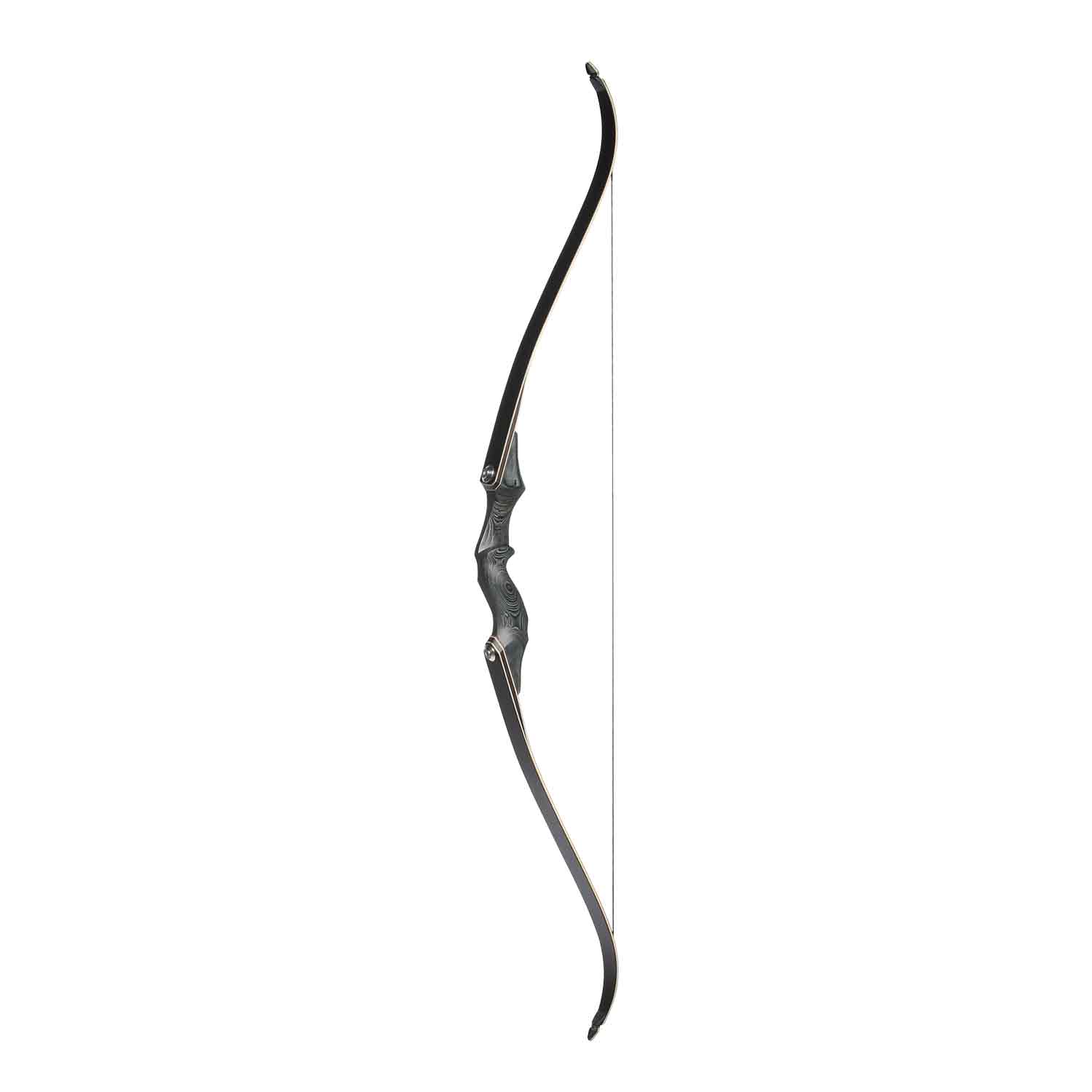
Galaxy Ember 60"
Galaxy is Lancaster Archery Supply's house brand, and the Ember is its hunting-weight star — a genuinely pretty 60" takedown with a 15" hardwood riser and bamboo-core limbs faced and backed in black fiberglass, currently $199.98 and flagged as a Lancaster Staff Pick (chosen here over the PSE Nighthawk, whose limbs stop at 50 lb and which is aimed more at recreational shooters). Hunting forums like Rokslide and SaddleHunter treat the Ember as the step-up budget recurve: owners call it "an excellent little budget recurve... tough as nails" with limbs that feel quick for the class, and the trad crowd likes that it comes in honest hunting weights of 30-55 lb in 5 lb steps. The trade-offs are inherent to the format: a 60" bow with a 15" riser is less forgiving than a 62-64" rig, so it rewards decent form and properly spined arrows, and TradTalk threads note marked draw weights can run off from a few suppliers, making a known dealer like Lancaster the smart buy. Fittings are proprietary bolt-on (not ILF), but replacement Ember limbs are sold separately, so you can move up in weight without rebuying. Backorders of 2-3 weeks are common — it sells.