Mathews
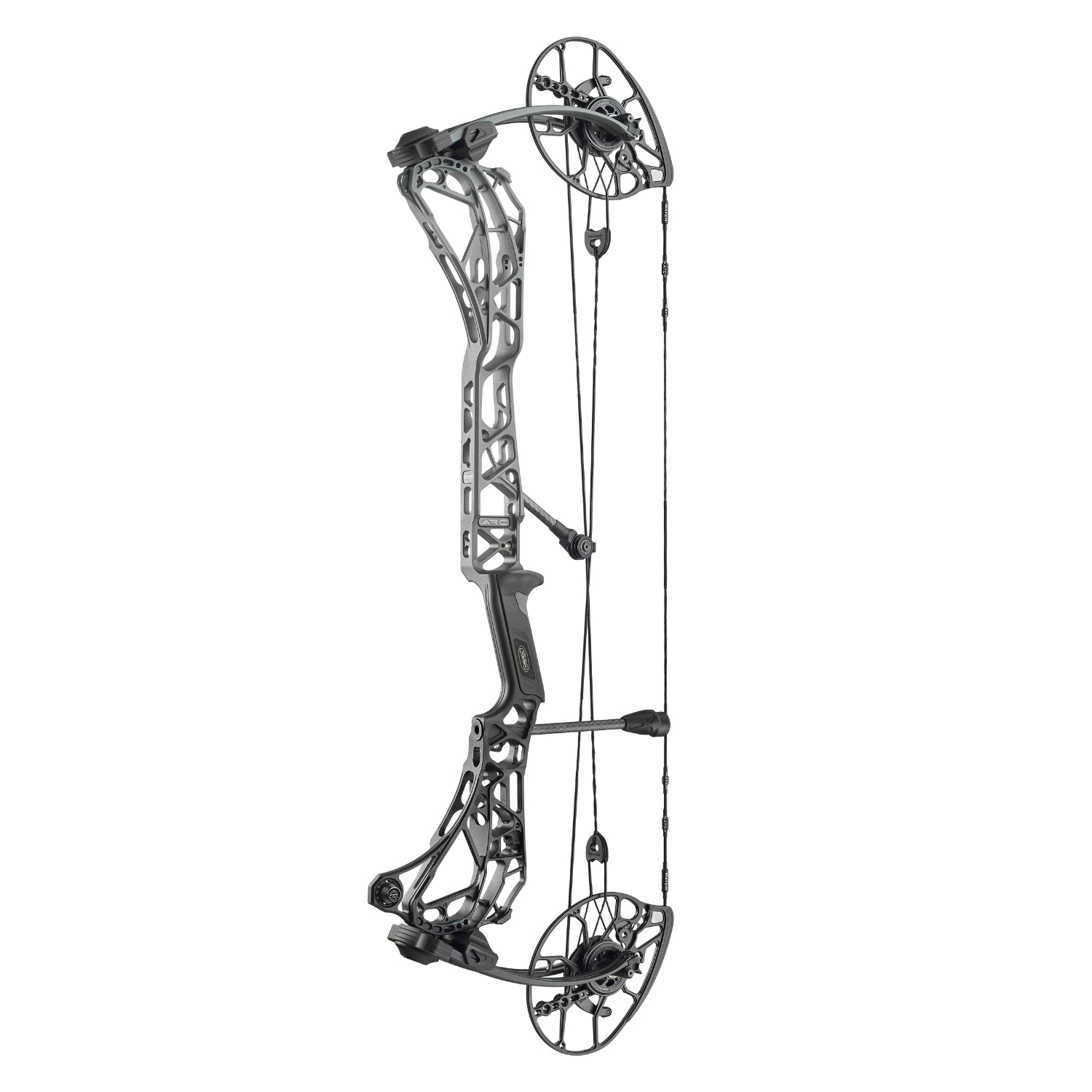
Mathews ARC 30
The ARC 30 headlines Mathews' 2026 lineup alongside the ARC 34, and it is the fastest short hunting bow Mathews has built: 348 fps IBO from a 30-inch, sub-four-pound aluminum chassis. The SWX-2 cam adds Perimeter Weight Technology to keep felt recoil down once accessories go on, and Field & Stream chronographed 328 fps with a 350-grain arrow at 30 inches and 70 pounds — real speed, independently verified. Optional Z mods trade speed for a noticeably softer cycle. Community reception is more divided than a typical Mathews launch; an ArcheryTalk thread literally titled "Is the ARC really that bad??" captures the mood. Fans call it the most pleasant-drawing Switchweight Mathews yet, while detractors find the back wall aggressive and report shakier pin float than on a Hoyt AX-3, and $1,459 continues Mathews' steady price creep. Owner head-to-heads against the AX-3 29 usually give Mathews the draw feel and Hoyt the hold, quietness, and tuning system. Dealer-only distribution means no online discounts, but Switchweight mods (55–80 lb) and a 25–30.5-inch draw range make it easy to configure. For whitetail rigs where compactness and speed rule, it remains the benchmark.
Specifications
Highlights
Pros
- ✓348 fps IBO verified close to spec on independent chronographs
- ✓Under 4 lb bare — light for an aluminum flagship
- ✓Perimeter-weighted SWX-2 cam keeps the shot dead quiet even fully rigged
- ✓Smoothest-drawing Switchweight cam Mathews has offered, per multiple reviewers
- ✓Z mod option gives a genuinely soft cycle if you'll trade some speed
- ✓Switchweight changes peak weight 55–80 lb without new limbs
- ✓Huge dealer network and the strongest resale value in archery
Cons
- ✗Aggressive back wall — some ArcheryTalk shooters report shakier pin float than rivals
- ✗$1,459 continues Mathews' price creep; second-priciest bow in this group
- ✗Dealer-only: no discounts, and setup quality varies by shop
- ✗Divided community reception versus past Mathews launches — demo before buying
- ✗6" brace height is less forgiving than an Artus or Varos
Owner Insightssummarized from ArcheryTalk, Reddit, and owner reviews
The ARC 30 headlines Mathews' 2026 lineup alongside the ARC 34, and its identity is simple: the fastest short hunting bow Mathews has ever built. The 348 fps IBO rating is real — Field & Stream chronographed 328 fps with a 350-grain hunting arrow at 30 inches and 70 pounds, and the ArcheryTalk thread 'ARC 30 is fast AF' says how the community received it. But this is also the rare Mathews launch with a genuinely divided reception: fans call it the most pleasant-drawing Switchweight bow the company has made, while detractors point to an aggressive back wall and a valley so short it barely exists — one reviewer went as far as calling the ARCs possibly the harshest-drawing Mathews ever.
Both camps are describing the same cam. The SWX-2 rolls through a smooth, consistent cycle with no dump, then locks into a firm wall with almost no valley — creep a fraction and it wants to take the shot for you. The optional Z mods soften the back half noticeably (at a few fps cost) and are the most common fix in the threads; even then the valley stays 'ridiculously short' per owners. What nobody disputes: perimeter weights on the cam make it dead quiet and shock-free even fully rigged, sub-4-lb mass carries beautifully, and Switchweight mods move peak weight from 55 to 80 lb without touching the limbs. In the endlessly rehashed head-to-head with the Hoyt AX-3 29, the pattern is consistent — Mathews wins draw smoothness and speed, Hoyt wins the hold (steadier, slower pin float), quietness, and tuning system; one AT shooter measurably grouped worse with the ARC.
This is the whitetail and treestand hunter's speed rig: compact, dead quiet, genuinely fast, with the biggest dealer network in archery behind it. At $1,459 it's expensive for a 30-inch bow — a Darton TriTech 33 undercuts it by $110 with more press-free tunability, and the Hoyt AX-3 29 is $60 cheaper — but Mathews resale recoups more of that than any rival. The forum's buying advice is unanimous on one point: shoot it before you buy, ideally back-to-back with the AX-3 29, and ask the shop to demo the Z mods. Dealer-only, no online sales.
What owners like
- +The fastest short hunting bow Mathews has built — 348 fps IBO, and Field & Stream independently chrono'd 328 fps with a 350-grain arrow at 30 inches and 70 lb
- +Under 4 lb bare, light for an aluminum flagship
- +Perimeter-weighted SWX-2 cam keeps the shot dead quiet and shock-free even fully rigged
- +Fans call it the most pleasant-drawing Switchweight Mathews yet
- +Optional Z mods genuinely soften the back half of the cycle if you'll trade a few fps
- +Switchweight mods change peak weight from 55 to 80 lb without new limbs
- +Compact 30-inch ATA is ideal in a treestand or ground blind
- +Huge dealer network and the strongest resale value in archery
Common complaints
- −The valley is almost non-existent — creep even slightly and the SWX-2 cam wants to go before you're ready
- −The back wall is aggressive; one reviewer called the ARCs possibly the harshest-drawing bows Mathews has ever released
- −Owner head-to-heads report shakier, faster pin float than a Hoyt AX-3 29
- −Community reception is more divided than a typical Mathews launch — demo before buying
- −$1,459 continues Mathews' steady price creep
- −6-inch brace height is less forgiving than most 2026 flagships
- −Dealer-only: no online discounts, and setup quality varies by shop
Common Questions
Is the ARC 30 really as fast as Mathews claims?
What are people complaining about in the draw?
ARC 30 or Hoyt Alpha AX-3 29?
How does Switchweight work?
Is it too much bow for a beginner?
What does it cost and where do I buy?
Compare the Mathews ARC 30
Related bows
More from Mathews →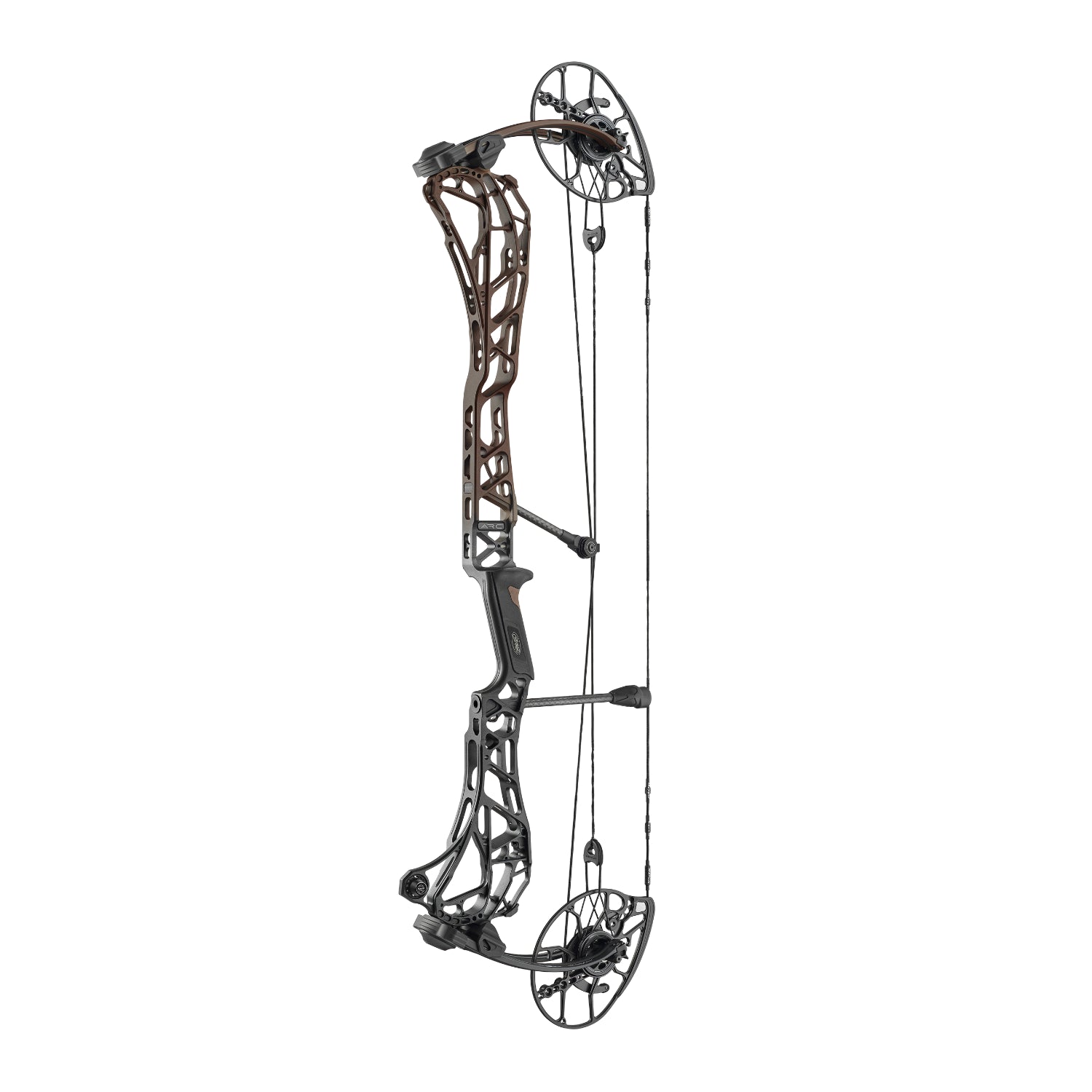
Mathews
Mathews ARC 34
Mathews retired the Lift X line for 2026, and the ARC 34 is the new flagship — in Outdoor Life's 2026 test it earned the only unanimous 5/5 draw-cycle score, with testers calling it smooth as butter. That matches about half of ArcheryTalk; the other half found the first third of the draw stiff and the bow a bit jumpy off the back wall, because the valley is short and you have to keep steady pressure into the stops. The new SWX-2 cam carries perimeter weights, and mod choice matters: standard SWX mods chrono'd 289 fps in OL's 28.5"/62.5-lb rig, while the smoother SWX-Z mods gave up about 5 fps. It aims rock-steady for a 4.3-lb bow, tunes in minutes with press-free Limb Shift adjustment, and is typically Mathews-quiet and dead in the hand after the shot. The knocks: the grip remains polarizing ("the grip still hates me" is live-thread sentiment), and its 3.56" 50-yard groups trailed the Elite Varos' 2.79". At $1,469 it undercuts carbon rivals by several hundred dollars while giving up little.
Mathews
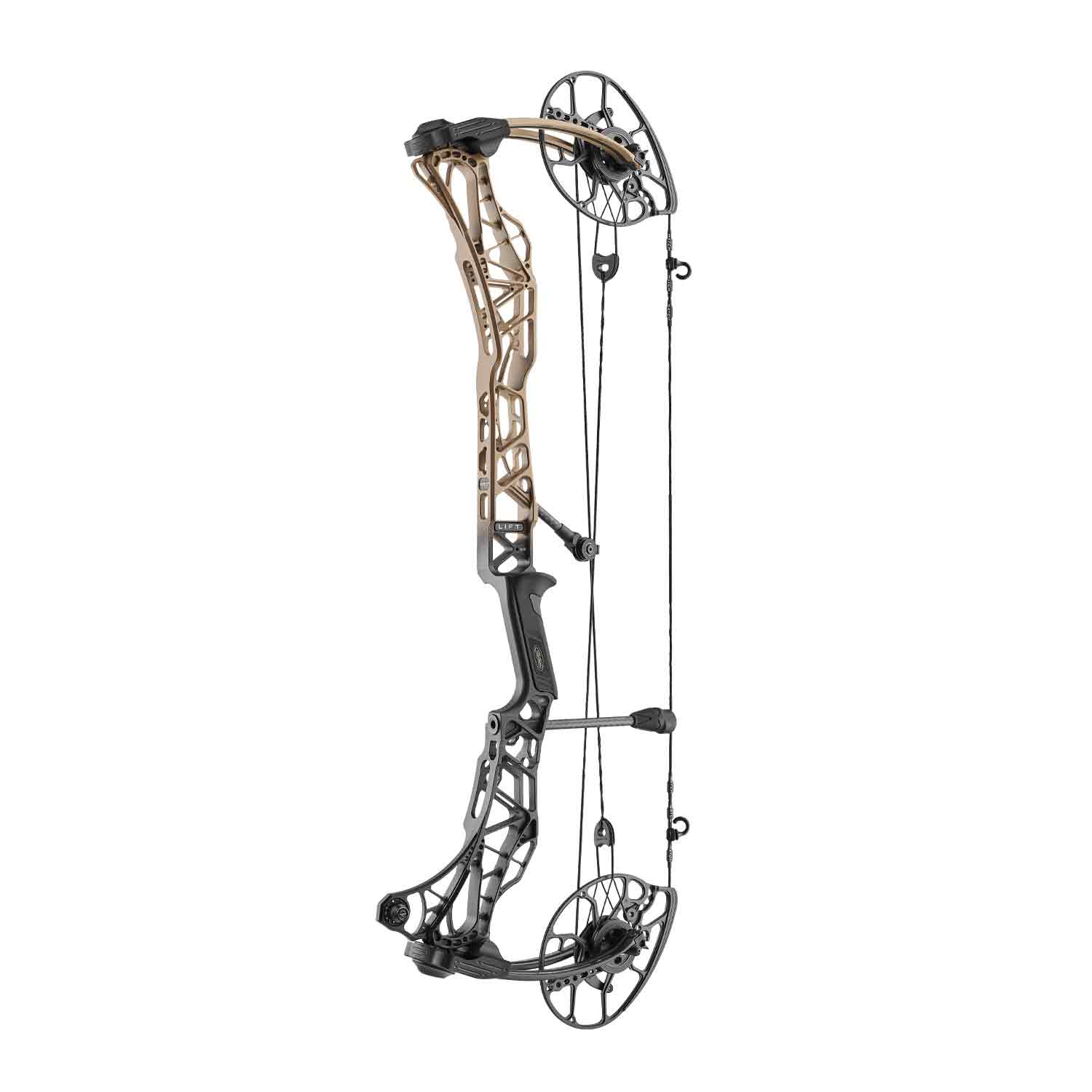
Mathews Lift X 29.5
Mathews' 2025 flagship is still on dealer racks, and now that the ARC series has replaced it, closeout pricing makes it the sleeper buy of this list — Scheels has it at $1,099, down from $1,299. On paper it's the athlete of the group: 3.99 lb bare, 348 fps IBO (the fastest-rated Mathews here), and a compact 29.5" ATA that's a treestand and blind favorite. Field & Stream measured it among the quietest bows they've tested at 67.5 dB and found it the most accurate bow in their test from 20–40 yards, and owners echo the dead-in-the-hand shot. The honest caveat is the draw: the SWX cam holds near max weight late in the cycle before dropping into a short valley, and ArcheryTalk draw-force-curve threads confirm it's more aggressive than the marketing suggests — the ARC exists partly to fix that. Limb Shift Technology handles cam-lean tuning with a wrench, no press, and the BOND grip is swappable if the stock feel isn't yours. If the price-per-performance math matters more than having the newest cam, this is the value play.
Bowtech
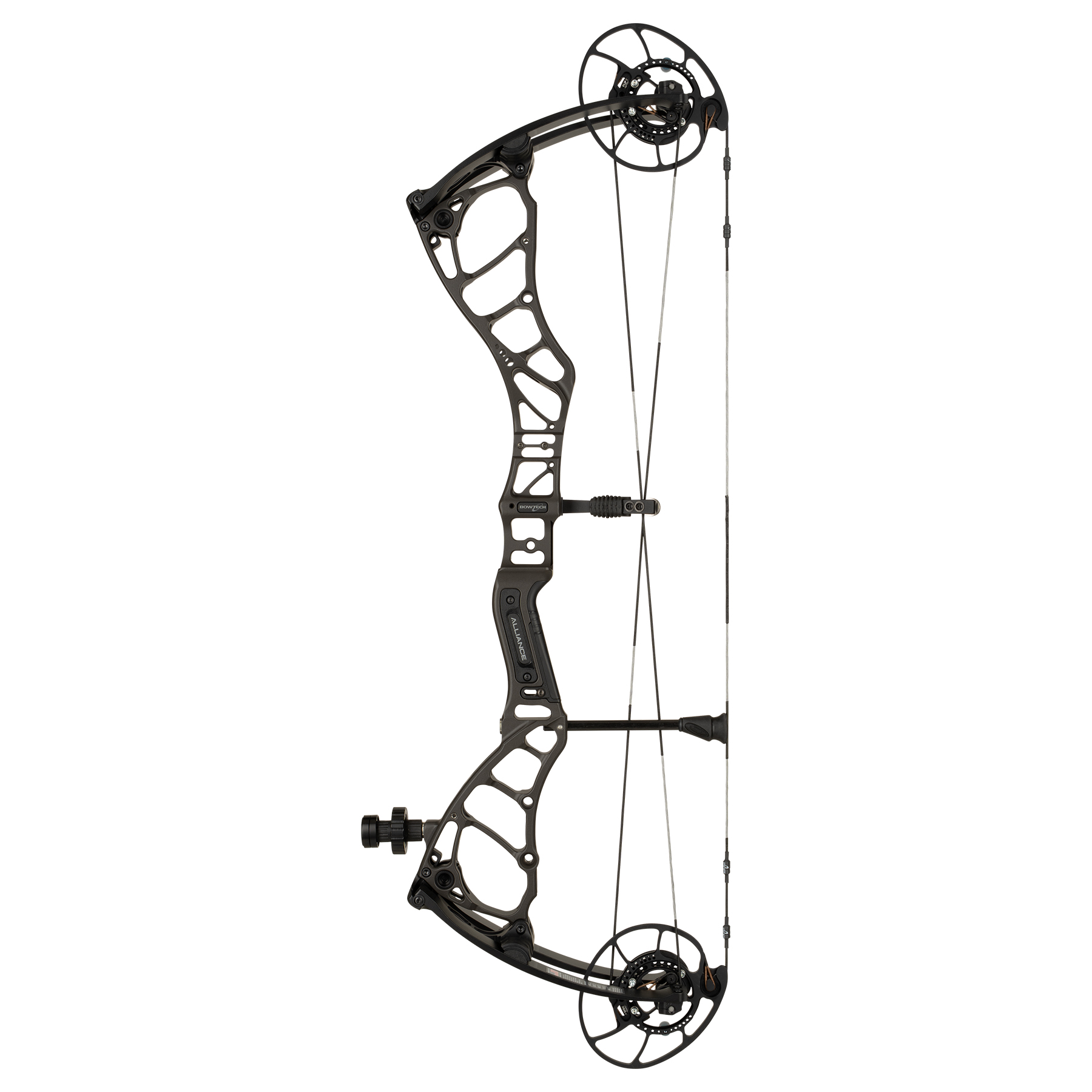
Bowtech Alliance
The Alliance is Bowtech's 2026 flagship and it won Best New Bow at the ATA Show — then Outdoor Life's test team scored it at the bottom of their seven-bow field (13.8 points), which tells you how split opinion is. The core idea is still Bowtech's best trick: DeadLock cams slide on the axle for press-free left/right tuning, now with bigger screws, finer clicks, and laser-etched reference marks that finally take the guesswork out, plus FlipDisc mods that flip between Comfort and Performance draw cycles. Fans (Archery Business, Born Hunting) call the Comfort setting silky smooth and say it's far more dead in the hand than the outgoing Proven; OL's testers hit it for a soft, spongy back wall and a thin, deep grip nobody liked — and at 280.5 fps it was the slowest bow they chrono'd. The truth is FlipDisc splits the personality: Comfort mode is soft everywhere, Performance mode firms the wall with the classic Bowtech dump. The adjustable GripLock angle helps some hands, and 4.09 lb is respectably light. A 33" Alliance 33 exists for stability-first shooters at the same $1,499.
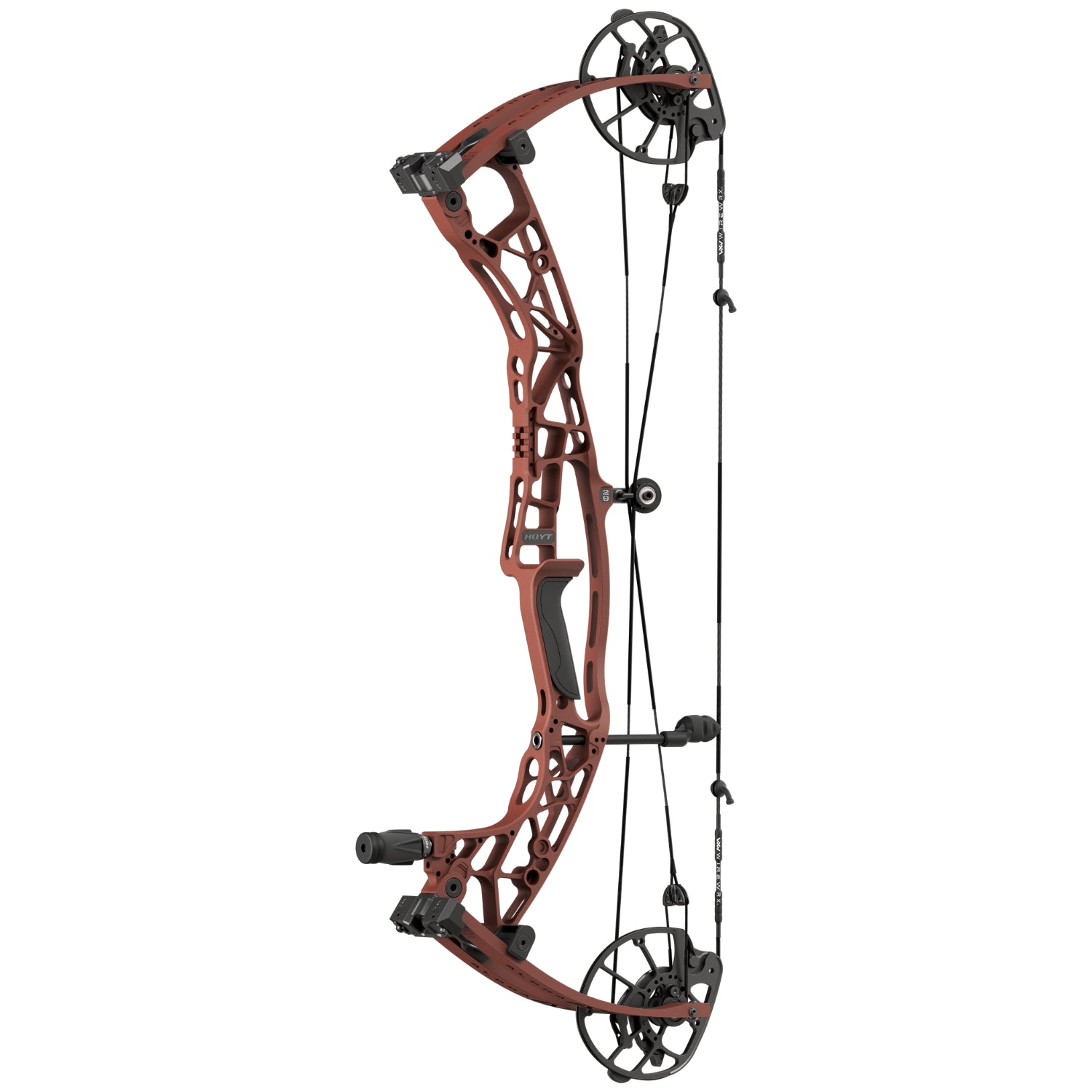
Hoyt's 2026 aluminum flagship comes in four versions; the AX-3 29 is the compact one, and it may be the most complete tuning package Hoyt has ever shipped. The new XTS Tuning System corrects both horizontal and vertical tears without a press — a first for Hoyt, whose shim-based tuning already led the industry — on what the company claims is the stiffest riser on the market. Bowhunter magazine measured it among the quietest, most vibration-free bows it has tested, crediting the In-Line accessory system that bolts sights and rests directly to the riser. It rates 340 fps ATA with the HBX Gen 4 cam's quarter-inch draw-length adjustments. ArcheryTalk head-to-heads against the Mathews ARC 30 read like a coin flip: Mathews usually wins draw feel, while the Hoyt wins the hold ("dead steady, minimal pin float"), quietness, and tuning system. The knocks: 4.4 pounds bare is nearly half a pound over the ARC 30, draw length tops out at 30 inches so longer-draw shooters need the AX-3 33, the flat Hoyt grip stays polarizing, and $1,399 is real money. The lone verified Scheels review so far is five stars.
Darton Archery
Darton TriTech 33
Darton doesn't advertise much, but the Michigan company that invented cam systems half the industry licenses builds arguably the best-value flagship in archery. The TriTech 33 is the middle of Darton's 2026 flagship trio (31/33/35), pairing the BBS dual-sync cam with three patent-pending tuning systems: Perfect Tune adjustable limb pockets, Perfect Timing yoke hangers, and a dual-function micro-adjust roller guard that moves arrow flight without a press. Uniquely, Darton publishes actual measured speeds rather than optimistic IBO math — 334–335 fps standard, 339–341 fps with the included speed mod — and ArcheryTalk chrono threads consistently back the numbers up, with owners calling it "the smoothest drawing 70 lb bow I've had." At $1,349 it undercuts a Mathews ARC 30 or Hoyt Alpha AX-3 by $100–$300 while giving up nothing in tunability. The catches: 4.6 pounds bare is portly, the dealer network is thin so test-drives are hard to arrange, resale values trail the big brands, and the styling is more machine shop than marketing department. For shooters who care about engineering over badge, it is the sleeper pick of 2026.
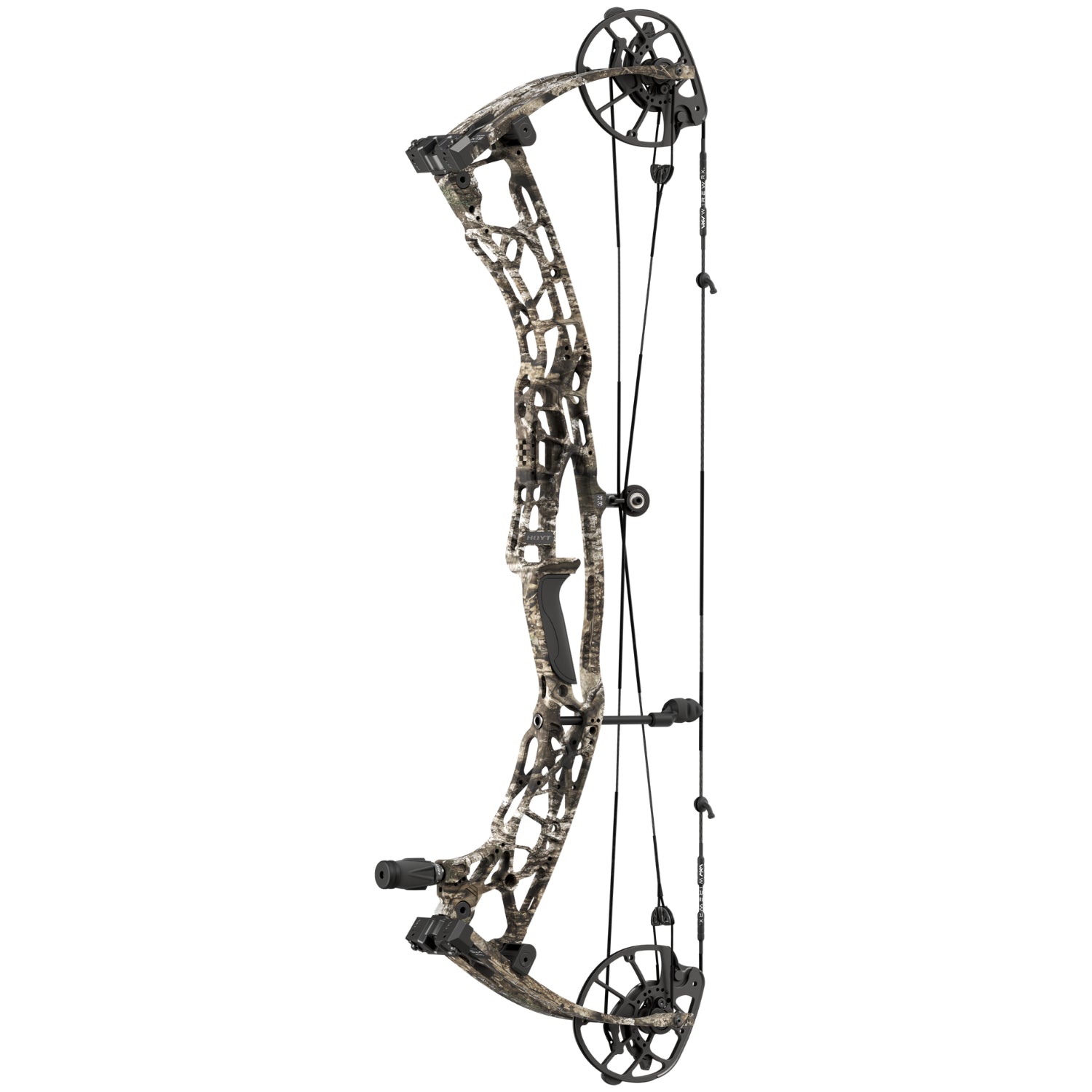
The aluminum Alpha AX-3 33 was the quiet overachiever of 2026: runner-up in Outdoor Life's bow test at 20.2 points, where it posted the best back wall of any bow (4.6/5) and the only unanimous 5/5 grip score — testers' favorite grip, hands down. Groups averaged 3.64" at 50 yards, just behind the Mathews ARC 34. The HBX Gen 4 cam draws with less perceived weight up front, and you can adjust back-wall feel and letoff; one tester's 73-lb bow 'drew like silk.' The honest knocks from ArcheryTalk and Field & Stream: there's a bigger hump into the break-over than the Mathews, and some shooters feel a bit of jump and vibration at the shot, so it's not the deadest bow here. It also weighs a legitimate 4.75 lb on Hoyt's own spec sheet — heavier than early press materials suggested — and the price crept from a $1,499 launch MSRP to $1,599 on Hoyt's site mid-year. It shares the RX-10's XTS press-free tuning at $550 less, which is exactly why a lot of Hoyt guys are skipping carbon this year.