Mathews
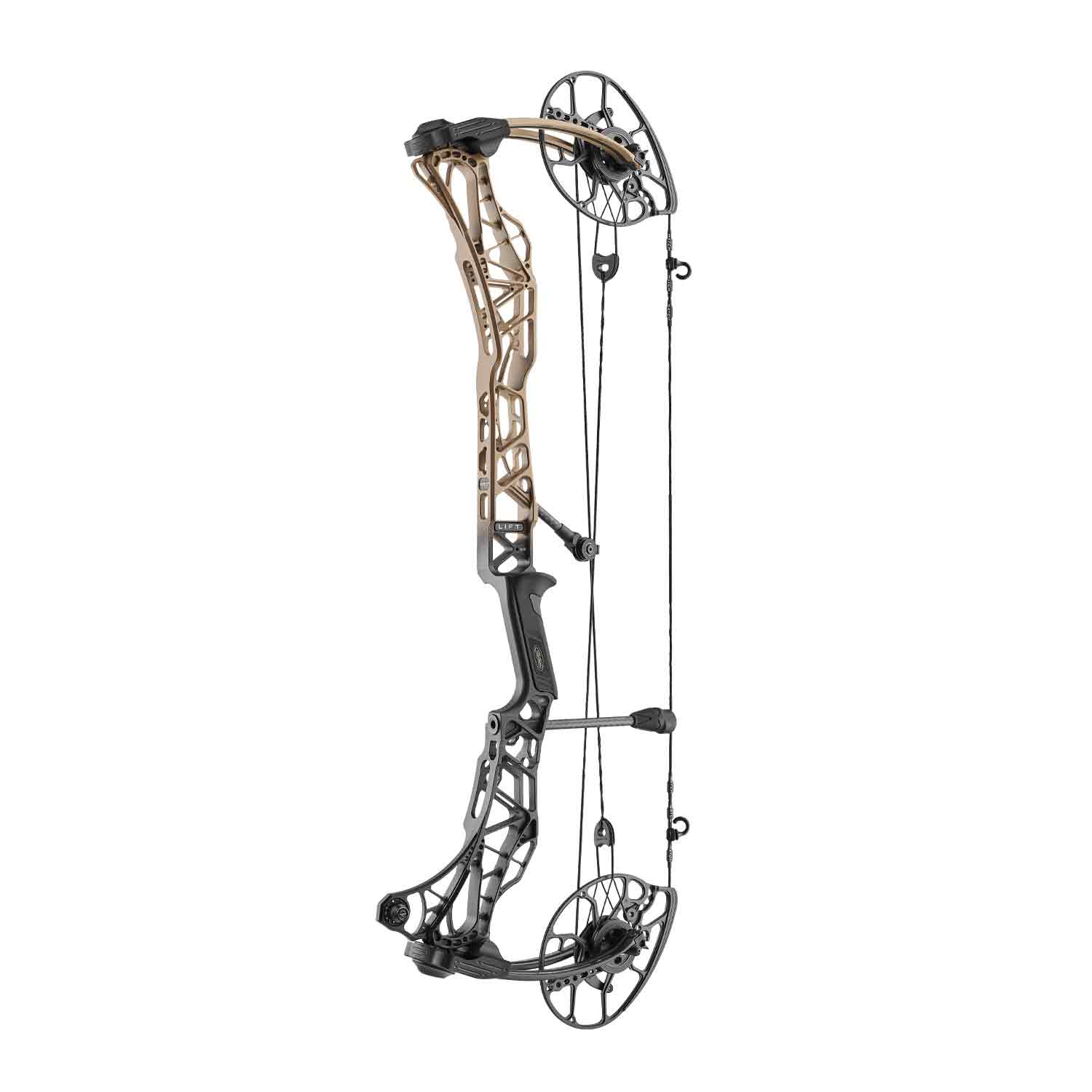
Mathews Lift X 29.5
Mathews' 2025 flagship is still on dealer racks, and now that the ARC series has replaced it, closeout pricing makes it the sleeper buy of this list — Scheels has it at $1,099, down from $1,299. On paper it's the athlete of the group: 3.99 lb bare, 348 fps IBO (the fastest-rated Mathews here), and a compact 29.5" ATA that's a treestand and blind favorite. Field & Stream measured it among the quietest bows they've tested at 67.5 dB and found it the most accurate bow in their test from 20–40 yards, and owners echo the dead-in-the-hand shot. The honest caveat is the draw: the SWX cam holds near max weight late in the cycle before dropping into a short valley, and ArcheryTalk draw-force-curve threads confirm it's more aggressive than the marketing suggests — the ARC exists partly to fix that. Limb Shift Technology handles cam-lean tuning with a wrench, no press, and the BOND grip is swappable if the stock feel isn't yours. If the price-per-performance math matters more than having the newest cam, this is the value play.
Specifications
Highlights
Pros
- ✓Lightest bow in this group at 3.99 lb bare
- ✓Field & Stream's most accurate bow from 20–40 yards in its test year
- ✓Measured 67.5 dB — among the quietest flagships ever tested
- ✓Dead in the hand with essentially no post-shot vibration
- ✓Closeout pricing: ~$200+ under original street, far under 2026 flagships
- ✓Press-free Limb Shift micro-tuning
- ✓Compact 29.5" ATA excels in blinds and treestands
Cons
- ✗Aggressive cycle — holds near peak weight late, then a short valley
- ✗6" brace height is less forgiving than the ARC 34's 6.5"
- ✗SwitchWeight X mods cost extra any time your draw weight or letoff changes
- ✗Discontinued for 2026 — colors, dexterity, and mod availability will shrink
- ✗Only 2 customer reviews at the rating source — thin sample
Owner Insightssummarized from ArcheryTalk, Reddit, and owner reviews
The Lift X was Mathews' 2025 flagship, and now that the ARC series has replaced it, it's become the sleeper buy of the flagship tier — closeout pricing around $1,099 for a bow that Field & Stream measured as one of the quietest they'd ever tested and the most accurate in their evaluation from 20 to 40 yards. It also has the most Reddit and forum discussion of any bow in this group by a wide margin, because Mathews is the default flagship brand and the Lift platform was everywhere for two seasons. The consensus that emerged: phenomenal shot, polarizing draw.
Start with what nobody disputes. At 3.99 lb bare it's genuinely light, the shot is a dead-in-hand dull thump with zero hand shock, and the back wall is rock solid. Limb Shift tuning — the feature that separates the X from the original Lift — fixes cam lean with a hex wrench and no press. The controversy is the SWX cam's cycle: draw-force-curve threads on ArcheryTalk confirmed it builds fast and holds near peak weight late, then drops into a thin valley where the slightest creep sends the string. The Lift vs Lift X threads are also worth knowing: owners of both say they feel nearly identical, so the X's case rests on Limb Shift — worth it if you tinker, skippable if your shop does your tuning.
This is the pick for treestand and blind hunters who want a proven, light, quiet flagship at a real discount and can live with an aggressive draw — try one at the shop first if you're creep-prone. Against the 2026 field it's a value argument: $200 under the Elite Varos and Bear Redeem for comparable accuracy pedigree at nearly a pound less mass, with the caveat that the Varos is far more forgiving to draw and tune. It's dealer-only like every Mathews, mods are a per-combo expense, and left-hand and niche finishes are selling through — if you want one, the window is closing.
What owners like
- +3.99 lb bare — the lightest flagship of its generation, and the difference is obvious the moment you pick one up
- +Field & Stream measured it at 67.5 dB — among the quietest bows they'd ever tested — and named it the most accurate in their test from 20–40 yards
- +Zero hand shock; owners describe the shot as a dull thump and nothing else
- +The back wall is genuinely solid — even the draw-cycle skeptics concede that
- +Limb Shift tuning corrects cam lean with a hex wrench, no press — the whole reason the X exists
- +Closeout pricing around $1,099 now that the ARC series replaced it — flagship performance for under-2026 money
- +Compact 29.5" ATA is a treestand, saddle, and blind favorite
- +348 fps IBO — the fastest-rated Mathews of its year
Common complaints
- −The draw is more aggressive than the marketing suggests — it builds early and holds near peak weight late in the cycle, and ArcheryTalk draw-force-curve threads back that up with data
- −Thin valley: creep a hair and the bow wants to take off on you
- −The 6" brace height is less forgiving than the ARC 34's 6.5"
- −SwitchWeight X economics sting — every draw weight/letoff combination is a separate mod purchase
- −Dealer-only, and closeout stock in some finishes and left-hand models is thinning
- −Discontinued for 2026, so mod and parts availability will only shrink from here
- −Owners who shot both say the Lift X feels nearly identical to the original Lift, so the X premium really buys you Limb Shift tuning and little else
Common Questions
What's actually different between the Lift X and the original Lift?
What draw length and weight range does the Lift X 29.5 cover?
Is the Lift X draw cycle really that harsh?
Is buying a discontinued flagship a mistake?
Lift X 29.5 vs the Elite Varos — which one?
How good is it for treestand hunting specifically?
Compare the Mathews Lift X 29.5
Related bows
More from Mathews →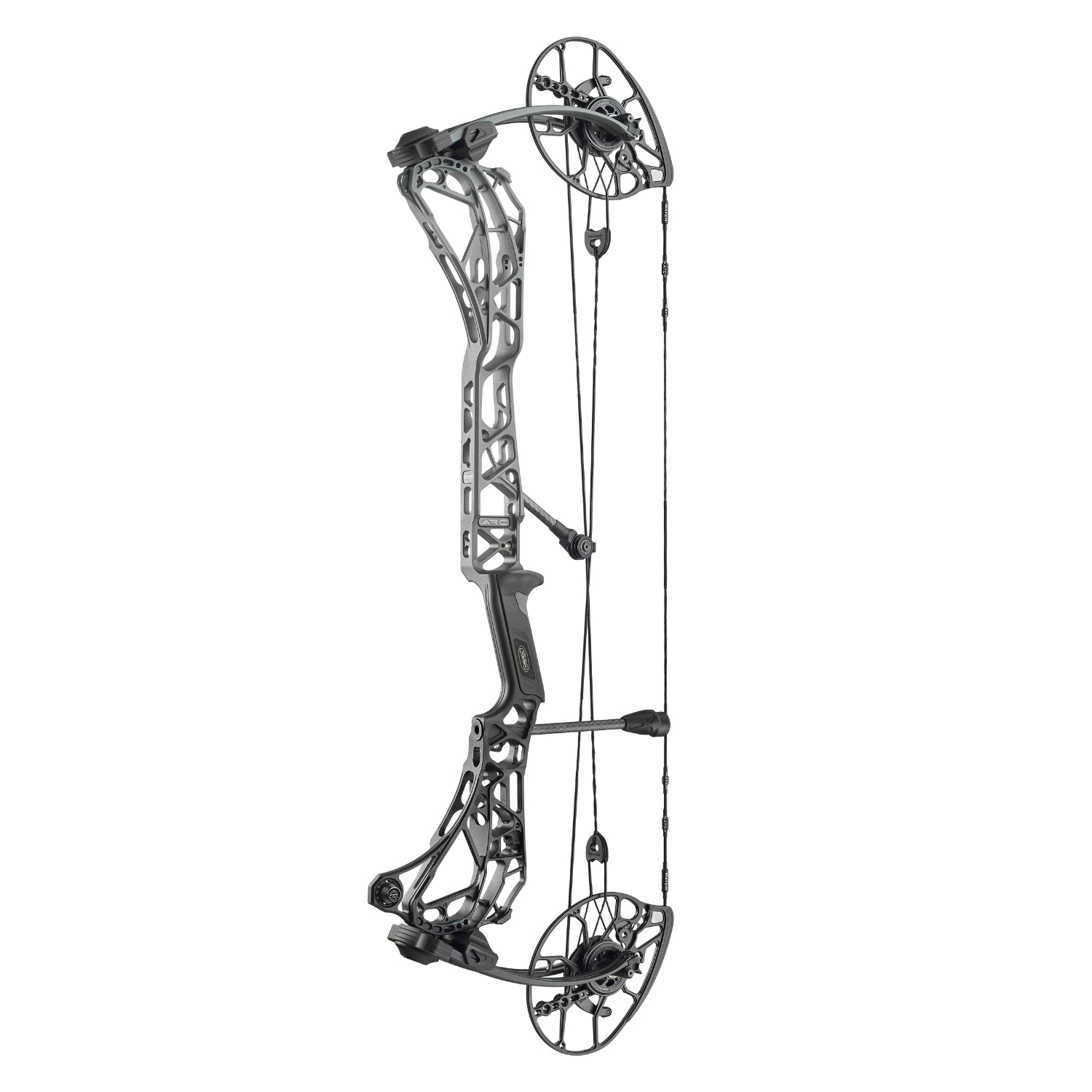
Mathews
Mathews ARC 30
The ARC 30 headlines Mathews' 2026 lineup alongside the ARC 34, and it is the fastest short hunting bow Mathews has built: 348 fps IBO from a 30-inch, sub-four-pound aluminum chassis. The SWX-2 cam adds Perimeter Weight Technology to keep felt recoil down once accessories go on, and Field & Stream chronographed 328 fps with a 350-grain arrow at 30 inches and 70 pounds — real speed, independently verified. Optional Z mods trade speed for a noticeably softer cycle. Community reception is more divided than a typical Mathews launch; an ArcheryTalk thread literally titled "Is the ARC really that bad??" captures the mood. Fans call it the most pleasant-drawing Switchweight Mathews yet, while detractors find the back wall aggressive and report shakier pin float than on a Hoyt AX-3, and $1,459 continues Mathews' steady price creep. Owner head-to-heads against the AX-3 29 usually give Mathews the draw feel and Hoyt the hold, quietness, and tuning system. Dealer-only distribution means no online discounts, but Switchweight mods (55–80 lb) and a 25–30.5-inch draw range make it easy to configure. For whitetail rigs where compactness and speed rule, it remains the benchmark.
Mathews
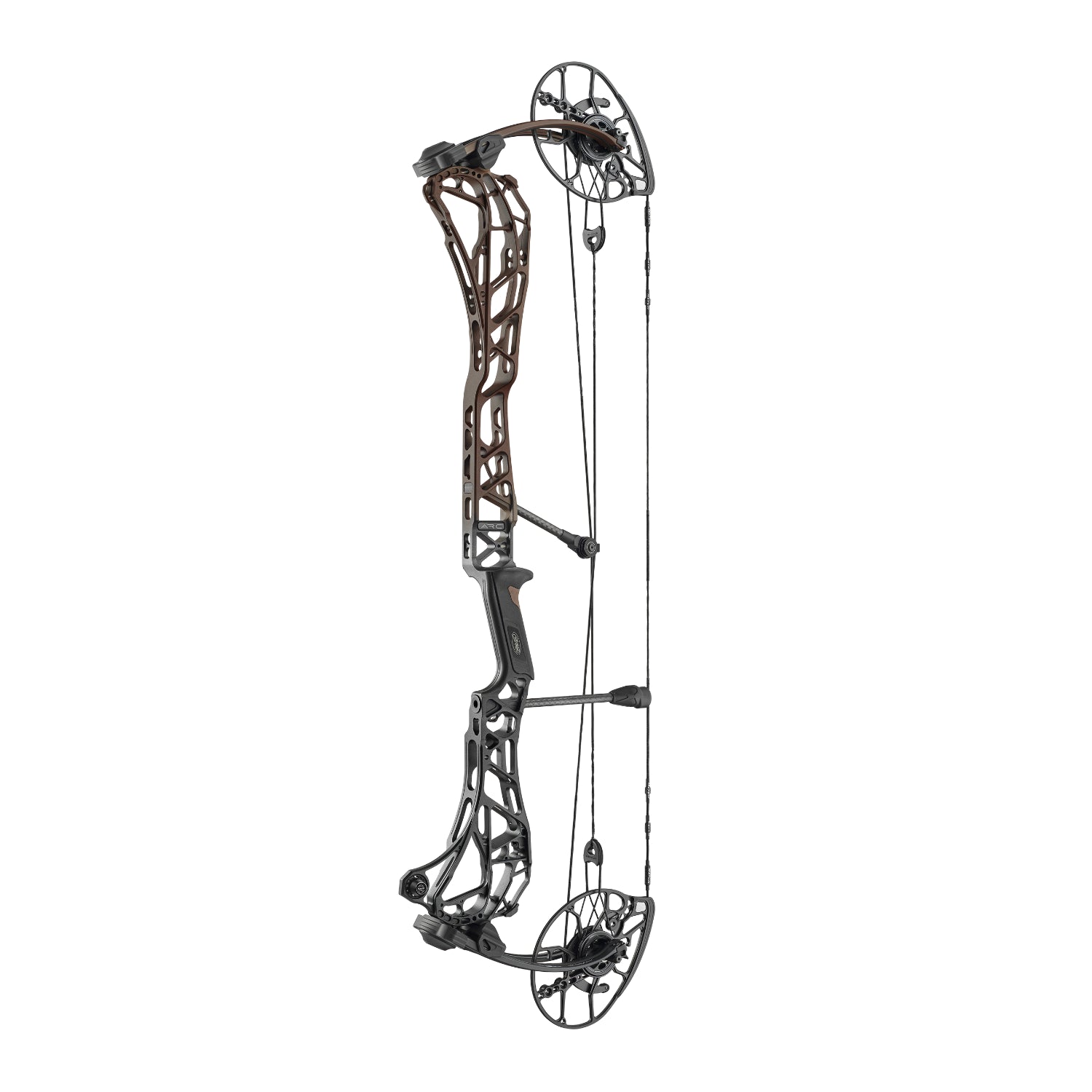
Mathews ARC 34
Mathews retired the Lift X line for 2026, and the ARC 34 is the new flagship — in Outdoor Life's 2026 test it earned the only unanimous 5/5 draw-cycle score, with testers calling it smooth as butter. That matches about half of ArcheryTalk; the other half found the first third of the draw stiff and the bow a bit jumpy off the back wall, because the valley is short and you have to keep steady pressure into the stops. The new SWX-2 cam carries perimeter weights, and mod choice matters: standard SWX mods chrono'd 289 fps in OL's 28.5"/62.5-lb rig, while the smoother SWX-Z mods gave up about 5 fps. It aims rock-steady for a 4.3-lb bow, tunes in minutes with press-free Limb Shift adjustment, and is typically Mathews-quiet and dead in the hand after the shot. The knocks: the grip remains polarizing ("the grip still hates me" is live-thread sentiment), and its 3.56" 50-yard groups trailed the Elite Varos' 2.79". At $1,469 it undercuts carbon rivals by several hundred dollars while giving up little.
Elite Archery
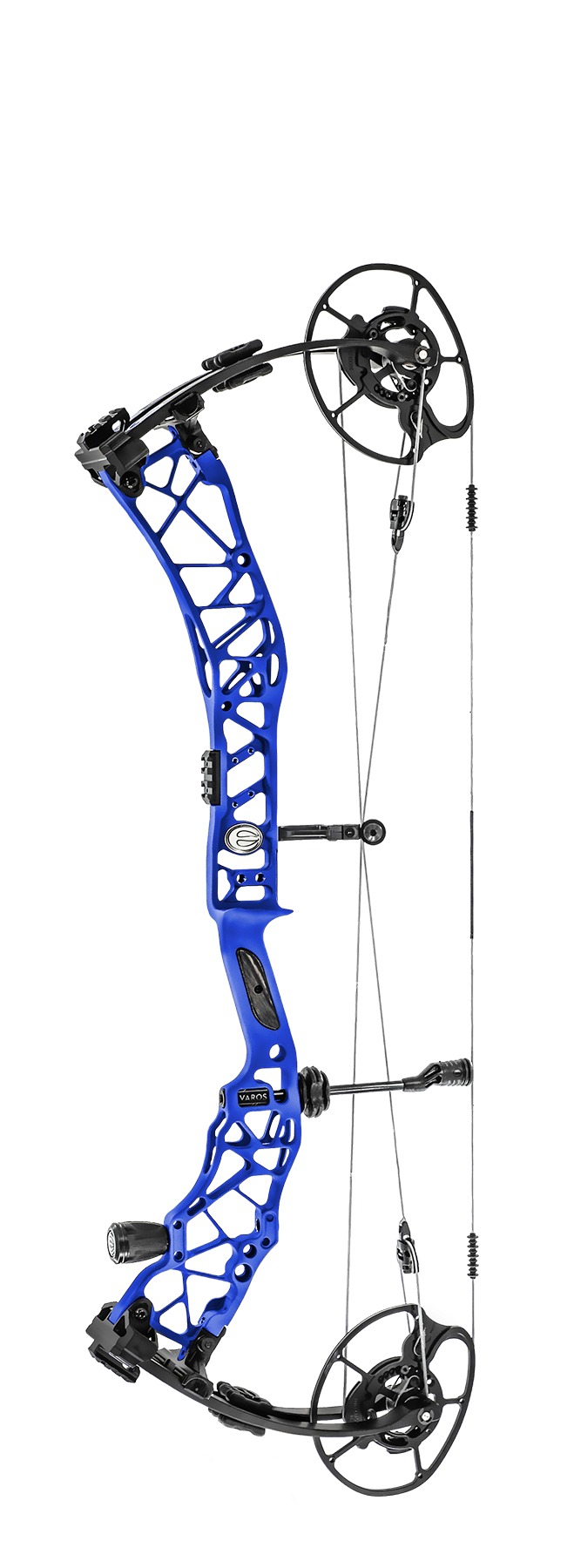
Elite Varos
The Varos is Outdoor Life's 2026 Bow of the Year, and it won on the metric that matters: accuracy. The three-shooter test team averaged 2.79" groups at 50 yards — best of the field — and in the 30-arrow shoot-off its groups ran 0.6" smaller than the Mathews ARC 34 and Hoyt AX-3 33. It also took a perfect 5/5 for post-shot behavior (dead quiet, dead still) and 5/5 for features, thanks to the new Micro Splitters that adjust cam timing with a screw turn — no press — on top of Elite's S.E.T. limb-pocket tuning. The SP2 cam runs up to 90% letoff with a meaty 7.8-lb holding weight that helps it pin on target. Owners on Elite's site (18 reviews, all 5-star) echo the 'bullet holes out of the box' story. Real knocks: at 4.75 lb it's the heaviest bow here, the transition into the valley is abrupt enough that OL scored the draw cycle just 3/5, the grip is slick (testers added tape), and 285.8 fps in standardized testing means it's no speed bow. At $1,299 it's the cheapest flagship in this group — the value is genuinely absurd.
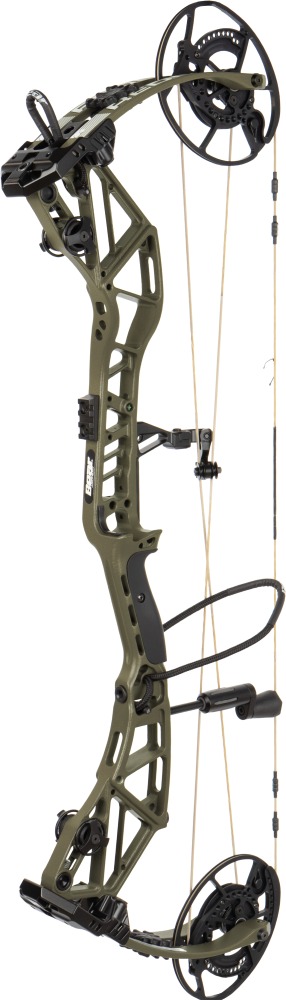
Bear Archery
Bear Redeem
The Redeem replaces the Persist 33 as Bear's 2026 flagship, and it is the brand's most serious run yet at the Mathews/Hoyt tier: a 30-inch, 340 fps IBO platform with the EKO2 cam, a diagonally pivoting roller cable guide that ArcheryTalk owners credit for a genuinely buttery draw, and QPC quad-pocket rockers that micro-adjust limb loading for tuning. Reviewers at Grand View Outdoors and Bowhunter Planet found it exceptionally stable for a 30-inch bow, holding well even in wind. The honest problems: at a measured 4.89 pounds bare it is the heaviest bow in its class — nearly a full pound over an ARC 30 — Grand View noted buzz in the grip and string twang out of the box, and the recurring ArcheryTalk gripe is that at $1,299 Bear priced it "almost as much as a Lift" when the brand's traditional edge was value. Draw weight comes in adjustable 45–60 and 55–70 lb ranges rather than discrete peak weights, which suits shooters who de-tune or build up more than 80-pound speed chasers. It is USA-made, with Bear's typically excellent factory grip.
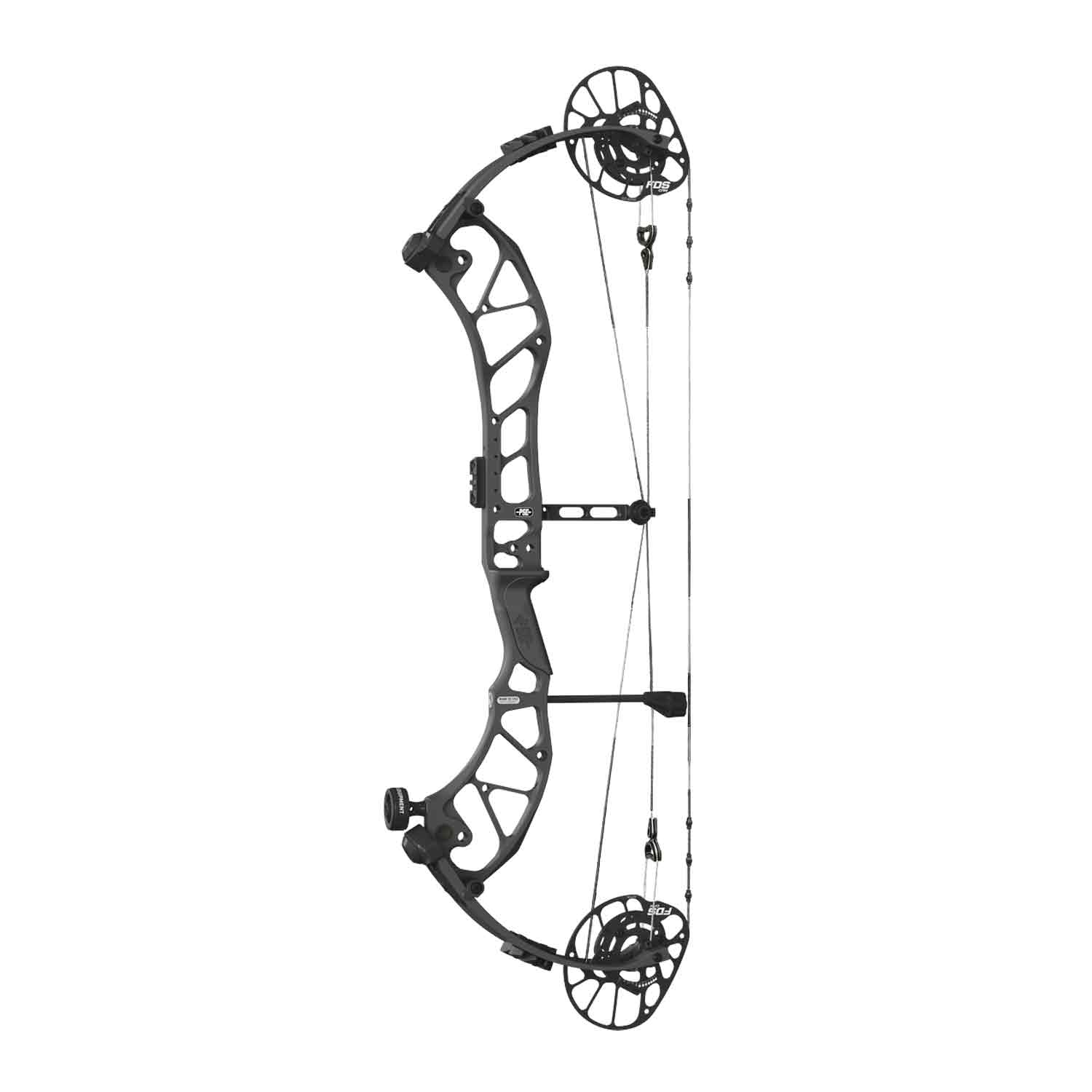
For 2026 PSE pushed the entire Mach flagship family to carbon (the Mach 34 is gone, succeeded by the carbon Mach 33 and 35 DS) and left one aluminum bow carrying the new FDS cam: the Decree FDS. That makes it the value play in PSE's premium line — the same 347 fps IBO cam system as the $1,800-plus carbon Machs, on a 31.5-inch machined riser for $1,299. The FDS cam adds roughly 10 fps over the 2025 Decree's EC2 while gaining effective brace height, and the platform picked up accuracy honors in Outdoor Life's bow testing. Real-world chronographs run about 282 fps with a 465-grain arrow at 28.5 inches and 70 pounds. Community reception of the Decree line is genuinely mixed on ArcheryTalk: fans call it unbelievably fast, stable, and easy to tune; critics call 4.65 pounds porky for its length, miss a 50-pound limb option (FDS runs 60/70/80 only), and felt the revived "Decree" name promised more than an aluminum mid-flagship. The 70–85% adjustable let-off and Full Draw Stability riser geometry hold well on target. If you want PSE's flagship shot without carbon prices, this is the only door in.
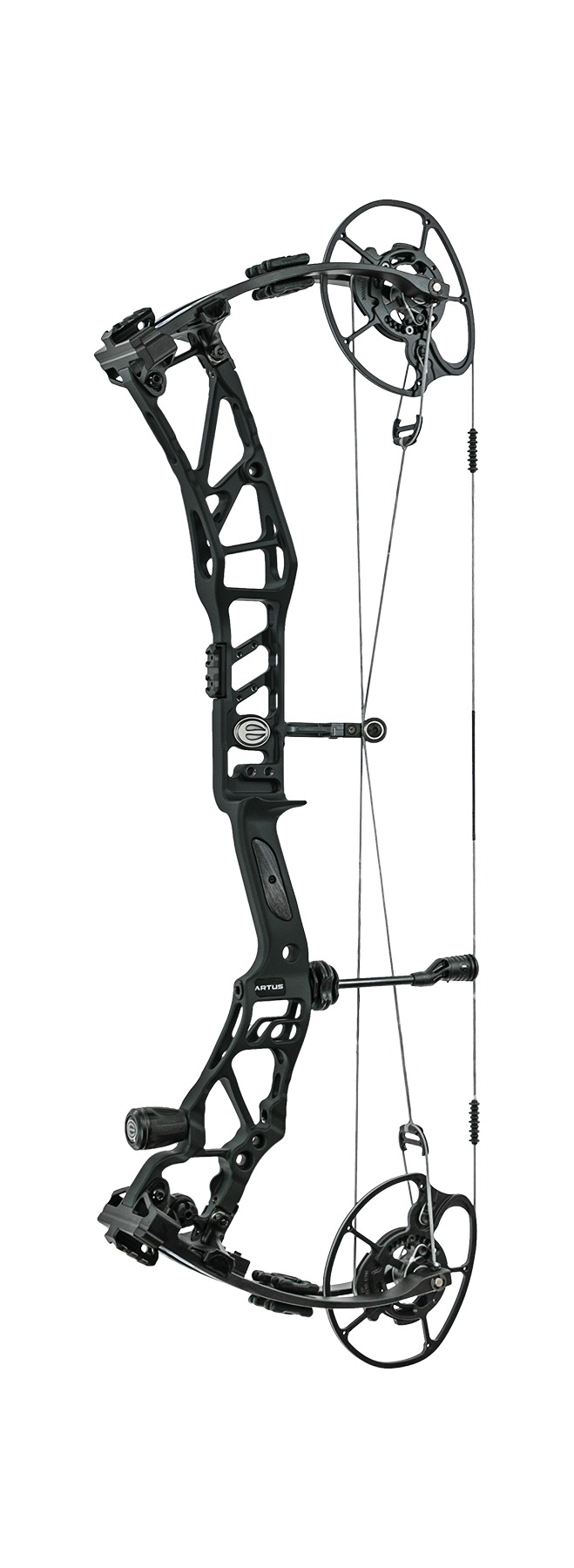
Elite Archery
Elite Artus
With the Varos taking over as Elite's 2026 flagship, the Artus slots in as the brand's second hunting bow — the previous-generation compact flagship that stays in the line at $1,299. Its pitch is pure shootability: a huge 6.875-inch brace height, up to 90 percent let-off, and Elite's S.E.T. system that tunes left/right impact by pivoting the limb pockets with an Allen key — no press, no shims. The result is a 30-inch bow that owners on ArcheryTalk swear "holds like a 33–35-inch bow," and the 13 customer reviews on Elite's site run a perfect 5.0. With VX performance mods it rates 340 fps IBO, though standard mods give up speed, and real-world numbers land in the mid-280s with hunting arrows. The community's one loud complaint is mass: 4.7 pounds bare gets called "absurdly heavy for a short bow," with critics saying Elite risers need a half-pound diet to keep pace with Mathews. It is also an awkward buy new — the newer Varos costs the same — but as a forgiving, dead-in-hand whitetail bow with the biggest brace height in its class, the Artus still earns its spot.