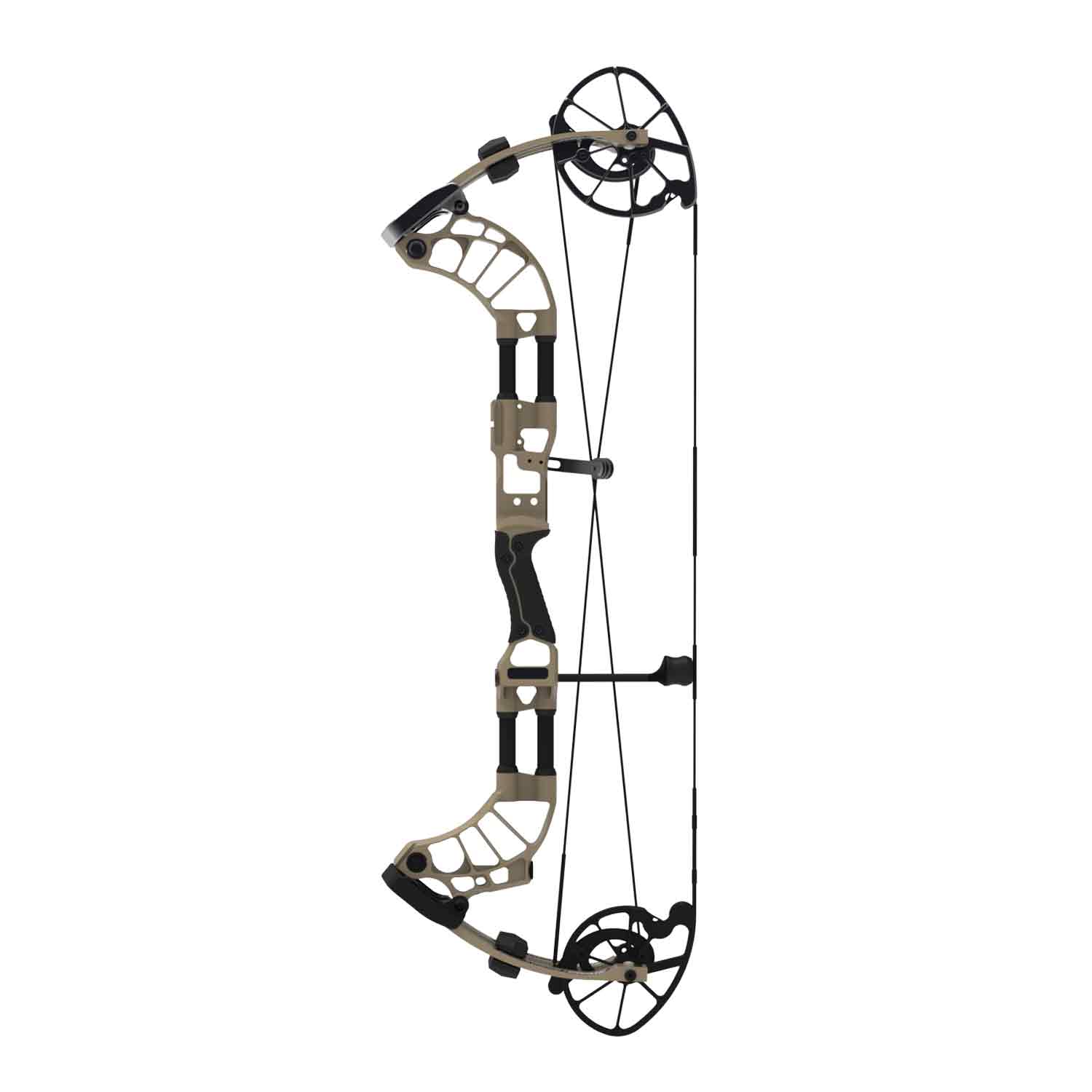
Prime Archery
Prime Divide 33
Prime's 2026 flagship isn't one bow, it's a menu: the Divide comes in 31, 33, 35, and 37" axle-to-axle lengths, each with a 6" or 7" brace-height option and standard or performance mods — eight hunting configurations before you pick a color. The 33/6 profiled here is the volume pick at 339 fps and 4.1 lb. The Divide keeps what Prime loyalists buy the brand for: the Center Grip riser puts your hand at the balance point, and reviewers (Rokslide, Field & Stream) consistently rank it among the steadiest-aiming, most accurate hunting bows made, with a Core Cam draw so smooth that even PSE Sicario reviewers use 'almost as smooth as the Prime core cam' as the benchmark. New Quik Tune tech shifts the cam laterally without pulling axles, and the Nano-Grip's aerogel core genuinely stays warmer in cold stands. ArcheryTalk sentiment is warm — 'the first bow from any manufacturer to get me to think of upgrading' — with grumbles: the price jumped to $1,699 (Prime historically undercut the big two), 339 fps is modest, early owners needed Prime's special shim tool for cam-spacing changes, and the dealer network is thinner than Mathews' or Hoyt's. Registration gets you free strings for life, which no rival matches.
Specifications
Highlights
Pros
- ✓Center Grip riser aims and holds like a target bow — repeatedly the steadiest in reviews
- ✓Core Cam draw cycle is the smoothness benchmark other brands get compared to
- ✓Eight ATA/brace configurations — the most buyer choice of any 2026 flagship
- ✓Quik Tune lateral cam adjustment without pulling axles
- ✓AST carbon-reinforced riser keeps a 33" bow at 4.1 lb
- ✓Nano-Grip with aerogel stays warm in cold weather
- ✓Free strings and cables for life with registration — unique among flagships
- ✓Draw-length-specific mods keep efficiency high at short and long draws
Cons
- ✗Price jumped to $1,699 — Prime used to be the value alternative to Mathews/Hoyt
- ✗339 fps IBO is modest; performance mods only add 7–9 fps
- ✗Cam spacing changes require Prime's dedicated shim tool
- ✗Dealer network is noticeably smaller than the big brands
- ✗No visible customer ratings yet at major retailers
Owner Insightssummarized from ArcheryTalk, Reddit, and owner reviews
Honest note first: Prime generates a fraction of the forum traffic Mathews and Hoyt do, so the picture here comes from a handful of substantive ArcheryTalk threads plus consistent reviewer testing (Field & Stream, Rokslide) rather than hundreds of owner reports. What discussion exists is unusually warm. The Divide isn't one bow, it's a menu — 31, 33, 35, and 37-inch axle-to-axle lengths, each with a 6- or 7-inch brace option — and the ArcheryTalk reaction to that flexibility was essentially 'no other manufacturer is providing this level of options.' One thread title says it all: 'What am I missing with the Prime Divide?' — and the answers were mostly people talking themselves into one. The 33/6 profiled here is the volume pick at 339 fps and 4.1 lb.
The shooting experience is what Prime loyalists have always bought: the Center Grip riser puts your hand at the bow's balance point, and reviewers consistently rank the Divide among the steadiest-aiming, most accurate hunting bows made. The Core Cam draw cycle is the industry's smoothness benchmark — literally; reviewers of rival bows use 'almost as smooth as the Prime core cam' as praise. New Quik Tune tech shifts the cam laterally without pulling axles, though cam-spacing changes still want Prime's special shim tool, a sore spot with early owners. The Nano-Grip's aerogel core measurably stays warmer in cold weather, and fit and finish draw no complaints.
This is the bow for shooters who value dead-steady aiming and a silky draw over raw speed, and who want to dial ATA and brace height to their exact style. The grumbles are real, though: at $1,699 Prime abandoned its traditional price advantage — it now costs more than a Mathews ARC 34 ($1,469) or Hoyt Alpha AX-3 33 ($1,599) while giving up 4–15 fps to Mathews — and the dealer network is meaningfully smaller than the big two's, so find a shop before you fall in love. The counterweight nobody else offers: register the bow and Prime sends you free strings and cables for life.
What owners like
- +Center Grip riser puts your hand at the balance point — reviewers repeatedly rank it the steadiest-aiming hunting bow made
- +The Core Cam draw is the smoothness benchmark other brands get measured against — even PSE Sicario reviewers use 'almost as smooth as the Prime core cam' as the compliment
- +Eight hunting configurations before you pick a color: 31/33/35/37-inch ATA, each with a 6- or 7-inch brace option
- +Quik Tune shifts the cam laterally without pulling axles
- +Free strings and cables for life with registration — no rival flagship matches that
- +Nano-Grip's aerogel core genuinely stays warmer in cold stands
- +AST carbon-reinforced riser keeps a 33-inch bow at 4.1 lb
- +Draw-length-specific mods keep efficiency high at short and long draws alike
Common complaints
- −Price jumped to $1,699 — Prime historically undercut Mathews and Hoyt, and longtime fans grumble about losing the value angle
- −339 fps IBO is modest, and the performance mods only claw back 7–9 fps
- −Cam-spacing changes require Prime's dedicated shim tool, which annoyed early owners
- −Dealer network is noticeably thinner than Mathews' or Hoyt's — test-driving one takes effort
- −83% letoff standard (80% with performance mods) versus 85% on most rivals
- −Discussion volume is a fraction of what Mathews and Hoyt generate, so long-term owner data is thinner
- −No visible customer ratings at major retailers yet
Common Questions
What's the difference between the 6-inch and 7-inch brace versions?
Is the Prime Center Grip thing real or marketing?
Does the Divide need a press to tune?
Is the free-strings-for-life program legit?
How hard is it to find a Prime dealer?
Prime Divide 33 or Mathews ARC 34?
Compare the Prime Divide 33
Related bows
More from Prime Archery →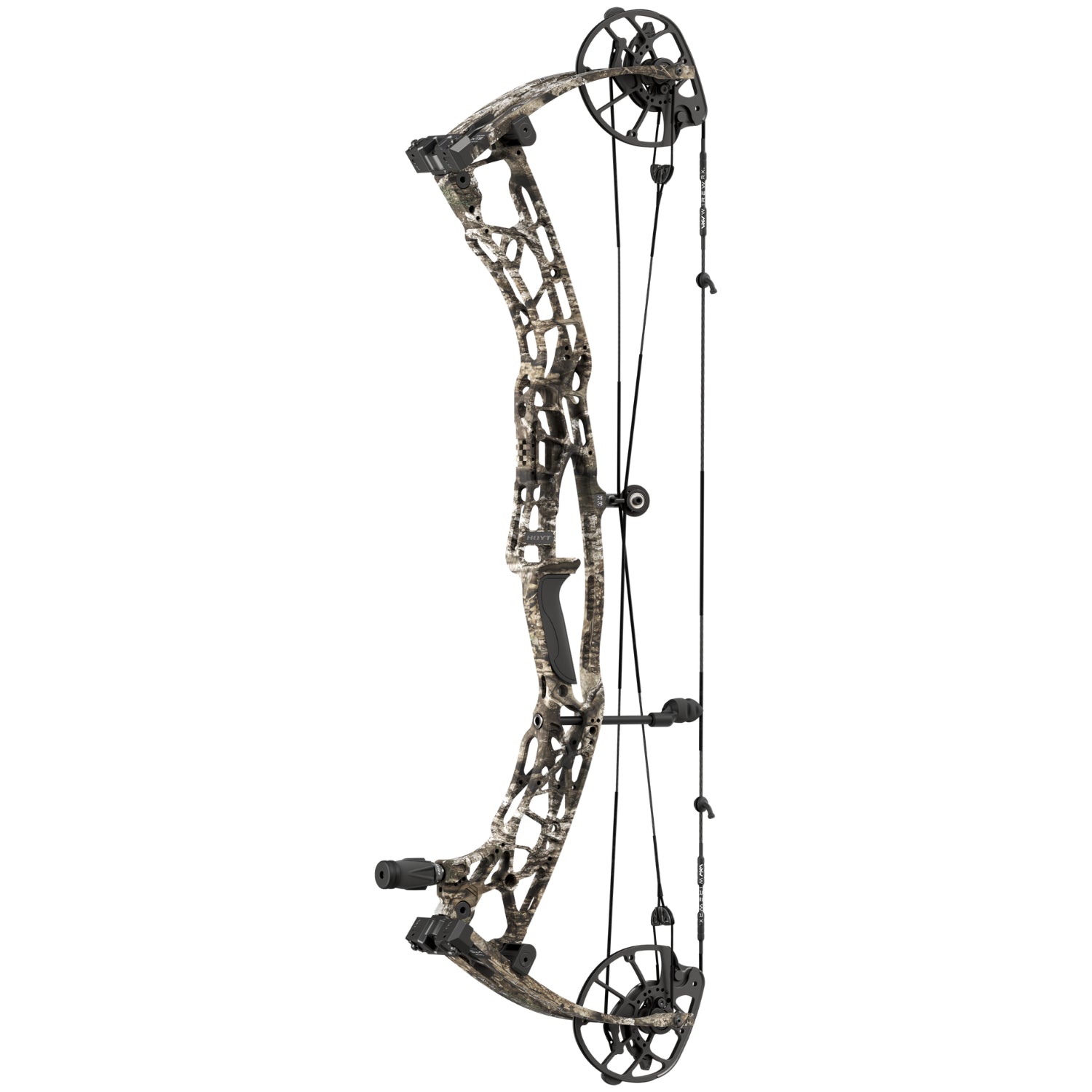
The aluminum Alpha AX-3 33 was the quiet overachiever of 2026: runner-up in Outdoor Life's bow test at 20.2 points, where it posted the best back wall of any bow (4.6/5) and the only unanimous 5/5 grip score — testers' favorite grip, hands down. Groups averaged 3.64" at 50 yards, just behind the Mathews ARC 34. The HBX Gen 4 cam draws with less perceived weight up front, and you can adjust back-wall feel and letoff; one tester's 73-lb bow 'drew like silk.' The honest knocks from ArcheryTalk and Field & Stream: there's a bigger hump into the break-over than the Mathews, and some shooters feel a bit of jump and vibration at the shot, so it's not the deadest bow here. It also weighs a legitimate 4.75 lb on Hoyt's own spec sheet — heavier than early press materials suggested — and the price crept from a $1,499 launch MSRP to $1,599 on Hoyt's site mid-year. It shares the RX-10's XTS press-free tuning at $550 less, which is exactly why a lot of Hoyt guys are skipping carbon this year.
Xpedition Archery
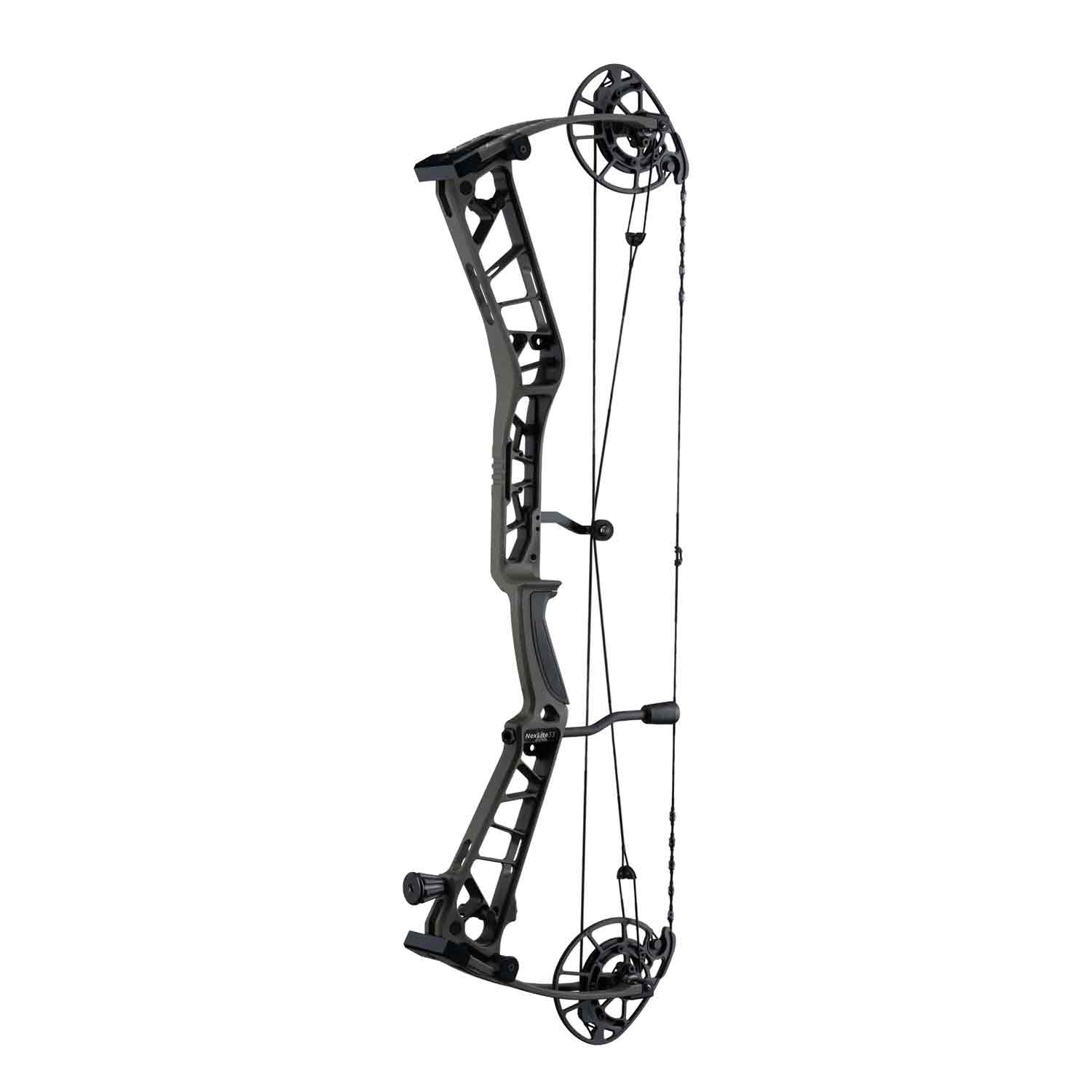
Xpedition NexLite 33
Xpedition has always built stiff, dead-in-hand risers; the problems were tuning them and finding a dealer. The 2026 NexLite 33, the brand's new flagship, attacks the first complaint head-on. Its Nano Ceramic Magnite riser drops the bow to a class-lightest 3.75 pounds — the lightest bow in Field & Stream's flagship test — while the new NXB cam adds quarter-inch draw-length adjustments and the XLok shim system lets you correct tears without a press, the exact missing feature ArcheryTalk shooters said kept them off previous Xpeditions. The 330 fps IBO rating is honest but modest; a Mathews ARC 30 or PSE Decree FDS is meaningfully faster on paper. At $1,599 it is the most expensive bow in this group, though longtime followers note Xpedition actually lowered pricing for 2026. The knocks: a featherweight bow holds less steadily in wind than 4.5-pound rivals until you add stabilizer weight back, the boutique dealer network makes try-before-you-buy difficult, and resale is soft. For mountain hunters counting ounces on multi-day pack-ins, nothing else in the flagship class matches the carry weight.
Bowtech
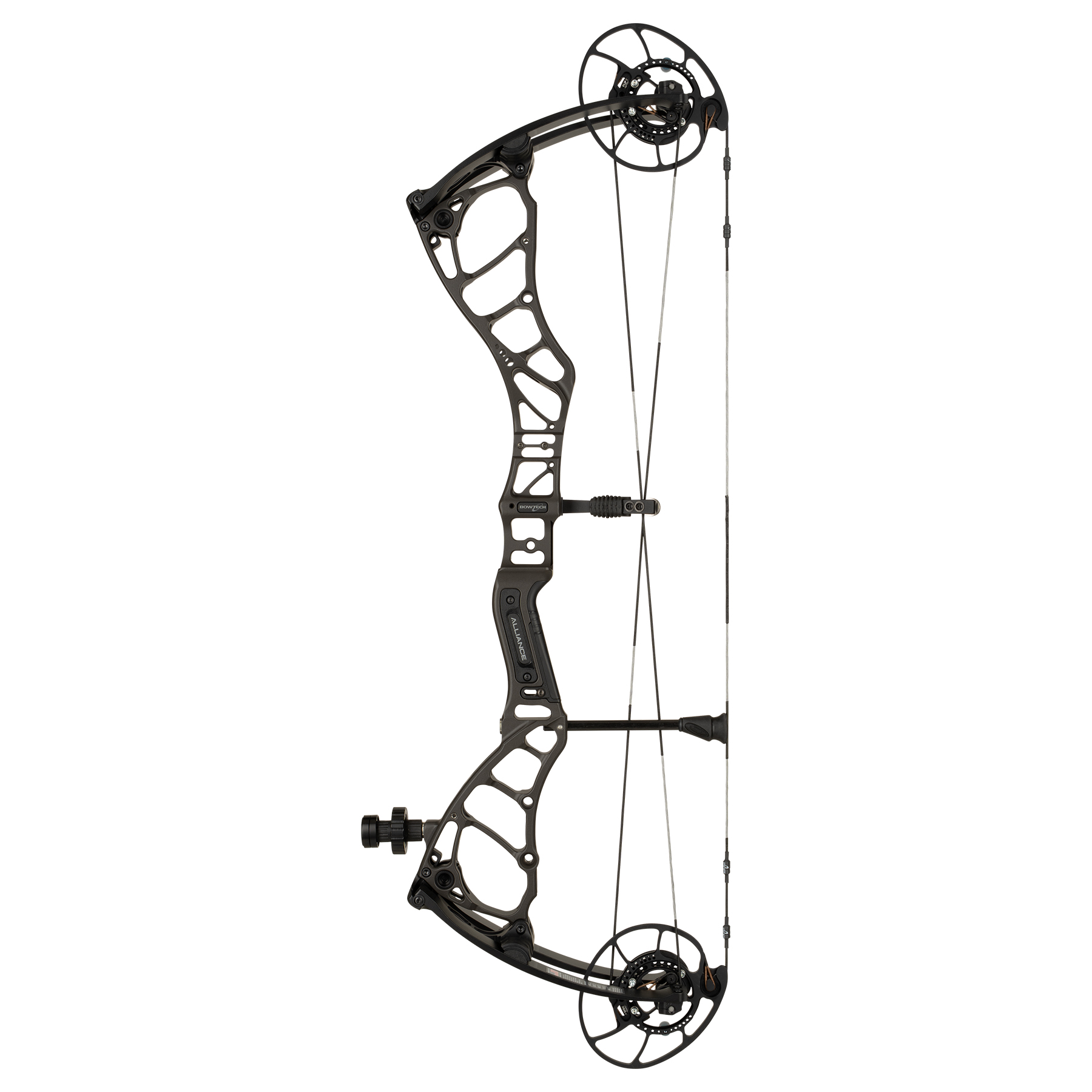
Bowtech Alliance
The Alliance is Bowtech's 2026 flagship and it won Best New Bow at the ATA Show — then Outdoor Life's test team scored it at the bottom of their seven-bow field (13.8 points), which tells you how split opinion is. The core idea is still Bowtech's best trick: DeadLock cams slide on the axle for press-free left/right tuning, now with bigger screws, finer clicks, and laser-etched reference marks that finally take the guesswork out, plus FlipDisc mods that flip between Comfort and Performance draw cycles. Fans (Archery Business, Born Hunting) call the Comfort setting silky smooth and say it's far more dead in the hand than the outgoing Proven; OL's testers hit it for a soft, spongy back wall and a thin, deep grip nobody liked — and at 280.5 fps it was the slowest bow they chrono'd. The truth is FlipDisc splits the personality: Comfort mode is soft everywhere, Performance mode firms the wall with the classic Bowtech dump. The adjustable GripLock angle helps some hands, and 4.09 lb is respectably light. A 33" Alliance 33 exists for stability-first shooters at the same $1,499.
Mathews
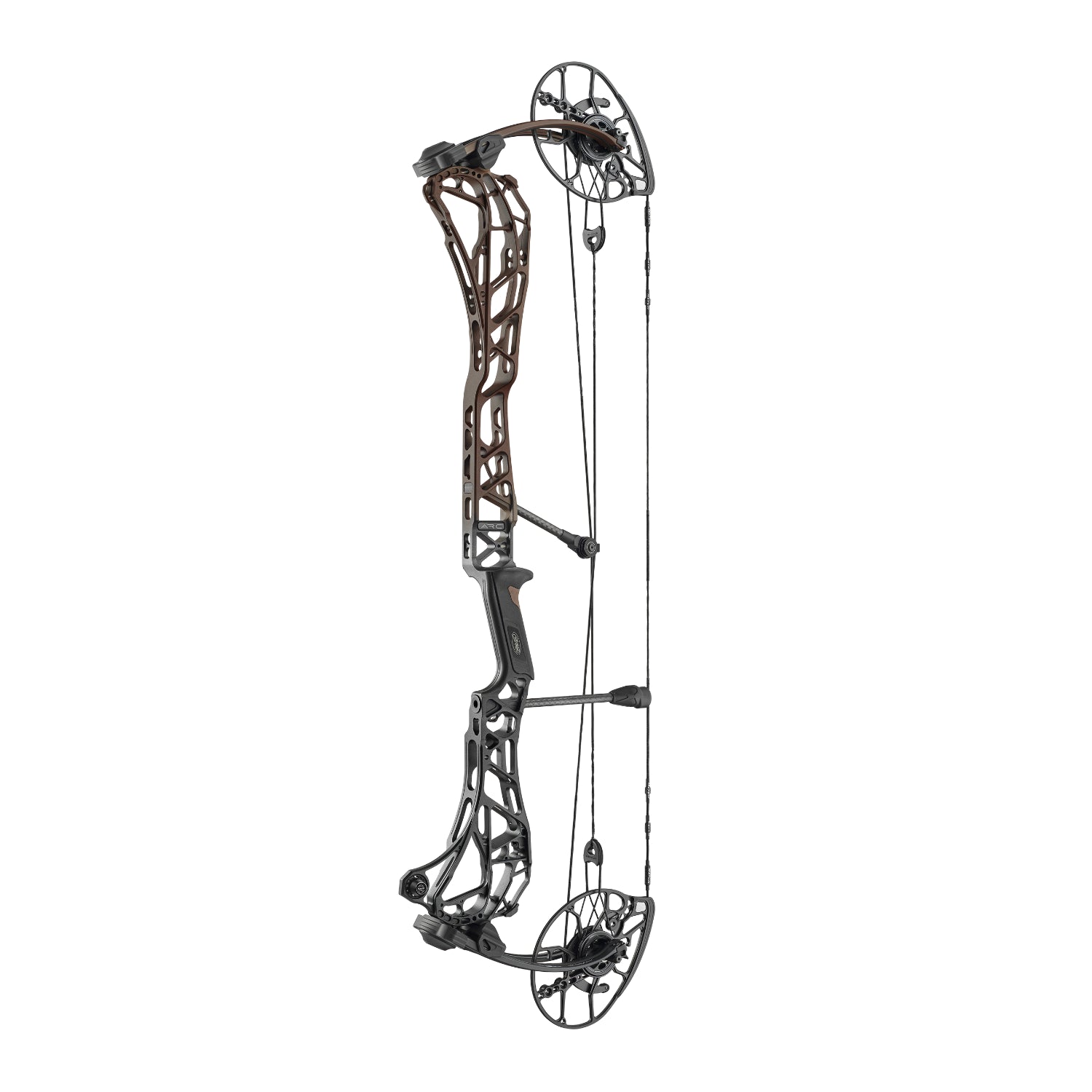
Mathews ARC 34
Mathews retired the Lift X line for 2026, and the ARC 34 is the new flagship — in Outdoor Life's 2026 test it earned the only unanimous 5/5 draw-cycle score, with testers calling it smooth as butter. That matches about half of ArcheryTalk; the other half found the first third of the draw stiff and the bow a bit jumpy off the back wall, because the valley is short and you have to keep steady pressure into the stops. The new SWX-2 cam carries perimeter weights, and mod choice matters: standard SWX mods chrono'd 289 fps in OL's 28.5"/62.5-lb rig, while the smoother SWX-Z mods gave up about 5 fps. It aims rock-steady for a 4.3-lb bow, tunes in minutes with press-free Limb Shift adjustment, and is typically Mathews-quiet and dead in the hand after the shot. The knocks: the grip remains polarizing ("the grip still hates me" is live-thread sentiment), and its 3.56" 50-yard groups trailed the Elite Varos' 2.79". At $1,469 it undercuts carbon rivals by several hundred dollars while giving up little.
Mathews
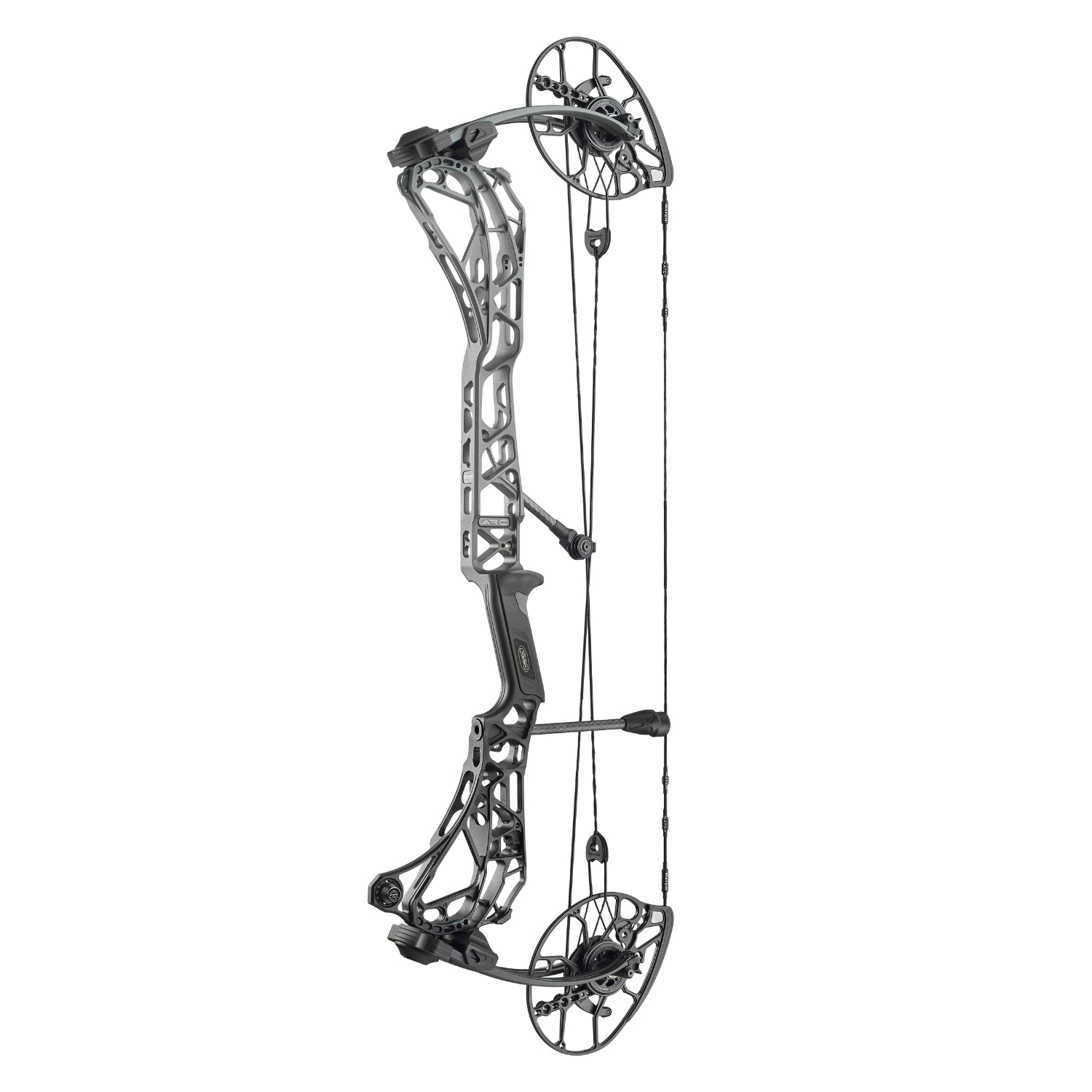
Mathews ARC 30
The ARC 30 headlines Mathews' 2026 lineup alongside the ARC 34, and it is the fastest short hunting bow Mathews has built: 348 fps IBO from a 30-inch, sub-four-pound aluminum chassis. The SWX-2 cam adds Perimeter Weight Technology to keep felt recoil down once accessories go on, and Field & Stream chronographed 328 fps with a 350-grain arrow at 30 inches and 70 pounds — real speed, independently verified. Optional Z mods trade speed for a noticeably softer cycle. Community reception is more divided than a typical Mathews launch; an ArcheryTalk thread literally titled "Is the ARC really that bad??" captures the mood. Fans call it the most pleasant-drawing Switchweight Mathews yet, while detractors find the back wall aggressive and report shakier pin float than on a Hoyt AX-3, and $1,459 continues Mathews' steady price creep. Owner head-to-heads against the AX-3 29 usually give Mathews the draw feel and Hoyt the hold, quietness, and tuning system. Dealer-only distribution means no online discounts, but Switchweight mods (55–80 lb) and a 25–30.5-inch draw range make it easy to configure. For whitetail rigs where compactness and speed rule, it remains the benchmark.
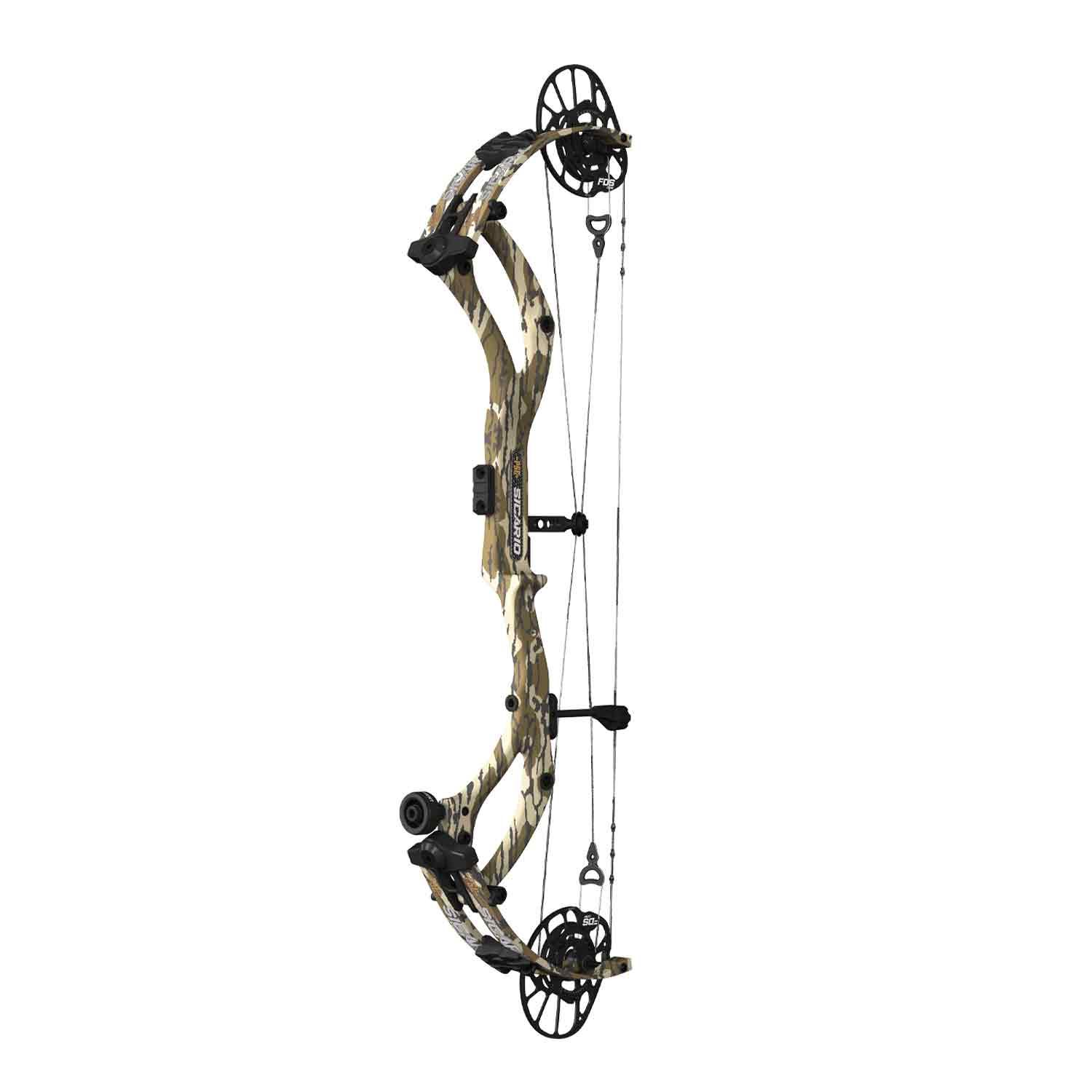
PSE calls the Sicario the fastest carbon bow ever built, and the numbers back the swagger: 357 fps IBO, and in Outdoor Life's standardized 2026 test it chrono'd 305 fps — about 20 fps clear of every other flagship. One ArcheryTalk tester ran 353 fps with a 350-grain arrow at 70 lb/30.25". The surprise is how civilized it is. The FDS cam's geometry gives an effective 6.5" brace from a nominal 5.25", and the community consensus is a draw that's stiff but linear and smooth — 'speeds that don't make sense' for the cycle — with a decent valley and very little vibration from the Dead Frequency Carbon riser at just 3.9 lb. Now the honest part: Outdoor Life scored its features 2/5 because, unlike every rival here, real tuning still means a bow press (the EZ.220 spacer system helps but doesn't replace one), its draw cycle scored lowest in the test, and accuracy trailed at 4.04" average groups — a short-brace speed bow still punishes sloppy form. At $1,999 street it's priced against the RX-10 with fewer convenience features but a huge speed edge.