
Samick
Samick Journey 64"
The Journey is the Samick Sage's long-armed sibling: the same multi-laminate hard-maple riser concept and bolt-on limb system stretched to 64" AMO with longer limbs, built for archers around 6 feet and taller or anyone drawing past 29" where the 62" Sage stacks. Lancaster's review pegged it as a do-everything bow for hunting, recreational shooting, and 3D, with limbs in 5 lb increments from 30-60 lb — meaning every configuration except the lightest is already at or near hunting weight, and the 55-60 lb options outreach most budget takedowns. The grip is cut to index your hand consistently, and the extra length makes it noticeably more forgiving of release errors than shorter hunting bows. The big caveat in 2026 is availability: Lancaster and Southland no longer stock it, so you're buying through Amazon (where sizes blink in and out), eBay, or small shops like Raptor Archery, and long-term parts support leans on the shared Sage limb-bolt pattern rather than Samick's wobbly US distribution. If you can't find one, the Southwest Archery Spyder XL is the community's like-for-like substitute. Found in stock at hunting weight, it's still a smooth, tall-archer bargain.
Specifications
Highlights
Pros
- ✓64" AMO length is smooth and stack-free out to ~31" draws
- ✓More forgiving on release than 60-62" hunting recurves
- ✓30-60 lb limb range — one of the few budget bows reaching 60 lb
- ✓Shares the ubiquitous Sage limb-bolt pattern for spares
- ✓Well-shaped locator grip that builds consistent hand placement
- ✓Endorsed by Lancaster's own review for hunting and 3D versatility
Cons
- ✗Availability has thinned badly — gone from Lancaster and Southland, spotty on Amazon
- ✗Samick's US distribution/warranty support is unreliable in 2026
- ✗Prices now swing widely ($130-190) across marketplace sellers
- ✗64" length is unwieldy in ground blinds and thick brush
- ✗Proprietary limb fitting, not ILF
Owner Insightssummarized from ArcheryTalk, Reddit, and owner reviews
The Journey is the Samick Sage's long-armed sibling, and for years it was the reflexive forum answer whenever someone 6 feet or taller asked why their draw felt like pulling into a wall: same maple-riser DNA and bolt-on limb system, stretched to 64" so the draw stays silky out past 30". There's a classic ArcheryTalk thread of a new archer with a 31" draw being told, in near-unison, Journey-not-Sage — and that's still the core of its reputation. Tall-shooter threads on Rokslide tell the same story: for long draws, the extra four inches of bow is the whole game.
Shooting it is the Sage experience with the rough edge sanded off the draw cycle. The length makes it noticeably more forgiving of release errors than 60-62" bows, the locator grip indexes your hand the same way every time, and because longer limbs store more energy at long draws, a 45 lb Journey pulled to 30" hits meaningfully harder than its marked weight implies. The stock string is the usual entry-grade Dacron — replace it — and limb swaps use the shared Sage bolt pattern, which matters more than ever now: with 30-60 lb options it's one of the only budget bows that reaches a legitimate 60 lb.
The 2026 problem isn't the bow, it's buying one. Lancaster and Southland no longer stock it, Amazon sizes blink in and out, and marketplace prices wander from $130 to $190 for the same bow, all while Samick's US warranty support is best described as theoretical. That's why the community's like-for-like substitute is the Southwest Archery Spyder XL — same 64" mission, designed by the original Sage engineers, $164 with an actual warranty. If you find a Journey in stock at hunting weight (especially 55-60 lb, which the Spyder XL can't match), it's still a tall archer's bargain; otherwise the XL is the honest recommendation.
What owners like
- +64" AMO length stays smooth and stack-free out to roughly 31" — the standard answer when a 6-footer asks 'Sage or Journey?' on the forums
- +Noticeably more forgiving of release errors than 60-62" hunting recurves
- +Limbs run 30-60 lb, making it one of the very few budget takedowns that reaches a true 60
- +Shares the ubiquitous Sage limb-bolt pattern, so spares and step-up limbs stay findable
- +Locator grip builds consistent hand placement for self-taught shooters
- +Longer limbs store more energy at long draws — a 45 lb Journey at 30" hits harder than the number suggests
- +Lancaster's own published review endorsed it as a do-everything bow for hunting, recreation, and 3D
Common complaints
- −Availability has cratered — gone from Lancaster and Southland, blinking in and out on Amazon, eBay, and small shops
- −Samick's US distribution and warranty support are unreliable in 2026
- −Prices swing $130-190 across marketplace sellers for the identical bow
- −64" is unwieldy in ground blinds and thick brush
- −Proprietary limb fitting, not ILF
- −Same entry-grade stock string as the Sage — budget for a real Flemish twist immediately
- −The community increasingly just steers you to the Spyder XL, which does the same job and is actually in stock
Common Questions
Journey or Sage — what's the actual cutoff?
Is it still possible to buy one?
Do Sage limbs fit the Journey?
Can I hunt with it?
Journey vs. Southwest Archery Spyder XL?
Related bows
More from Samick →
Samick
Samick Sage
For over a decade, "just buy a Samick Sage" was the reflexive r/Archery answer to every beginner question, and the cult status is earned: a hard-maple riser, fiberglass-laminated limbs, threaded bushings for a sight, plunger, quiver, and stabilizer, and a proprietary bolt-on limb pattern with the cheapest, most available replacement limbs in traditional archery. That limb ecosystem is the Sage's superpower for hunters — start at 25-35 lb to learn form, then swap to 45 or 50 lb limbs for around $70-90 instead of buying a new bow. It is not ILF, so you're locked to Sage-pattern limbs, but clones and spares are everywhere. Samick's global distribution has wobbled in recent years; Southland Archery Supply now produces and sells it for about $110, while Amazon third-party listings drift up toward $160, and the original design team went on to found Southwest Archery, whose Spyder is essentially the Sage 2.0. At 62" AMO it suits draws up to about 29". Thousands of deer have fallen to 45-55 lb Sages; it remains the benchmark budget hunting takedown.
Southwest Archery
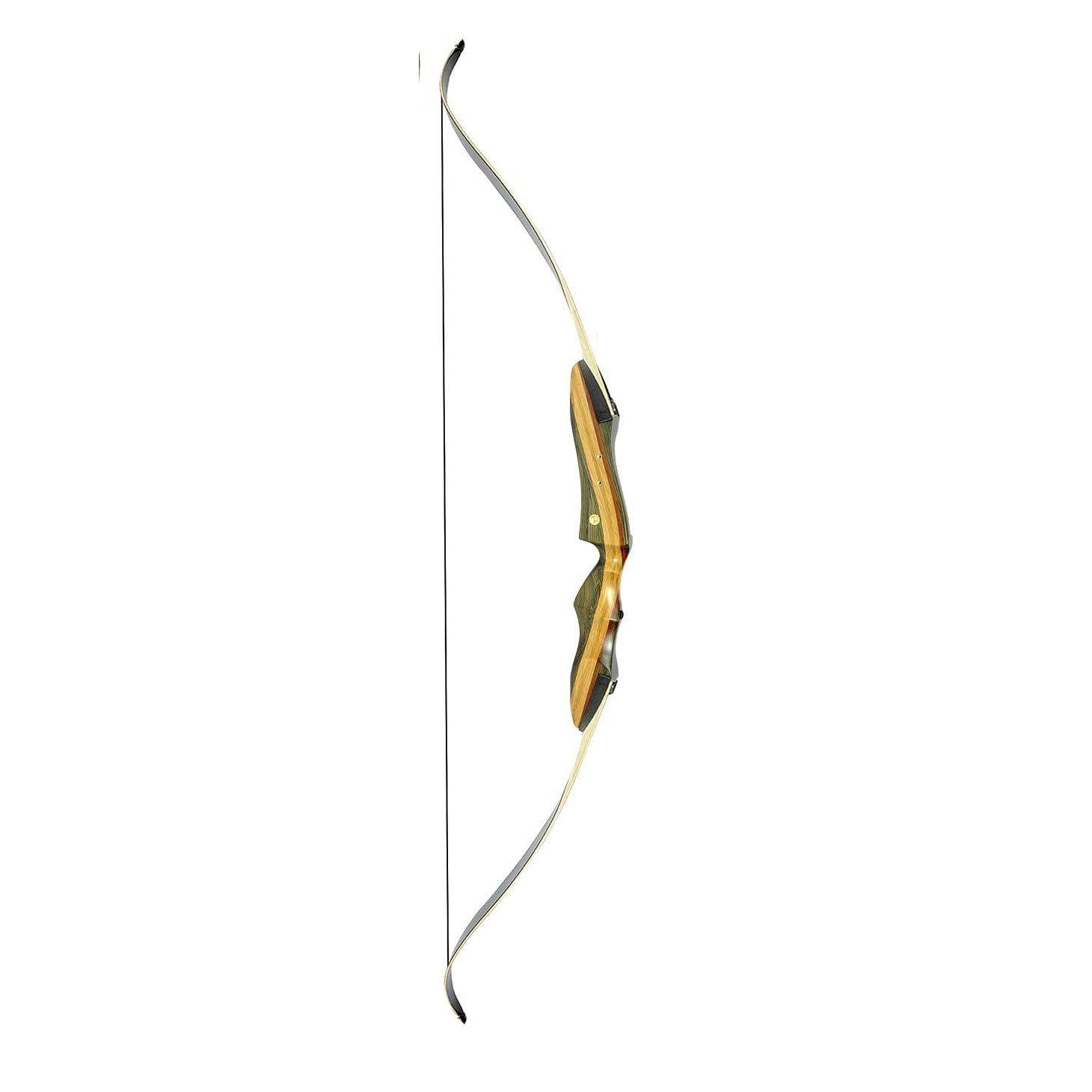
Southwest Archery Spyder XL
The Spyder line was designed by the same team behind the original Samick Sage, and the community treats it as the Sage 2.0 — same basic architecture with rounded riser edges, cleaner finish, and tool-free limb bolts. The XL is the one hunters with long arms should care about: the same riser as the 62" Spyder wearing longer limbs for a 64" AMO length that keeps the draw cycle smooth past 29", where the standard Sage and Spyder start to stack. The riser is white oak, Dymondwood, and padouk with threaded bushings for sights, plunger rests, quivers, and stabilizers; the hard-maple/fiberglass limbs get reinforced tips that are Fast Flight and Flemish string compatible. Draw weights run 25-55 lb (including an odd 29 lb step), so 45-55 lb hunting configurations are available off the shelf. Southwest sells it directly for $164 with 107 store reviews, and the Amazon listing has years of positive feedback. Like the Sage, the limb fitting is proprietary — Spyder and Sage-pattern limbs interchange, but ILF limbs do not. A 1-year warranty (with online registration) is unusual at this price.
Galaxy Archery
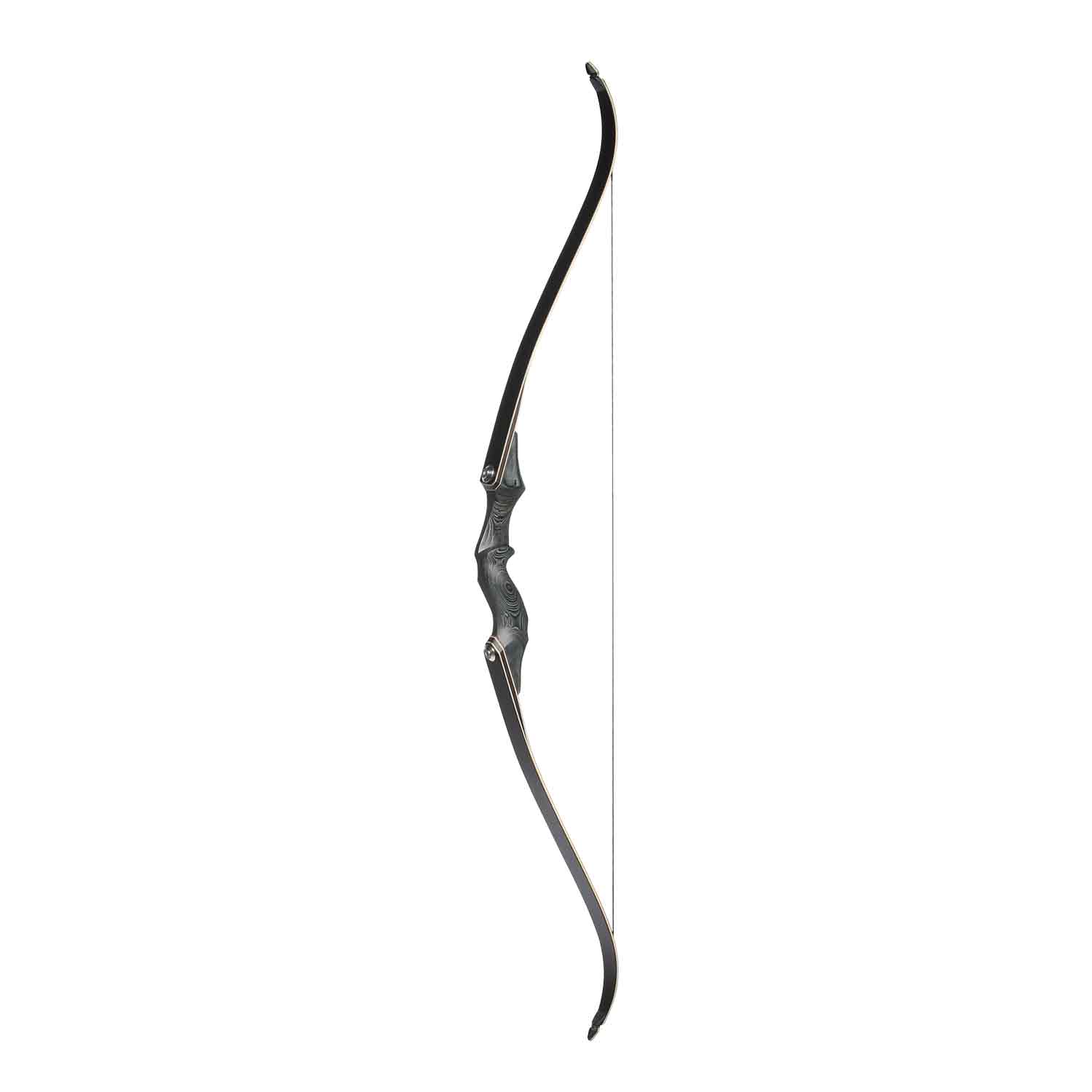
Galaxy Ember 60"
Galaxy is Lancaster Archery Supply's house brand, and the Ember is its hunting-weight star — a genuinely pretty 60" takedown with a 15" hardwood riser and bamboo-core limbs faced and backed in black fiberglass, currently $199.98 and flagged as a Lancaster Staff Pick (chosen here over the PSE Nighthawk, whose limbs stop at 50 lb and which is aimed more at recreational shooters). Hunting forums like Rokslide and SaddleHunter treat the Ember as the step-up budget recurve: owners call it "an excellent little budget recurve... tough as nails" with limbs that feel quick for the class, and the trad crowd likes that it comes in honest hunting weights of 30-55 lb in 5 lb steps. The trade-offs are inherent to the format: a 60" bow with a 15" riser is less forgiving than a 62-64" rig, so it rewards decent form and properly spined arrows, and TradTalk threads note marked draw weights can run off from a few suppliers, making a known dealer like Lancaster the smart buy. Fittings are proprietary bolt-on (not ILF), but replacement Ember limbs are sold separately, so you can move up in weight without rebuying. Backorders of 2-3 weeks are common — it sells.
Black Hunter
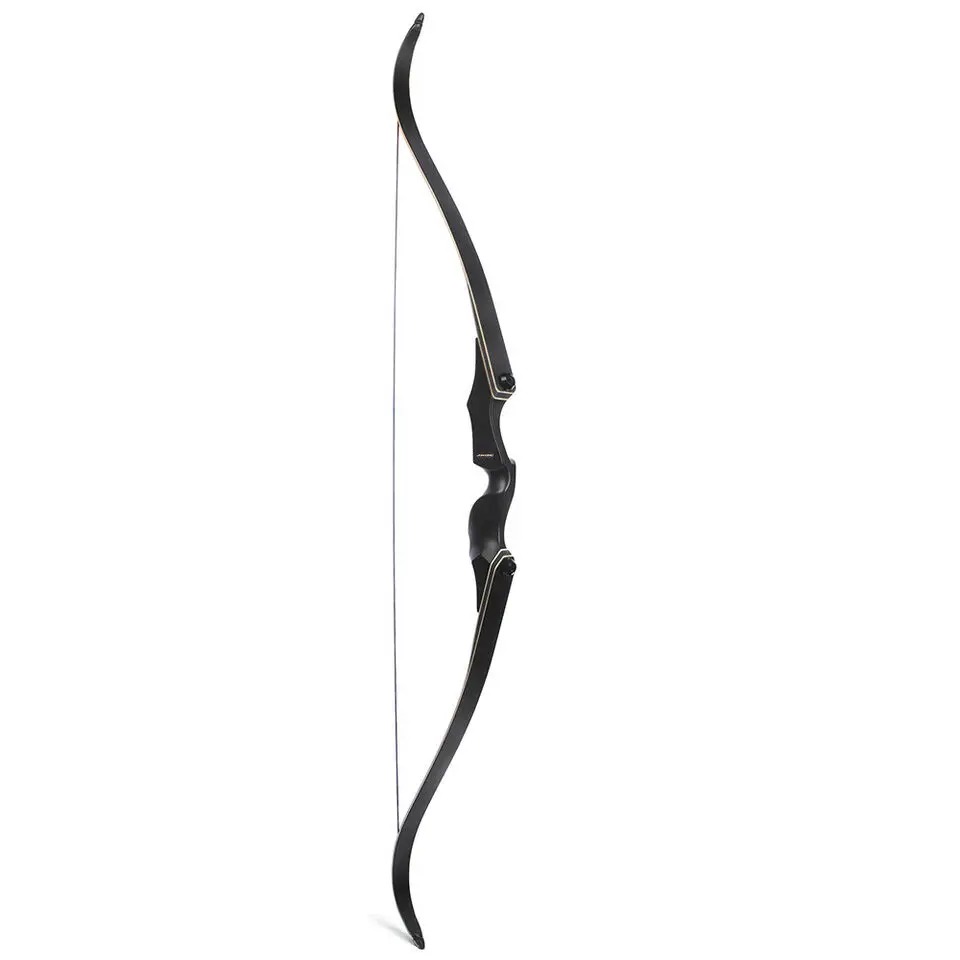
Black Hunter 60" Takedown
The Black Hunter is the trad forums' worst-kept secret: a Chinese-made 60" takedown with a Dymondwood-style riser and bamboo-core, fiberglass-laminated limbs that TradTalk and ArcheryTalk veterans keep admitting shoots like bows costing three times more. At roughly $99-130 depending on storefront (it's sold under Obert, OBTOUTDOOR, Mandarin Duck, and others — same bow, different boxes), reviewers flatly say it "can't be beat" for the money. The ergonomic grip points naturally, the 2.2 lb mass carries all day, and the phenolic-tipped limbs safely run modern low-stretch strings — which matters, because the number-one community mod is binning the stock string for a $25 D97 Flemish twist, which owners report makes it noticeably faster, quieter, and softer in the hand. With limbs from 20-60 lb in 5 lb steps it's a genuine budget hunting rig at 45-55 lb, and spare limbs are cheap. The honest caveats: marked draw weights can run a few pounds off, quality varies slightly between the storefronts cloning it, no stringer is included, and there's no real warranty — just marketplace return windows. As a first hunting recurve or a beater truck bow, it's the value king.
KESHES
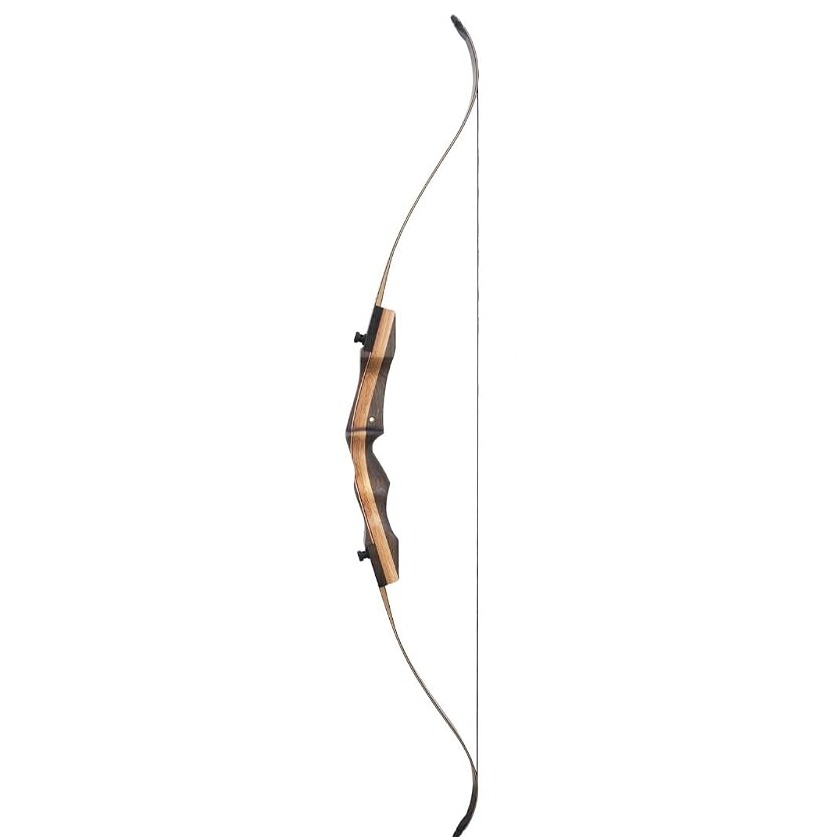
KESHES 62" Takedown
The KESHES 62" is one of Amazon's perennial best-selling takedown recurves, chosen here over the TopArchery alloy-riser bows because its review base is far deeper and its wood-riser, Sage-pattern format is better suited to traditional hunting. KESHES leans on the claim that it's built in the same factory as the Samick Sage, and the bow backs that up in the hand: hardwood riser, fiberglass-laminated limbs, pre-installed brass bushings for a sight, stabilizer, plunger, or bowfishing reel, and a 14/16-strand Dacron string. The kit adds a stick-on rest, stringer tool, and basic sight for around $90, undercutting the Sage itself. Limbs run 15-60 lb in 5 lb steps — the 15-25 lb options make it a family/trainer favorite, while 40-55 lb limbs turn the same riser into a legitimate deer bow, though reviewers note the manual is rough for true beginners and the accessories are throwaway grade. At roughly 2 lb it carries easily, and a 29" max draw suits average frames. Community sentiment (Amazon reviewers, archery blogs) is consistent: shockingly good wood and finish for the price, reliable customer service with a money-back guarantee, but budget for a real string and rest before hunting season.
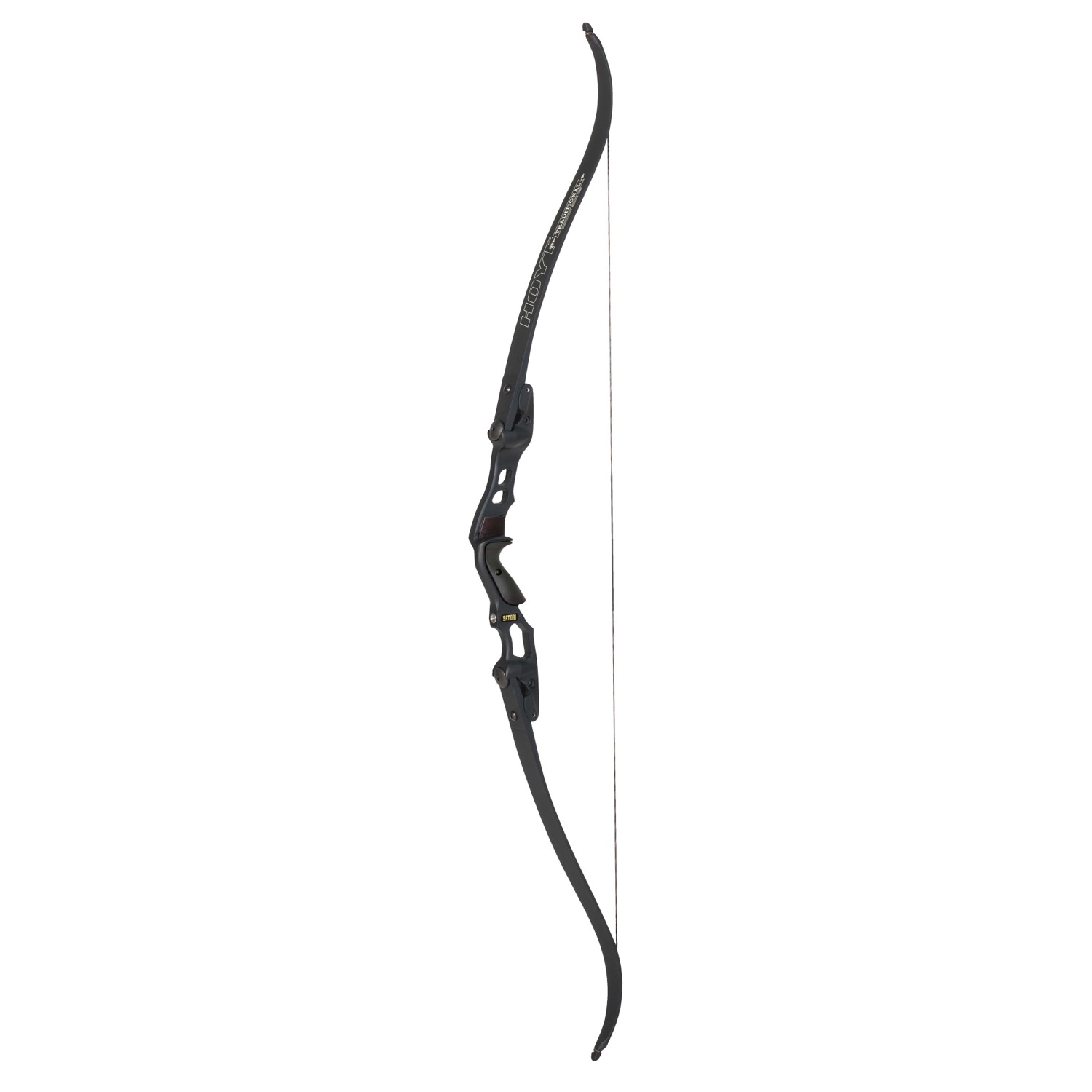
Hoyt
Hoyt Satori
The Satori is the modern benchmark for ILF hunting recurves — ArcheryTalk regulars call it "the Glock of trad bows": unglamorous, reliable, and a flat-out shooter. The machined aluminum riser comes in 17", 19", and 21" lengths (2.4 lb for the 19") with Hoyt's Grand Prix ILF pockets, micro limb alignment, and an adjustable side plate over a radiused shelf, so it tunes like a target bow but carries like a hunting rig. Because it's true ILF, you can hang Hoyt's own carbon/maple Satori limbs (35-65 lb, rated on the 21" riser) or any of hundreds of ILF limbs from $180 budget sets to $1,000 carbon-foam blades — the upgrade path is the whole sport. Complete bows run about $1,100 at 3Rivers ($520 riser + $580 limbs; watch for package deals nearer $900). Community gripes are specific: the ILF fitting can creak on a cold first draw (owners pre-draw once on stand), the metal riser is louder than wood if untuned, and there's only one rest hole. Find the quiet sweet spot around 8-8.125" brace and it's arguably the most accurate hunting recurve sold today.