IBO Speed, ATA, Brace Height: Which Bow Specs Actually Matter
Bow spec sheets are written to win comparisons, not to inform them. The speed number comes from a test setup almost nobody hunts, the brace height tradeoff is real but never explained, and half the numbers on the page won't change a single hunt. Here's the translation layer: what each spec measures, how it actually feels, and which ones should move your money.
IBO/ATA speed: real, and really overstated
| Setup | Rated 340 fps bow shoots... |
|---|---|
| 70 lb, 30" draw, 350 gr arrow (the test) | ~340 fps |
| 70 lb, 29" draw, 420 gr hunting arrow | ~305 fps |
| 60 lb, 28" draw, 450 gr hunting arrow | ~270 fps |
| 60 lb, 27" draw, 480 gr heavy build | ~255 fps |
Both rating standards (IBO and the newer ATA standard most brands quote) measure a 350-grain arrow from a 70 lb, 30-inch-draw bow — maximum energy, minimum arrow. Every step your real setup takes from that ideal costs speed: roughly 10 fps per inch of draw length, a couple fps per pound of draw weight, and a chunk more for the heavier arrows that hunting penetration actually wants. The table isn't a reason to ignore speed — flatter trajectory genuinely forgives range-estimation mistakes, and 20 fps between two bows is real — it's a reason to compare bows by their rated numbers against each other while knowing your arrow will do something slower and better.
The trap is paying for speed twice. Speed-demon bows buy their rating with aggressive cams and short brace heights, which means a harsher draw cycle and a less forgiving launch — costs you feel on every shot, for fps you mostly don't. The community's consistent advice: shoot the bows, buy the draw cycle you like, and let speed break ties.
Brace height: the forgiveness dial
Brace height is the distance from the grip's deepest point to the string at rest — and mechanically, it's how long the arrow stays attached to the string. A short brace (5.5-6") powers the arrow longer, which is where speed bows find their fps; it also means your torque, flinch, or cold-morning form wobble has more time to steer the arrow wrong. A tall brace (6.75-7.25") releases the arrow sooner: slower, and noticeably more forgiving. This is the most honest tradeoff on the spec sheet, and it's why 'forgiving' flagship hunting bows cluster at 6.5" and up while the speed line lives below 6.25". For a first serious bow, err tall; for a practiced shooter chasing trajectory, the short brace is a fair trade knowingly made.
Axle-to-axle: where and how you hunt
ATA length — axle to axle, where the cams mount — decides how the bow handles more than how it shoots. Short bows (28-31") maneuver in ground blinds, saddles, and brushy stands, which is why the compact class exists; they're also more sensitive to torque and a bit twitchier to aim. Longer bows (33-35") hold steadier and forgive more, at the cost of bulk in tight quarters. Whitetail hunters in blinds and saddles have pushed the market short; western spot-and-stalk shooters taking 50-yard shots still favor length. Match the number to your actual hunting, not to the flagship the YouTube guy shoots.
Let-off and mass weight round out the numbers that matter. Modern let-off runs 75-90%; higher lets you hold longer at full draw (decisive in treestand hunting), and a few brands let you choose mods — the old target-shooter argument for low let-off is mostly irrelevant to hunters. Bare mass weight of 3.9-4.8 lb sounds trivial until you add a sight, rest, quiver, and stabilizer: rigged bows run 6-8 lb, and the difference between a carbon flagship and an aluminum budget bow is honestly about carrying comfort, not shooting. If a spec isn't in this guide — cam names, riser bridging, string suppressor counts — it's marketing, and it shouldn't move your money.
Bows mentioned in this guide
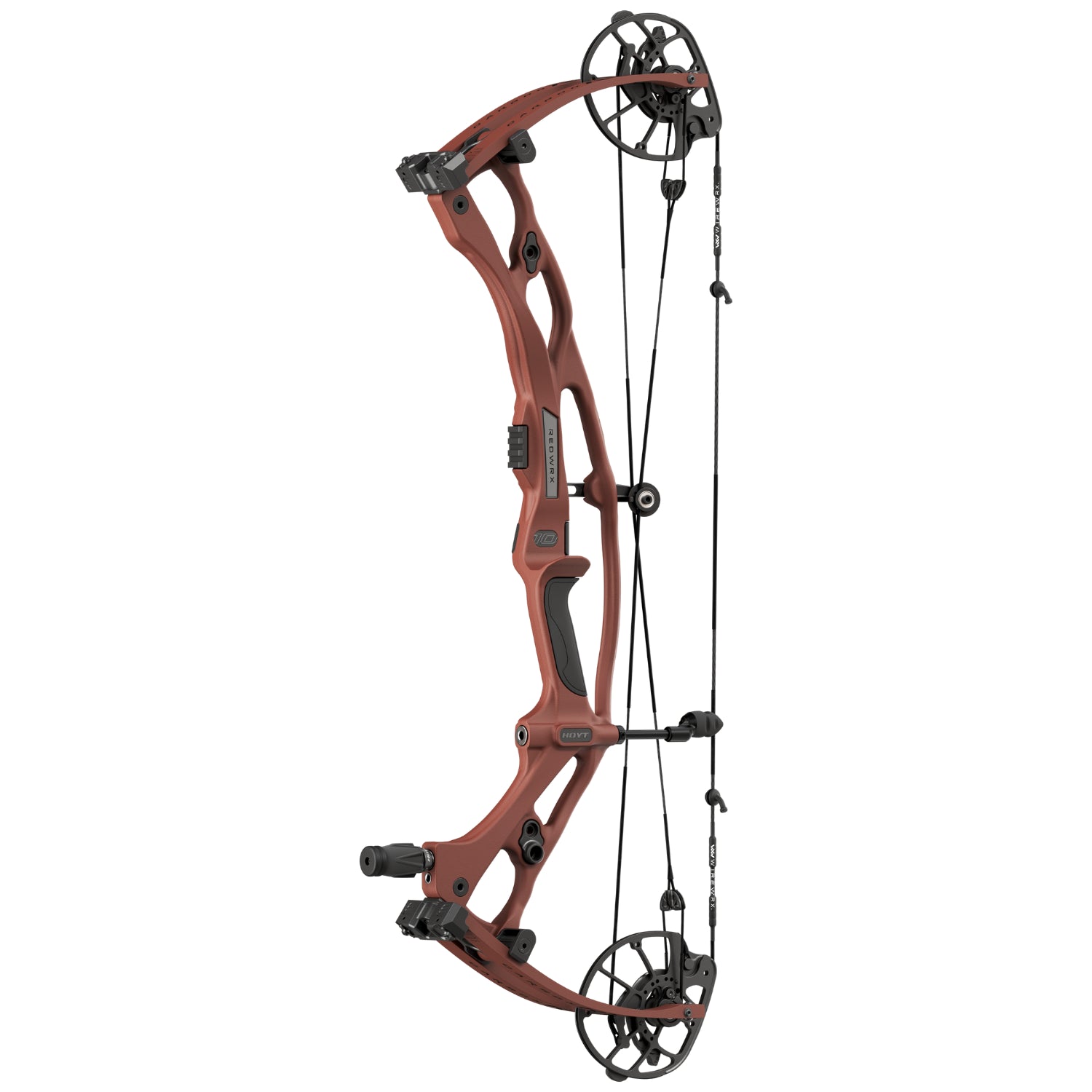
Hoyt's 2026 carbon flagship is really about one thing: the patent-pending XTS Tuning System, which adjusts for both left/right AND high/low paper tears without a press — something no other production system fully does. Reviewers who've lived with it (Born Hunting, Nock On) say it works and doesn't move your center shot, but the ArcheryTalk reality check matters: multiple owners report that two of three RX-10s they set up still needed traditional cam shimming to finish the job, so XTS narrows the gap rather than eliminating the press. The bow itself earns real praise — absurdly stable at full draw, surgically quiet, and the hollow carbon riser carries lighter than its 4.1 lb suggests while staying warm to the touch in late-season cold. The HBX Gen 4 cam gives quarter-inch draw adjustments plus customizable letoff and back-wall feel. The catch is value: $2,149 is $550 over the aluminum Alpha AX-3 that shares the same cam and tuning system, and the RX-10 didn't make Outdoor Life's 2026 podium while the AX-3 33 did. You're paying carbon money for carbon feel.
Elite Archery
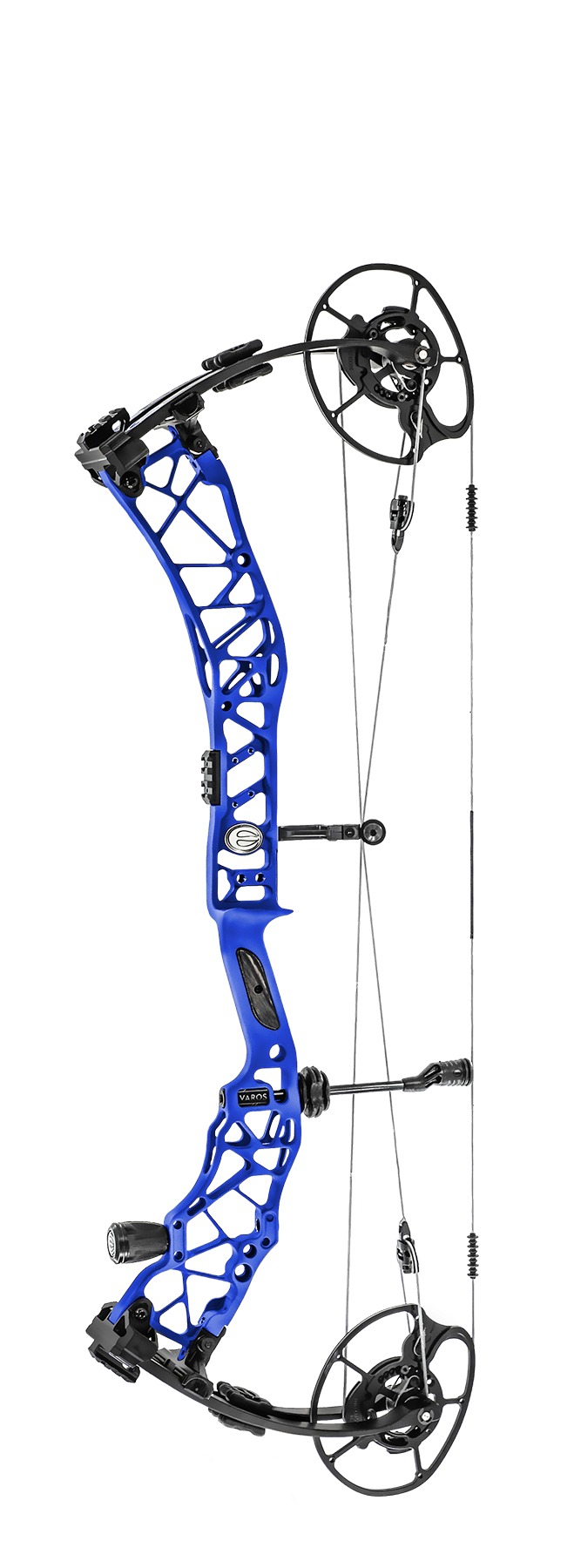
Elite Varos
The Varos is Outdoor Life's 2026 Bow of the Year, and it won on the metric that matters: accuracy. The three-shooter test team averaged 2.79" groups at 50 yards — best of the field — and in the 30-arrow shoot-off its groups ran 0.6" smaller than the Mathews ARC 34 and Hoyt AX-3 33. It also took a perfect 5/5 for post-shot behavior (dead quiet, dead still) and 5/5 for features, thanks to the new Micro Splitters that adjust cam timing with a screw turn — no press — on top of Elite's S.E.T. limb-pocket tuning. The SP2 cam runs up to 90% letoff with a meaty 7.8-lb holding weight that helps it pin on target. Owners on Elite's site (18 reviews, all 5-star) echo the 'bullet holes out of the box' story. Real knocks: at 4.75 lb it's the heaviest bow here, the transition into the valley is abrupt enough that OL scored the draw cycle just 3/5, the grip is slick (testers added tape), and 285.8 fps in standardized testing means it's no speed bow. At $1,299 it's the cheapest flagship in this group — the value is genuinely absurd.
Mathews
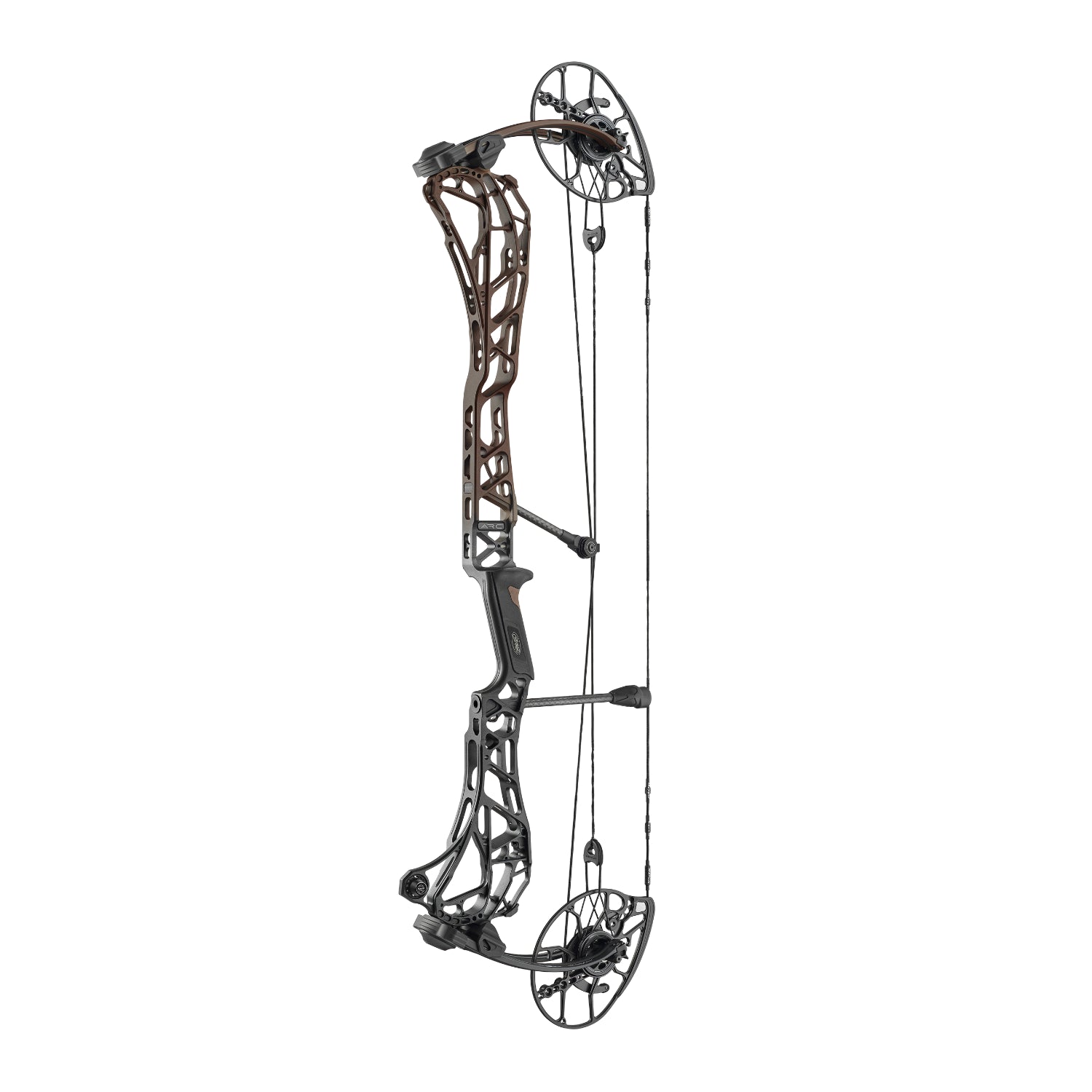
Mathews ARC 34
Mathews retired the Lift X line for 2026, and the ARC 34 is the new flagship — in Outdoor Life's 2026 test it earned the only unanimous 5/5 draw-cycle score, with testers calling it smooth as butter. That matches about half of ArcheryTalk; the other half found the first third of the draw stiff and the bow a bit jumpy off the back wall, because the valley is short and you have to keep steady pressure into the stops. The new SWX-2 cam carries perimeter weights, and mod choice matters: standard SWX mods chrono'd 289 fps in OL's 28.5"/62.5-lb rig, while the smoother SWX-Z mods gave up about 5 fps. It aims rock-steady for a 4.3-lb bow, tunes in minutes with press-free Limb Shift adjustment, and is typically Mathews-quiet and dead in the hand after the shot. The knocks: the grip remains polarizing ("the grip still hates me" is live-thread sentiment), and its 3.56" 50-yard groups trailed the Elite Varos' 2.79". At $1,469 it undercuts carbon rivals by several hundred dollars while giving up little.
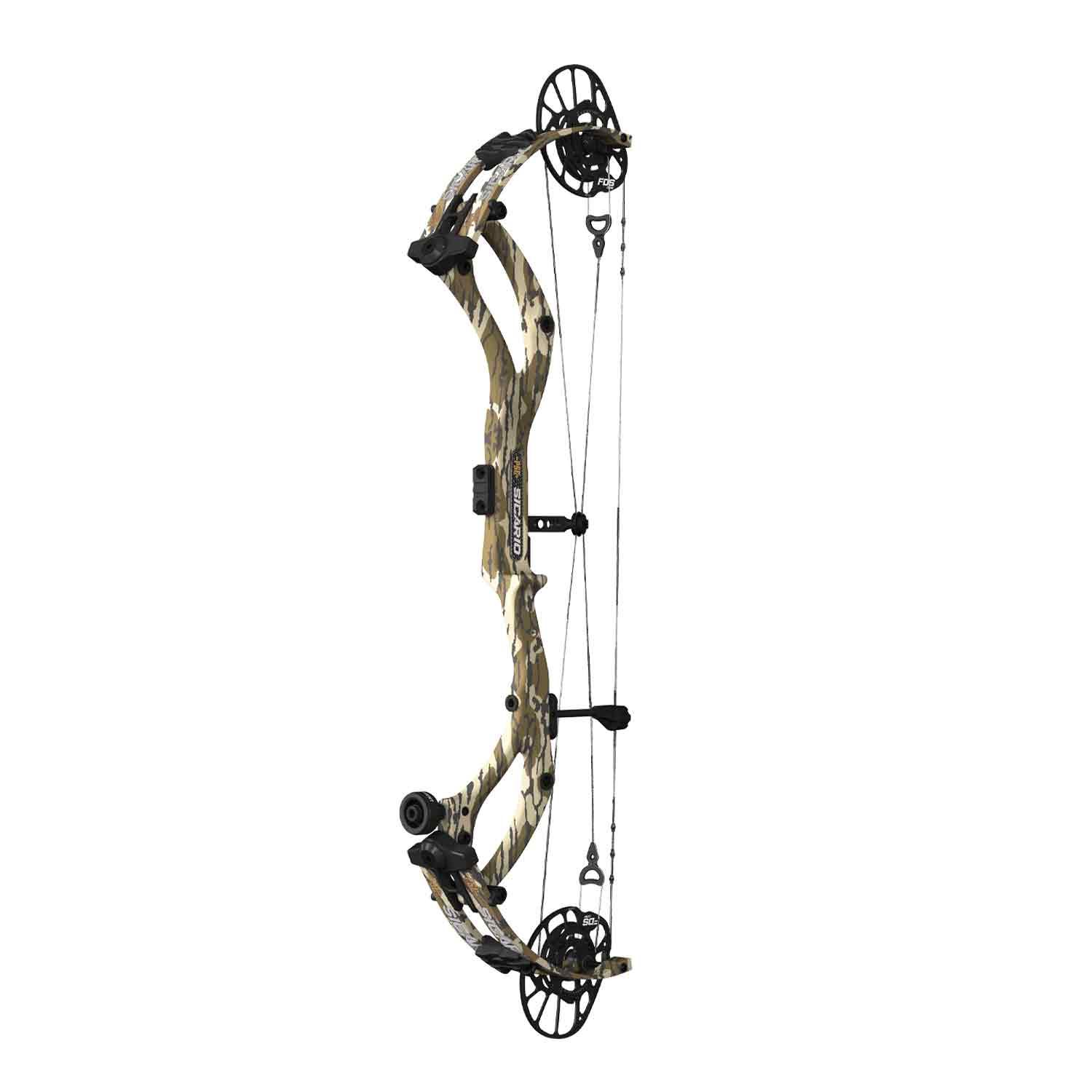
PSE calls the Sicario the fastest carbon bow ever built, and the numbers back the swagger: 357 fps IBO, and in Outdoor Life's standardized 2026 test it chrono'd 305 fps — about 20 fps clear of every other flagship. One ArcheryTalk tester ran 353 fps with a 350-grain arrow at 70 lb/30.25". The surprise is how civilized it is. The FDS cam's geometry gives an effective 6.5" brace from a nominal 5.25", and the community consensus is a draw that's stiff but linear and smooth — 'speeds that don't make sense' for the cycle — with a decent valley and very little vibration from the Dead Frequency Carbon riser at just 3.9 lb. Now the honest part: Outdoor Life scored its features 2/5 because, unlike every rival here, real tuning still means a bow press (the EZ.220 spacer system helps but doesn't replace one), its draw cycle scored lowest in the test, and accuracy trailed at 4.04" average groups — a short-brace speed bow still punishes sloppy form. At $1,999 street it's priced against the RX-10 with fewer convenience features but a huge speed edge.