PSE
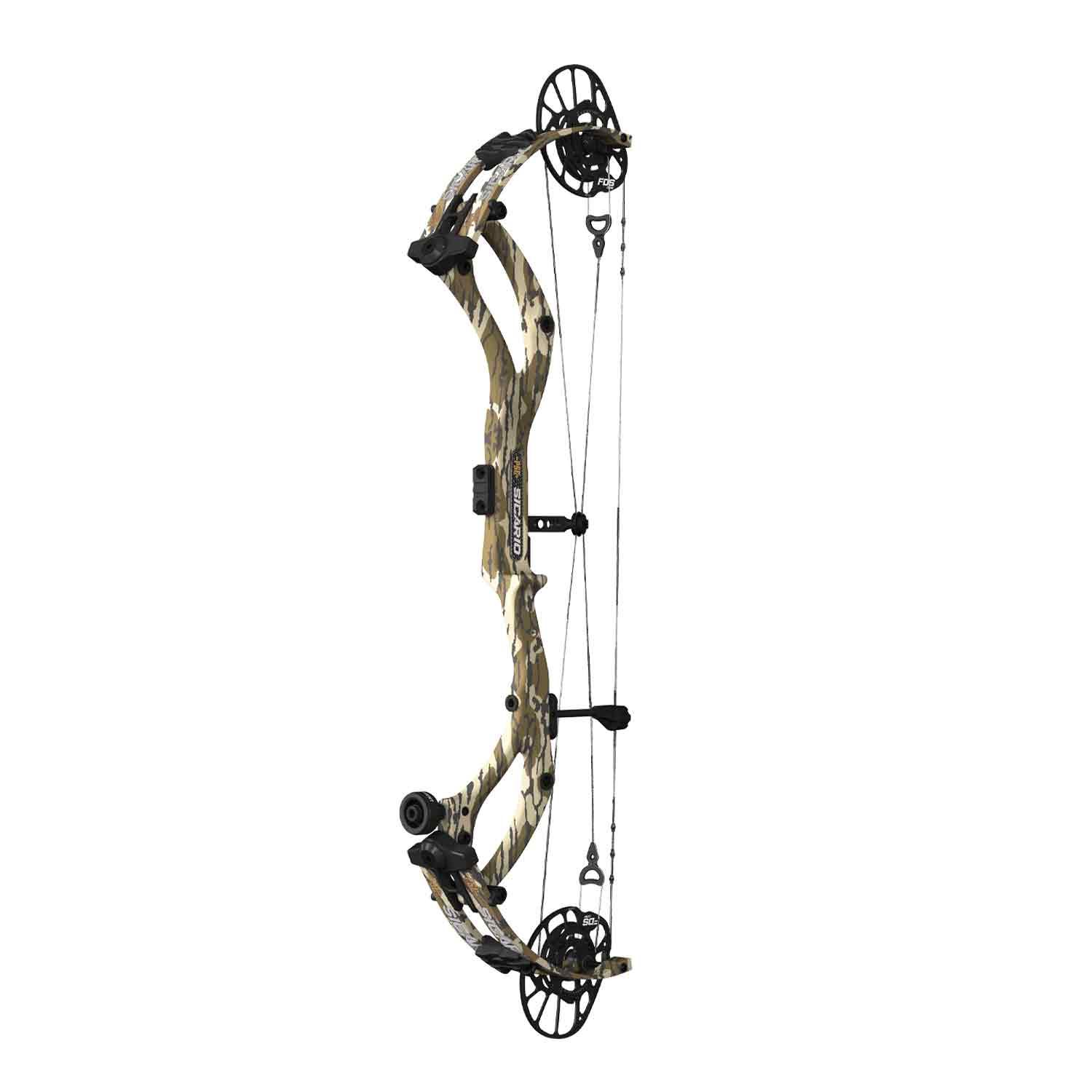
PSE Sicario Carbon FDS
PSE calls the Sicario the fastest carbon bow ever built, and the numbers back the swagger: 357 fps IBO, and in Outdoor Life's standardized 2026 test it chrono'd 305 fps — about 20 fps clear of every other flagship. One ArcheryTalk tester ran 353 fps with a 350-grain arrow at 70 lb/30.25". The surprise is how civilized it is. The FDS cam's geometry gives an effective 6.5" brace from a nominal 5.25", and the community consensus is a draw that's stiff but linear and smooth — 'speeds that don't make sense' for the cycle — with a decent valley and very little vibration from the Dead Frequency Carbon riser at just 3.9 lb. Now the honest part: Outdoor Life scored its features 2/5 because, unlike every rival here, real tuning still means a bow press (the EZ.220 spacer system helps but doesn't replace one), its draw cycle scored lowest in the test, and accuracy trailed at 4.04" average groups — a short-brace speed bow still punishes sloppy form. At $1,999 street it's priced against the RX-10 with fewer convenience features but a huge speed edge.
Specifications
Highlights
Pros
- ✓Fastest bow in Outdoor Life's 2026 test by roughly 20 fps
- ✓Remarkably smooth, linear draw for a speed bow — community consensus
- ✓Just 3.9 lb bare, lightest 2026 flagship here
- ✓Dead Frequency Carbon riser kills vibration; minimal hand shock
- ✓Effective 6.5" brace makes it more forgiving than the 5.25" spec reads
- ✓EZ.220 spacers allow 0.020" cam-lean tweaks without pulling axles
- ✓Street price runs $100 under its $2,099 MSRP at major retailers
Cons
- ✗Lowest draw-cycle score in Outdoor Life's 2026 test — it's still work to pull
- ✗Accuracy trailed the field (4.04" average at 50 yards)
- ✗Real tuning requires a bow press, unlike every rival flagship's press-free system
- ✗Short true brace height punishes imperfect form
- ✗$1,999 with fewer convenience features than similarly priced bows
- ✗No visible customer ratings yet at any major retailer
Owner Insightssummarized from ArcheryTalk, Reddit, and owner reviews
PSE calls the Sicario the fastest carbon bow ever built, and for once the swagger holds up under a chronograph: 357 fps IBO on paper, about 20 fps clear of every other 2026 flagship in Outdoor Life's standardized test (where it won Best Speed Bow), and ArcheryTalk owners posting numbers like 353 fps with a 350-grain arrow at 70 lb. The community reaction is a running double-take — thread after thread amounts to 'speeds that don't make sense' followed by surprise at how civilized it is to shoot. For a category that historically meant harsh draws and jumpy risers, that's the story here.
The practical experience splits cleanly into strengths and taxes. The FDS cam pulls stiff but perfectly linear — no stacking spike, no dump into the valley — and settles into a solid, forgiving back wall; owners repeatedly describe it as 'better than expected' rather than 'easy.' The 3.9 lb Dead Frequency Carbon riser is genuinely dead in the hand and near-silent. The tax comes in the details: Outdoor Life scored its draw cycle lowest in the test field and its accuracy trailed at 4.04-inch average 50-yard groups, because a short-true-brace speed bow amplifies form errors. And unlike every rival flagship this year, real tuning still wants a bow press — the EZ.220 spacer system handles cam-lean micro-adjustments, but it isn't a full press-free solution.
This is the bow for experienced shooters with solid form who want maximum kinetic energy and the flattest trajectory available — long-poke Western hunters and heavy-arrow elk guys, especially. At $1,999 street it sits right against the Hoyt Carbon RX-10 with fewer convenience features but a massive speed edge, and well above the Mathews ARC 30 (itself the fast-compact benchmark at 348 fps IBO). PSE sells through dealers, so plan on a shop relationship — and honestly, with this bow you'll want one for tuning anyway.
What owners like
- +Fastest flagship of 2026, full stop — 357 fps IBO, and Outdoor Life chrono'd it roughly 20 fps clear of every other flagship in its standardized test
- +Owner chronos back up the hype: an ArcheryTalk tester ran 353 fps with a 350-grain arrow at 70 lb and a 30.25-inch draw
- +Draw is stiff but dead linear — no peaks, no dump — and owners keep saying it's significantly better than they expected from a speed bow
- +Just 3.9 lb bare, the lightest 2026 carbon flagship
- +Dead Frequency Carbon riser genuinely kills vibration; near-silent at the shot
- +FDS cam geometry gives an effective 6.5-inch brace from the nominal 5.25, so it's more forgiving than the spec sheet reads
- +EZ.220 snap-spacers allow 0.020-inch cam-lean tweaks without pulling axles
- +Streets around $100 under its $2,099 MSRP at major retailers
Common complaints
- −Lowest draw-cycle score in Outdoor Life's 2026 test — linear or not, it's still work to pull
- −Accuracy trailed the field in that same test at 4.04-inch average 50-yard groups
- −Real tuning still means a bow press — the EZ.220 spacers help, but every rival flagship now has a more complete press-free system
- −The short true brace height punishes sloppy form; this is not a beginner's flagship
- −$1,999 with fewer convenience features than similarly priced bows
- −OL scored its features just 2/5 for exactly that reason
- −No visible customer ratings at any major retailer yet
Common Questions
Is the Sicario really that much faster than other flagships?
Is the draw cycle brutal like old speed bows?
Do I need a bow press to tune it?
Is the 5.25-inch brace height as unforgiving as it sounds?
What draw lengths and weights does it come in?
Sicario or Hoyt Carbon RX-10?
Compare the PSE Sicario Carbon FDS
Related bows
More from PSE →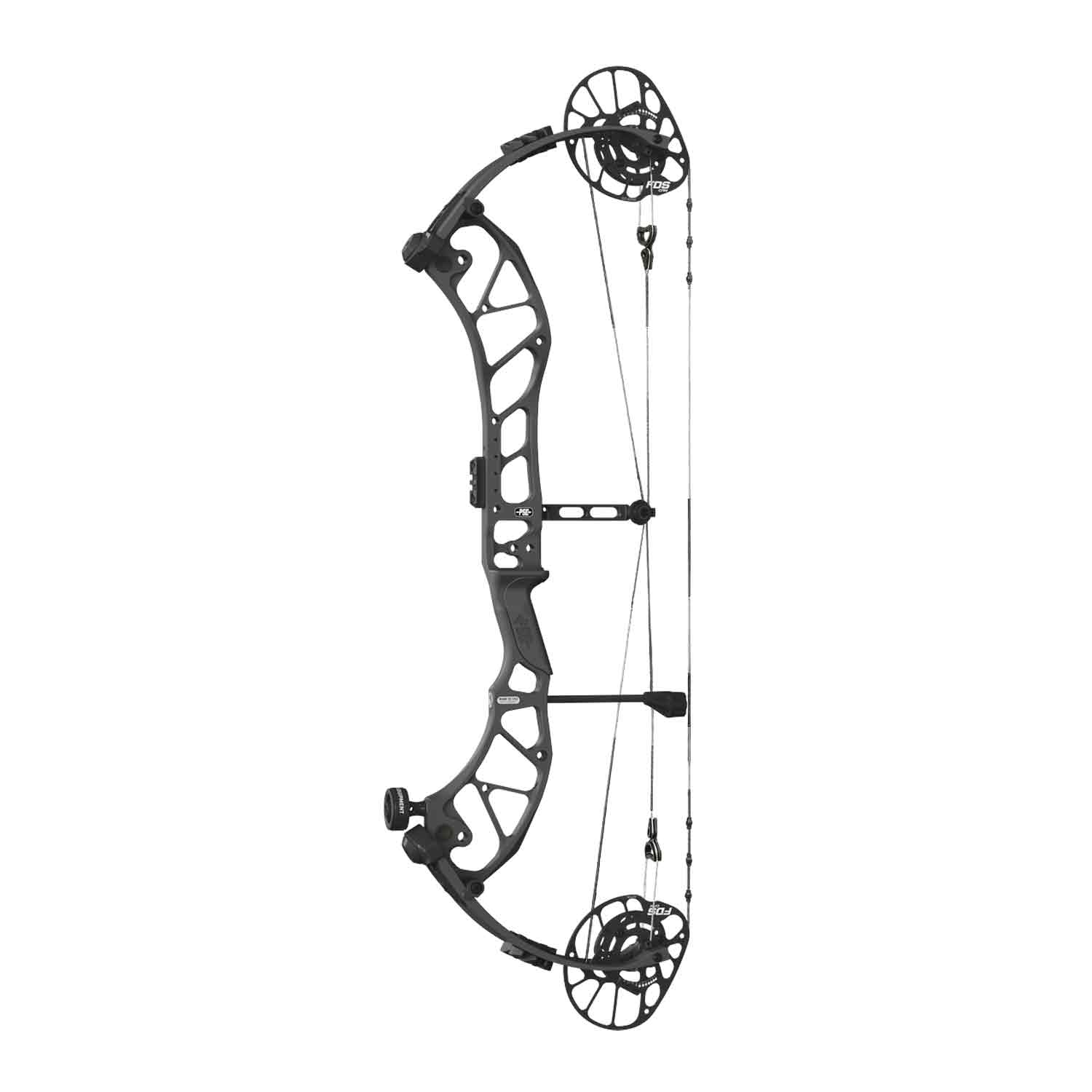
For 2026 PSE pushed the entire Mach flagship family to carbon (the Mach 34 is gone, succeeded by the carbon Mach 33 and 35 DS) and left one aluminum bow carrying the new FDS cam: the Decree FDS. That makes it the value play in PSE's premium line — the same 347 fps IBO cam system as the $1,800-plus carbon Machs, on a 31.5-inch machined riser for $1,299. The FDS cam adds roughly 10 fps over the 2025 Decree's EC2 while gaining effective brace height, and the platform picked up accuracy honors in Outdoor Life's bow testing. Real-world chronographs run about 282 fps with a 465-grain arrow at 28.5 inches and 70 pounds. Community reception of the Decree line is genuinely mixed on ArcheryTalk: fans call it unbelievably fast, stable, and easy to tune; critics call 4.65 pounds porky for its length, miss a 50-pound limb option (FDS runs 60/70/80 only), and felt the revived "Decree" name promised more than an aluminum mid-flagship. The 70–85% adjustable let-off and Full Draw Stability riser geometry hold well on target. If you want PSE's flagship shot without carbon prices, this is the only door in.
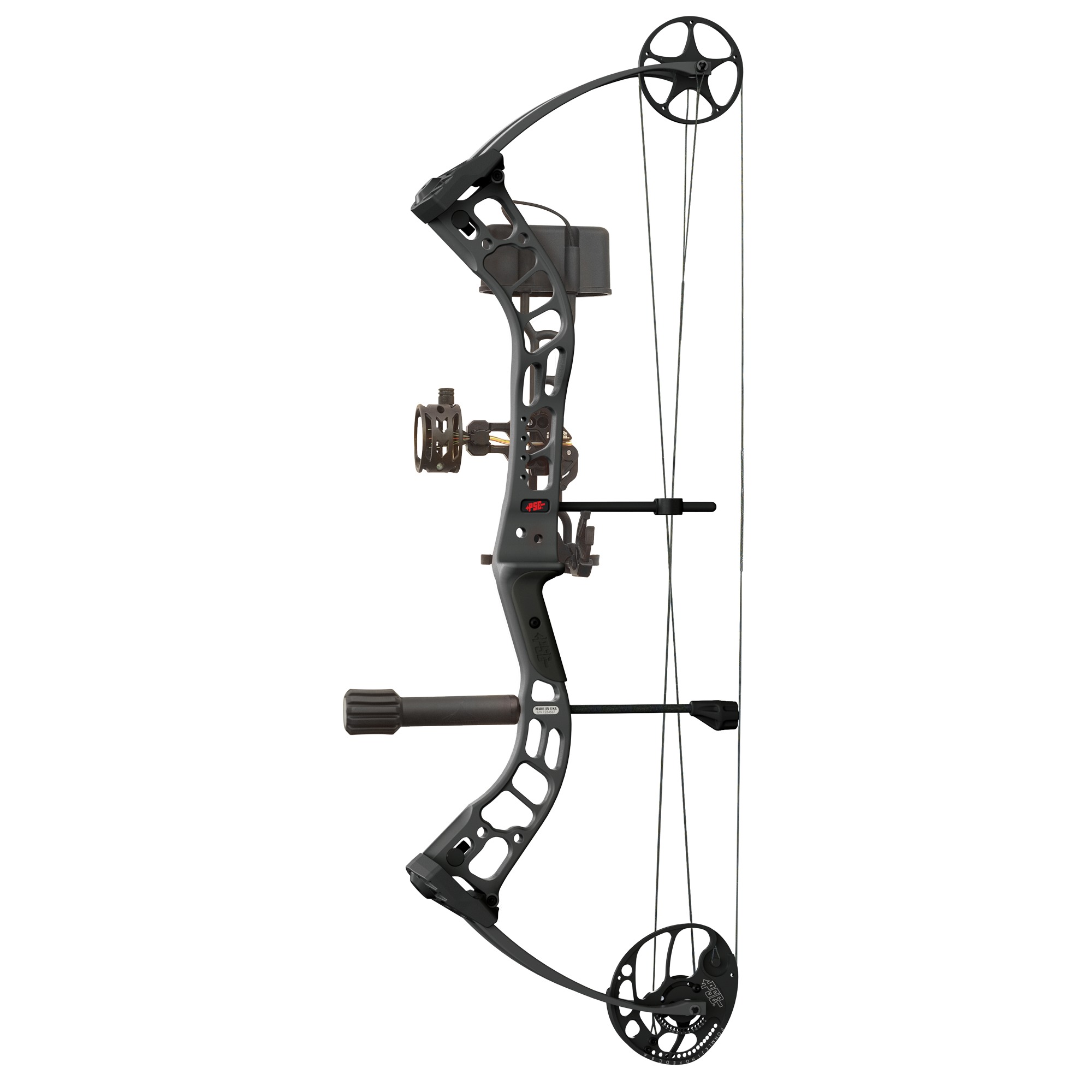
The Stinger has been PSE's budget workhorse for over 15 years, and the current ATK generation - refreshed with the wide-range 'Grow With You' SS Cam - keeps it the default recommendation for a first serious hunting rig. The price shown is the ready-to-shoot package (Sierra Lite sight, TruGlo EZ rest, Hunter Lite quiver, FX4 stabilizer, peep and loop) that typically runs $450-500; the bare SS Cam bow is $449 at Lancaster, and discounters have blown packages out in the high $300s. The ATK riser is noticeably more rigid than the old Stinger Max platform, the 32-inch axle-to-axle and 6-5/8-inch brace make it forgiving, and the SS Cam covers 21.5-30 inches of draw with no bow press. ArcheryTalk owners routinely call it the best bow in its price range - quiet, low-vibration, with multiple 'killed deer with it both years' testimonials. The trade-offs are honest ones: 312 fps is slow next to the 335 fps Alaskan XT and Amplify, 4.0 lb mass is porky for the class, the package accessories are bare-bones, and grip and finish feel a tier below the Elite Ember. As a durable, tunable do-everything platform, it is hard to beat at the price.
PSE
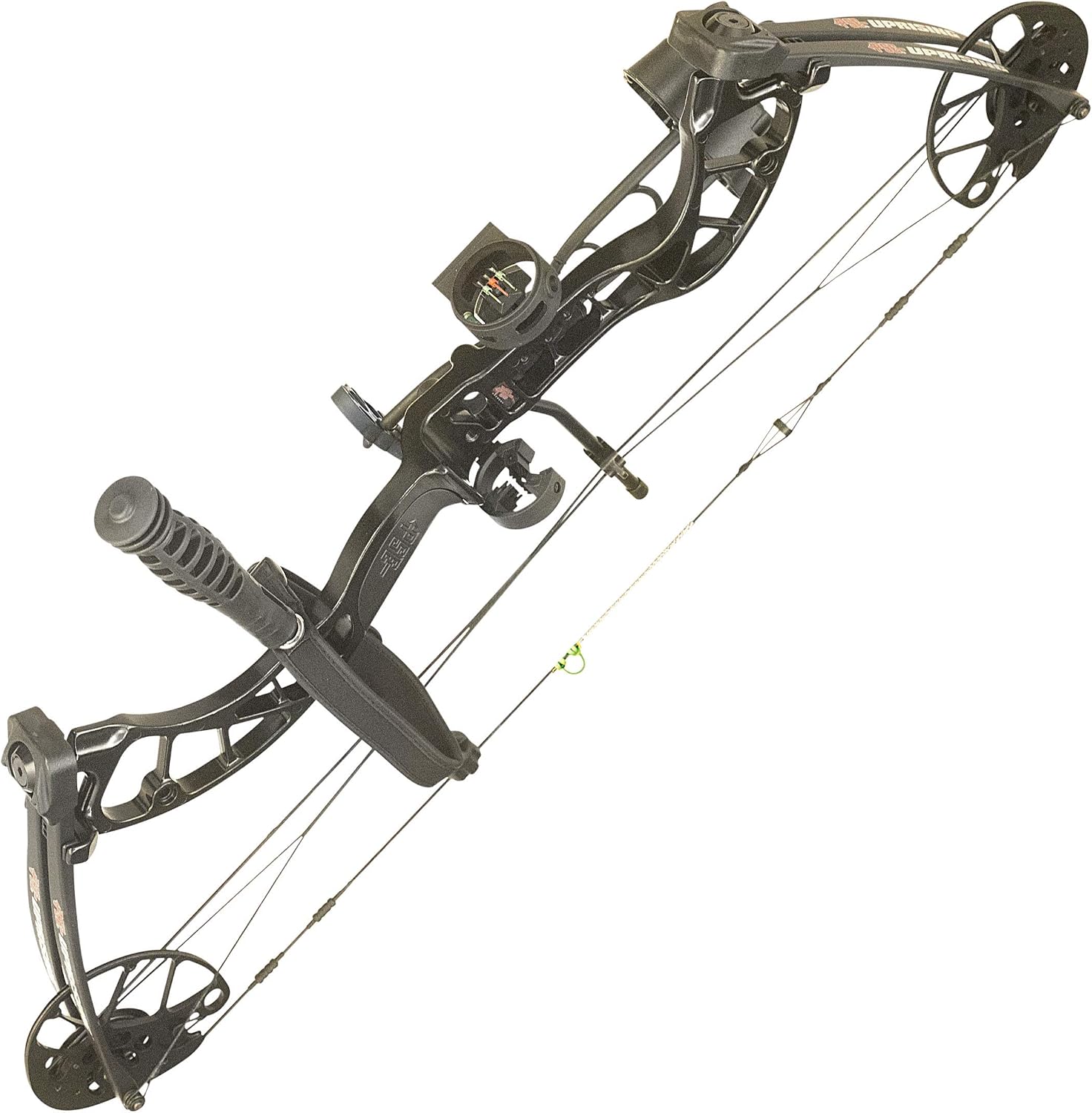
PSE Uprising
The Uprising is PSE's answer to the Edge and Cruzer, and it undercuts both on price: the Ready-to-Shoot package (3-pin sight, whisker-style rest, 5-arrow quiver, 6-inch stabilizer with sling) sells around $300 street, with sale prices dipping into the $260s. Adjustment range is legitimate - 14 to 30 inches of draw and 15 to 70 pounds, all module-based with no press - and at 310 fps ATA it out-runs the Edge XT on paper. Sportsman's Warehouse buyers rate it 4.8/5, and Women's Outdoor News praised how it grows with a shooter. The honest knocks: 70 percent let-off is the lowest in this class, so you hold roughly 18-21 pounds at full draw on a 65-70 lb setting - noticeably more than the 75-80 percent competition, which matters to new hunters waiting on a deer. The cam has a firmer hump toward the end of the cycle than the buttery Diamonds, and Amazon reviewers specifically call out the included rest as frustrating for beginners. Arrows and a release are not included. As pure bow-per-dollar, though, nothing name-brand beats it at $300, and PSE's lifetime warranty travels with a real dealer network.
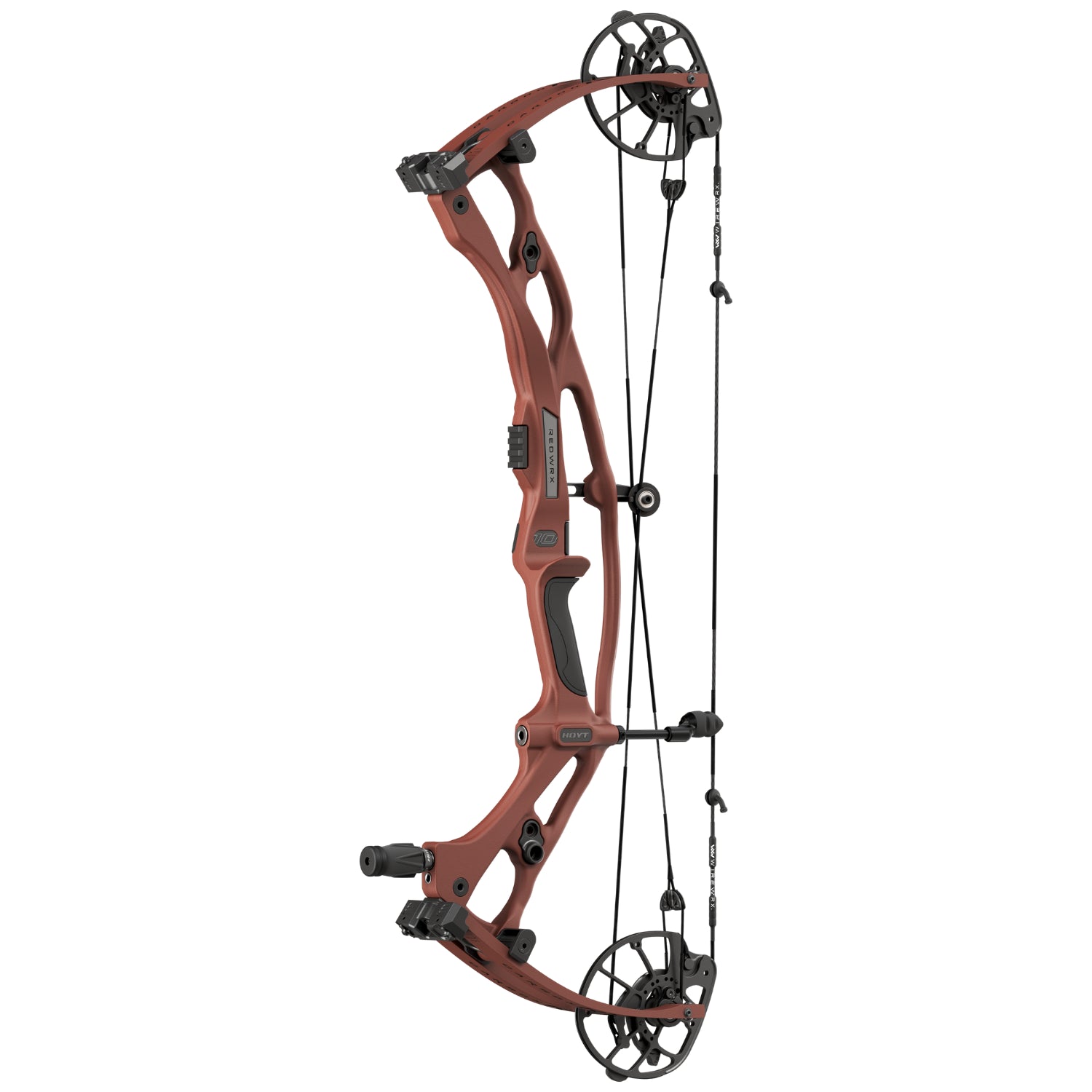
Hoyt's 2026 carbon flagship is really about one thing: the patent-pending XTS Tuning System, which adjusts for both left/right AND high/low paper tears without a press — something no other production system fully does. Reviewers who've lived with it (Born Hunting, Nock On) say it works and doesn't move your center shot, but the ArcheryTalk reality check matters: multiple owners report that two of three RX-10s they set up still needed traditional cam shimming to finish the job, so XTS narrows the gap rather than eliminating the press. The bow itself earns real praise — absurdly stable at full draw, surgically quiet, and the hollow carbon riser carries lighter than its 4.1 lb suggests while staying warm to the touch in late-season cold. The HBX Gen 4 cam gives quarter-inch draw adjustments plus customizable letoff and back-wall feel. The catch is value: $2,149 is $550 over the aluminum Alpha AX-3 that shares the same cam and tuning system, and the RX-10 didn't make Outdoor Life's 2026 podium while the AX-3 33 did. You're paying carbon money for carbon feel.
Prime Archery
Prime Divide 33
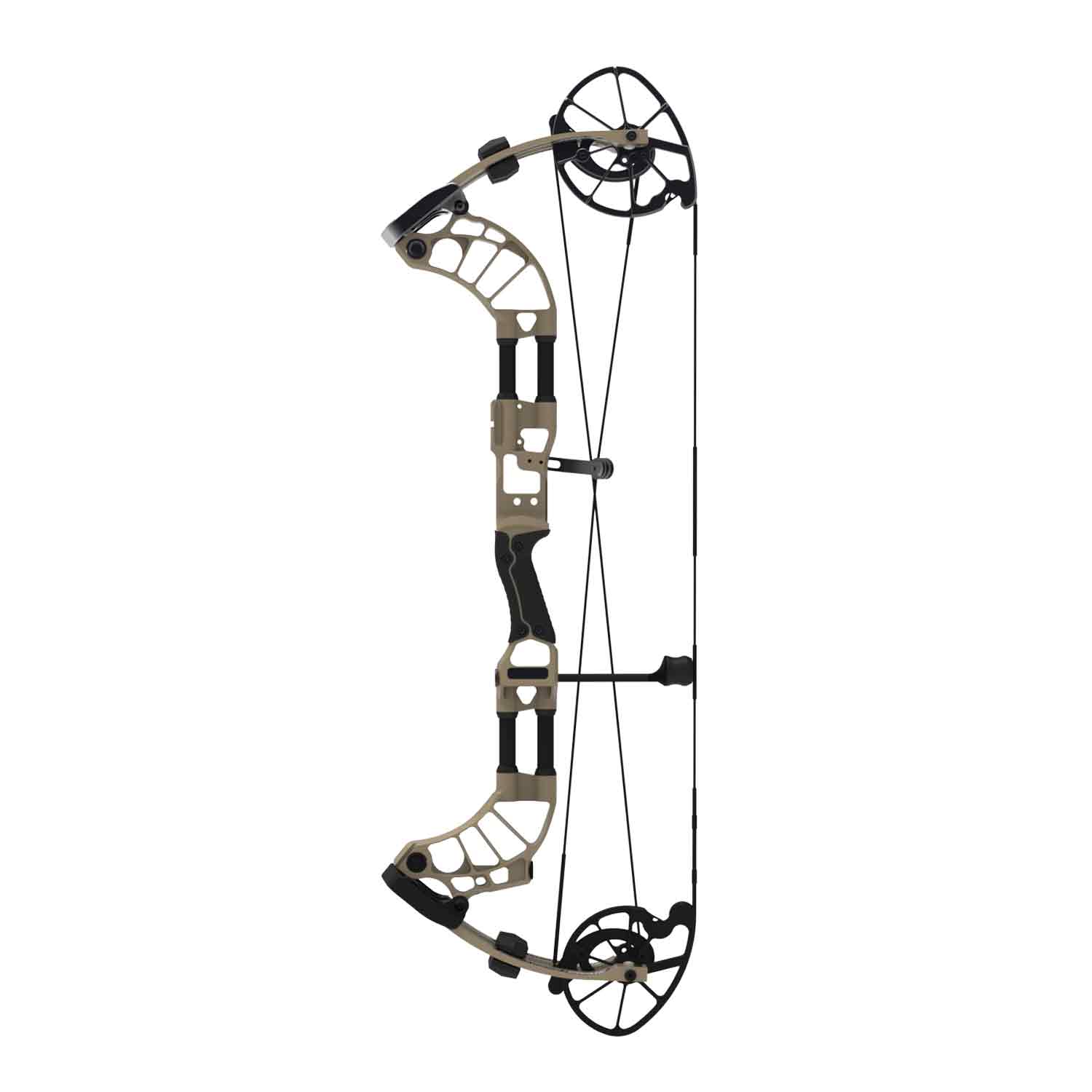
Prime's 2026 flagship isn't one bow, it's a menu: the Divide comes in 31, 33, 35, and 37" axle-to-axle lengths, each with a 6" or 7" brace-height option and standard or performance mods — eight hunting configurations before you pick a color. The 33/6 profiled here is the volume pick at 339 fps and 4.1 lb. The Divide keeps what Prime loyalists buy the brand for: the Center Grip riser puts your hand at the balance point, and reviewers (Rokslide, Field & Stream) consistently rank it among the steadiest-aiming, most accurate hunting bows made, with a Core Cam draw so smooth that even PSE Sicario reviewers use 'almost as smooth as the Prime core cam' as the benchmark. New Quik Tune tech shifts the cam laterally without pulling axles, and the Nano-Grip's aerogel core genuinely stays warmer in cold stands. ArcheryTalk sentiment is warm — 'the first bow from any manufacturer to get me to think of upgrading' — with grumbles: the price jumped to $1,699 (Prime historically undercut the big two), 339 fps is modest, early owners needed Prime's special shim tool for cam-spacing changes, and the dealer network is thinner than Mathews' or Hoyt's. Registration gets you free strings for life, which no rival matches.
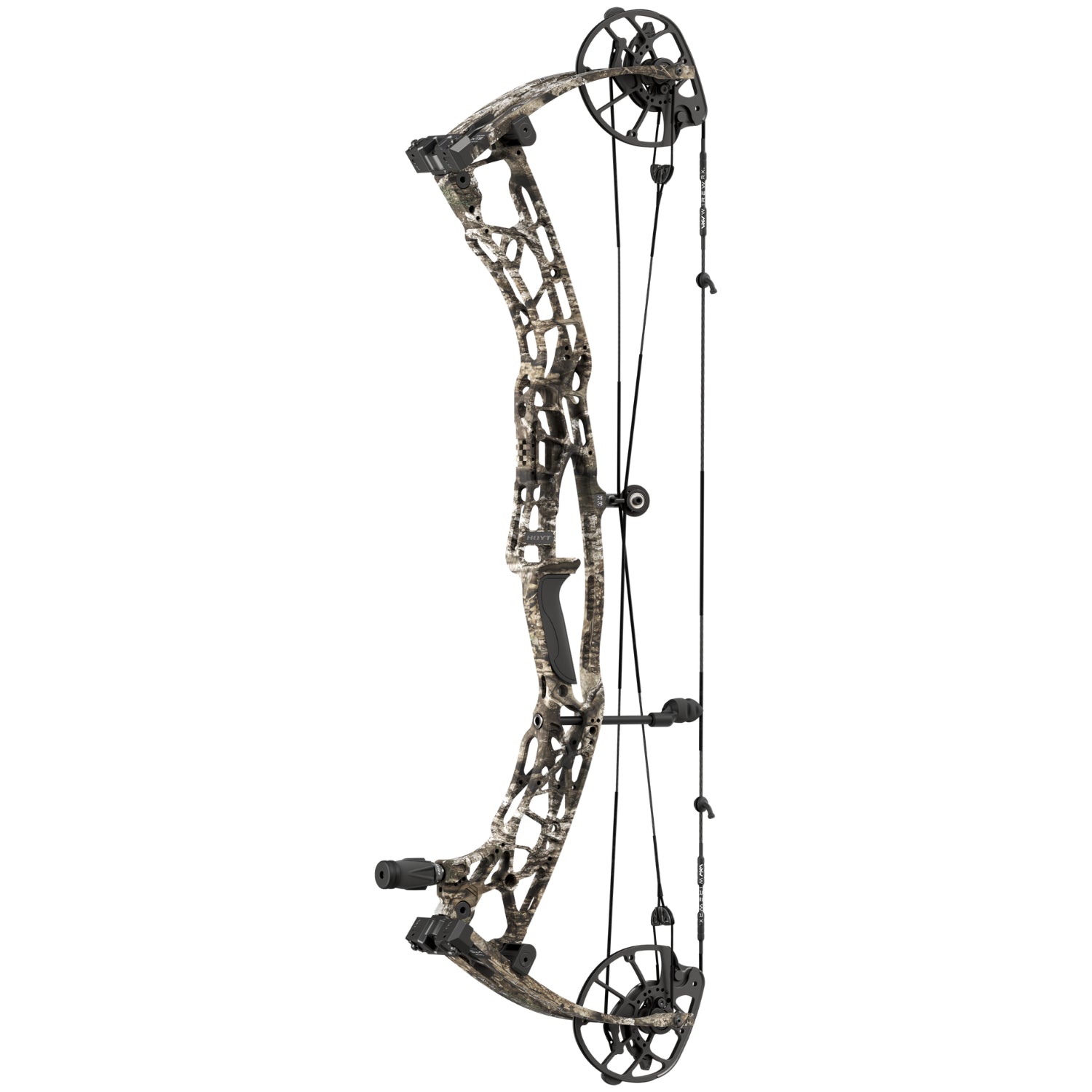
The aluminum Alpha AX-3 33 was the quiet overachiever of 2026: runner-up in Outdoor Life's bow test at 20.2 points, where it posted the best back wall of any bow (4.6/5) and the only unanimous 5/5 grip score — testers' favorite grip, hands down. Groups averaged 3.64" at 50 yards, just behind the Mathews ARC 34. The HBX Gen 4 cam draws with less perceived weight up front, and you can adjust back-wall feel and letoff; one tester's 73-lb bow 'drew like silk.' The honest knocks from ArcheryTalk and Field & Stream: there's a bigger hump into the break-over than the Mathews, and some shooters feel a bit of jump and vibration at the shot, so it's not the deadest bow here. It also weighs a legitimate 4.75 lb on Hoyt's own spec sheet — heavier than early press materials suggested — and the price crept from a $1,499 launch MSRP to $1,599 on Hoyt's site mid-year. It shares the RX-10's XTS press-free tuning at $550 less, which is exactly why a lot of Hoyt guys are skipping carbon this year.