Elite Archery
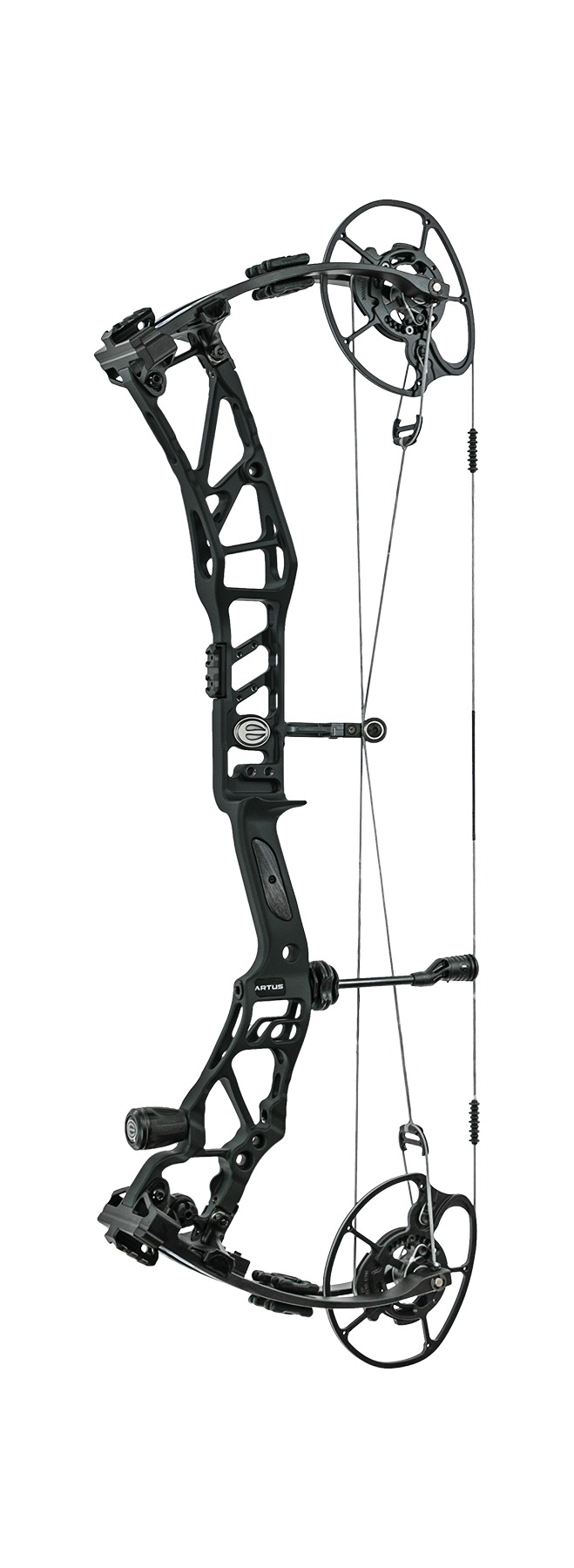
Elite Artus
With the Varos taking over as Elite's 2026 flagship, the Artus slots in as the brand's second hunting bow — the previous-generation compact flagship that stays in the line at $1,299. Its pitch is pure shootability: a huge 6.875-inch brace height, up to 90 percent let-off, and Elite's S.E.T. system that tunes left/right impact by pivoting the limb pockets with an Allen key — no press, no shims. The result is a 30-inch bow that owners on ArcheryTalk swear "holds like a 33–35-inch bow," and the 13 customer reviews on Elite's site run a perfect 5.0. With VX performance mods it rates 340 fps IBO, though standard mods give up speed, and real-world numbers land in the mid-280s with hunting arrows. The community's one loud complaint is mass: 4.7 pounds bare gets called "absurdly heavy for a short bow," with critics saying Elite risers need a half-pound diet to keep pace with Mathews. It is also an awkward buy new — the newer Varos costs the same — but as a forgiving, dead-in-hand whitetail bow with the biggest brace height in its class, the Artus still earns its spot.
Specifications
Highlights
Pros
- ✓6.875" brace height is the most forgiving flagship geometry available
- ✓Up to 90% let-off makes long holds at full draw effortless
- ✓S.E.T. press-free tuning is the easiest system in the industry to live with
- ✓Owners consistently say the 30" bow aims like a 33–35" target rig
- ✓Perfect 5.0 across 13 customer reviews on Elite's site
- ✓40–75 lb peak-weight range covers smaller-framed shooters most flagships ignore
- ✓Delta VRT damping keeps the shot quiet and nearly vibration-free
Cons
- ✗4.7 lb bare — repeatedly called too heavy for a 30" bow on ArcheryTalk
- ✗340 fps requires VX performance mods; standard mods are noticeably slower
- ✗Same $1,299 price as the newer flagship Varos makes the value case awkward
- ✗No 80 lb option for heavy-draw shooters
Owner Insightssummarized from ArcheryTalk, Reddit, and owner reviews
The Artus was Elite's compact flagship until the Varos took over for 2026, and it stays in the line because its pitch never stopped working: pure shootability. A 6.875-inch brace height — biggest in the flagship class — up to 90 percent letoff, and press-free S.E.T. tuning make it the least punishing high-end hunting bow to actually live with. The ArcheryTalk threads on it ('Really liking the Elite Artus') read like a support group for people surprised by how well a 30-inch bow aims: the signature owner claim is that it holds like a 33–35 inch target rig, and multiple posters report it printing tighter groups than bows they paid more for.
The practical experience is calm in a way modern flagships often aren't. The draw is smooth with no dump or surprises, the huge brace forgives form breaks, 90 percent letoff means holding on a hung-up buck costs almost nothing, and Delta VRT damping leaves just a soft thump at release. S.E.T. fixes left-right paper tears by pivoting the limb pockets with an Allen key — no press — and draw length runs 25 to 30.5 inches on the SP2 cam. The flip side is the one complaint owners never let go of: 4.7 pounds bare is a lot of bow for 30 inches of axle, and the critics say Elite risers need a half-pound diet. It's also honestly slow — 340 fps requires the VX mods, and hunting setups land mid-280s.
The Artus makes the most sense for treestand whitetail hunters who sit long, hold long, and value forgiveness over fps — and for smaller-framed shooters, since 40 lb limbs exist here and don't on most flagships. The awkward part is the price: at the same $1,299 as the newer, more decorated Varos, the Artus needs you to specifically want its bigger brace and shorter frame. Where it really shines is the used and clearance market, where it undercuts the Varos and remains every bit the bow it was. Dealer-only new, like all Elites, but famously easy to keep tuned at home afterward.
What owners like
- +6.875" brace height — the most forgiving flagship geometry you can buy
- +ArcheryTalk owners keep saying the same thing: the 30" Artus holds like a 33–35" bow, with one comparing it directly to his Sequel 31 but with a better string angle
- +Up to 90% letoff makes minute-long waits at full draw genuinely comfortable
- +S.E.T. limb-pocket tuning with an Allen key — no press, no shims, no shop visit
- +40–75 lb peak weights cover smaller-framed shooters most flagships ignore
- +Draw cycle is smooth with no surprises — owner threads describe shooting lasers out to 40 yards
- +Delta VRT damping keeps it quiet and nearly dead in hand
- +A perfect 5.0 across owner reviews on Elite's site, for whatever a small manufacturer-hosted sample is worth
Common complaints
- −The recurring ArcheryTalk gripe is blunt: absurdly heavy and chunky for such a short bow — 4.7 lb bare on a 30" frame
- −The 340 fps rating requires the VX performance mods; standard mods give up real speed
- −Mid-280s real-world with hunting arrows
- −Elite's newer Varos costs the same $1,299, which makes buying an Artus new an awkward proposition
- −No 80 lb option
- −Dealer-only
- −Reddit barely discusses it — sentiment lives almost entirely on ArcheryTalk
Common Questions
What draw length and weight range does the Artus cover?
Do I need a press to tune the Elite Artus?
Elite Artus vs Elite Varos — same price, which do I buy?
Is the Artus fast enough for hunting?
Why do people call a 30-inch bow a great aimer?
Related bows
More from Elite Archery →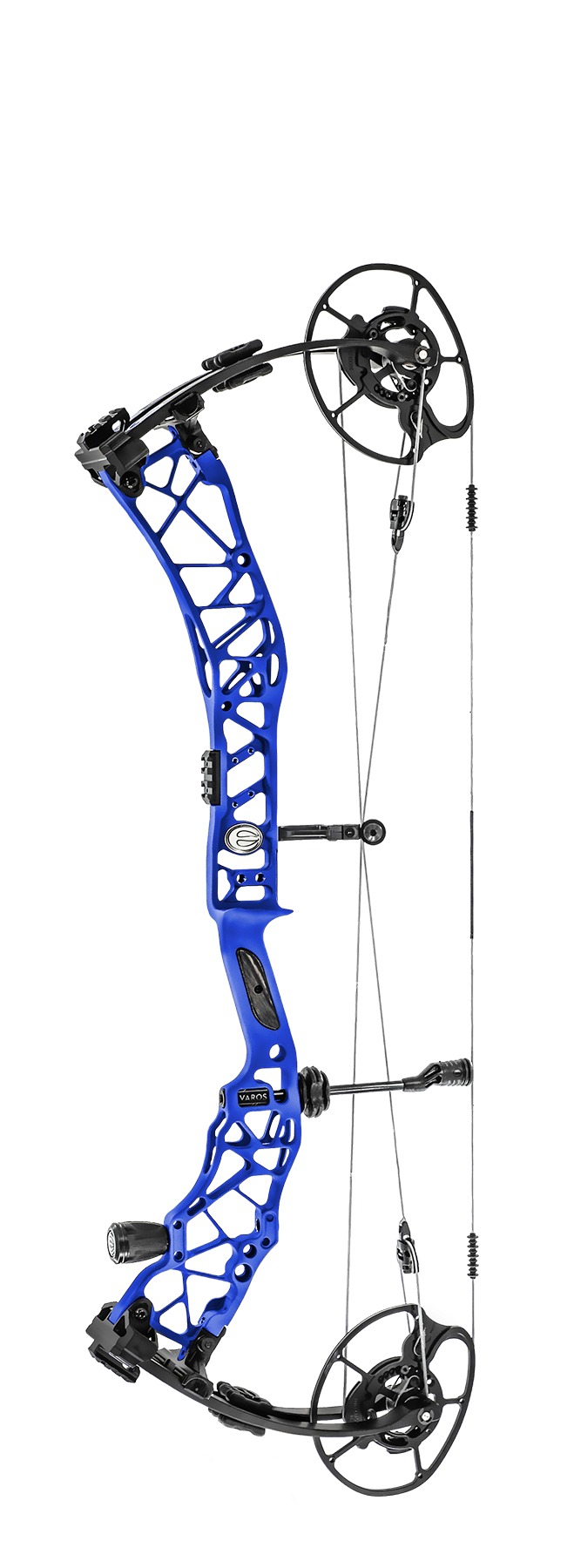
Elite Archery
Elite Varos
The Varos is Outdoor Life's 2026 Bow of the Year, and it won on the metric that matters: accuracy. The three-shooter test team averaged 2.79" groups at 50 yards — best of the field — and in the 30-arrow shoot-off its groups ran 0.6" smaller than the Mathews ARC 34 and Hoyt AX-3 33. It also took a perfect 5/5 for post-shot behavior (dead quiet, dead still) and 5/5 for features, thanks to the new Micro Splitters that adjust cam timing with a screw turn — no press — on top of Elite's S.E.T. limb-pocket tuning. The SP2 cam runs up to 90% letoff with a meaty 7.8-lb holding weight that helps it pin on target. Owners on Elite's site (18 reviews, all 5-star) echo the 'bullet holes out of the box' story. Real knocks: at 4.75 lb it's the heaviest bow here, the transition into the valley is abrupt enough that OL scored the draw cycle just 3/5, the grip is slick (testers added tape), and 285.8 fps in standardized testing means it's no speed bow. At $1,299 it's the cheapest flagship in this group — the value is genuinely absurd.
Elite Archery
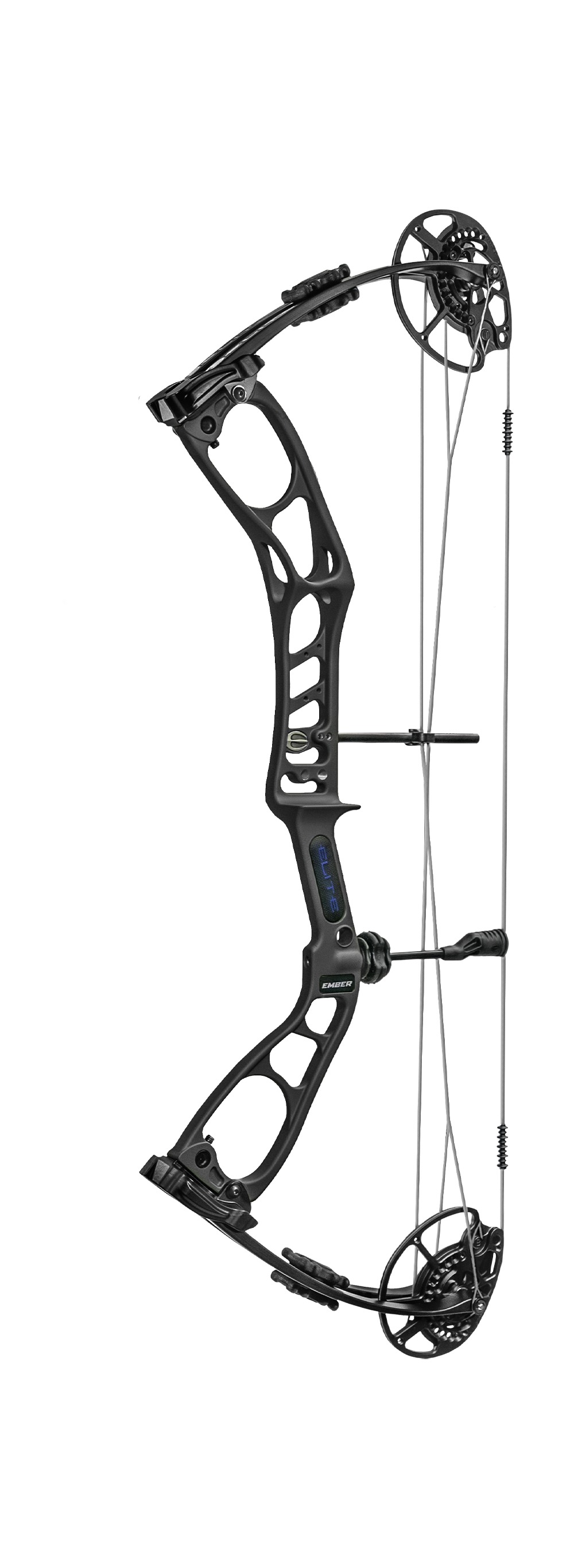
Elite Ember
The Ember is Elite's do-everything adjustable bow, and unlike most sub-$700 packages it comes from a brand better known for $1,200 flagships like the Era and Artus. The $679.99 price is for the RTS package (sold that way by Elite direct and Scheels), which bundles a CBE Tactic 3-pin sight, Arrow Mane capture rest, stabilizer, quiver and Winner's Choice strings - meaningfully nicer package parts than the Trophy Ridge or Octane kits rivals bolt on. With 10-60 lb of draw weight and 15-29 inches of draw length, it fits nearly anyone, which is why ArcheryTalk regulars call it one of the best grow-with-you buys; several report it out-holds and out-feels the Bear Legit and PSE Stinger head-to-head, with a limb-stop back wall that is unusually solid for the class. Real knocks: 310 fps IBO is modest and short-draw speeds are pedestrian; the dual-cam-with-yokes system needs occasional re-syncing where binary-cam rivals (Amplify, Deploy SB) hold tune longer; and a minority find the light 3.6 lb bare bow slightly nervous at full draw. Versus Elite's own flagships you give up SET tuning, speed and shot quietness - but not fit and finish.
Bear Archery
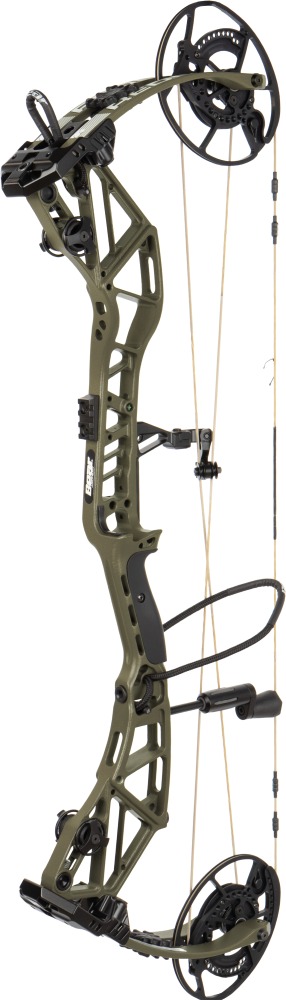
Bear Redeem
The Redeem replaces the Persist 33 as Bear's 2026 flagship, and it is the brand's most serious run yet at the Mathews/Hoyt tier: a 30-inch, 340 fps IBO platform with the EKO2 cam, a diagonally pivoting roller cable guide that ArcheryTalk owners credit for a genuinely buttery draw, and QPC quad-pocket rockers that micro-adjust limb loading for tuning. Reviewers at Grand View Outdoors and Bowhunter Planet found it exceptionally stable for a 30-inch bow, holding well even in wind. The honest problems: at a measured 4.89 pounds bare it is the heaviest bow in its class — nearly a full pound over an ARC 30 — Grand View noted buzz in the grip and string twang out of the box, and the recurring ArcheryTalk gripe is that at $1,299 Bear priced it "almost as much as a Lift" when the brand's traditional edge was value. Draw weight comes in adjustable 45–60 and 55–70 lb ranges rather than discrete peak weights, which suits shooters who de-tune or build up more than 80-pound speed chasers. It is USA-made, with Bear's typically excellent factory grip.
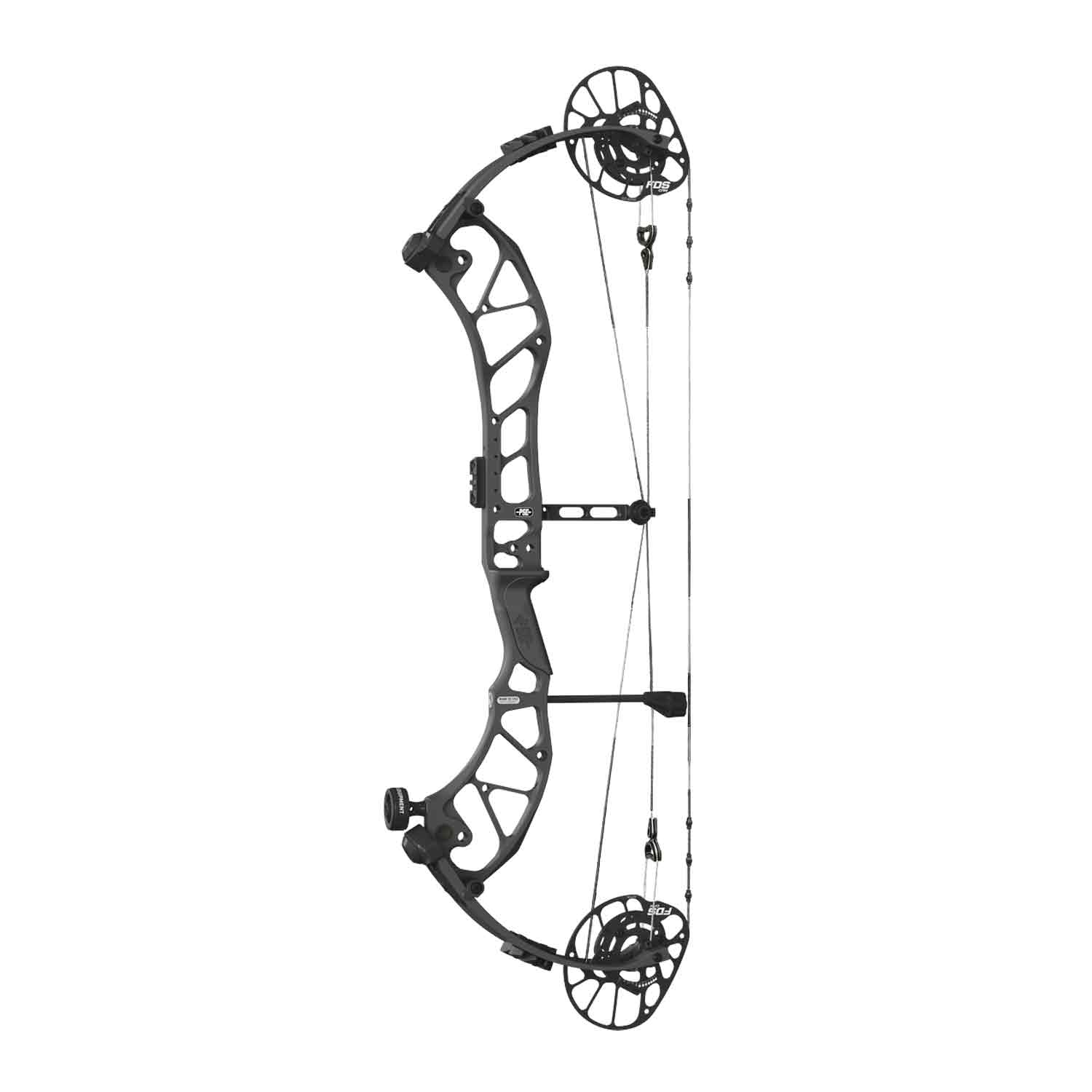
For 2026 PSE pushed the entire Mach flagship family to carbon (the Mach 34 is gone, succeeded by the carbon Mach 33 and 35 DS) and left one aluminum bow carrying the new FDS cam: the Decree FDS. That makes it the value play in PSE's premium line — the same 347 fps IBO cam system as the $1,800-plus carbon Machs, on a 31.5-inch machined riser for $1,299. The FDS cam adds roughly 10 fps over the 2025 Decree's EC2 while gaining effective brace height, and the platform picked up accuracy honors in Outdoor Life's bow testing. Real-world chronographs run about 282 fps with a 465-grain arrow at 28.5 inches and 70 pounds. Community reception of the Decree line is genuinely mixed on ArcheryTalk: fans call it unbelievably fast, stable, and easy to tune; critics call 4.65 pounds porky for its length, miss a 50-pound limb option (FDS runs 60/70/80 only), and felt the revived "Decree" name promised more than an aluminum mid-flagship. The 70–85% adjustable let-off and Full Draw Stability riser geometry hold well on target. If you want PSE's flagship shot without carbon prices, this is the only door in.
Darton Archery
Darton TriTech 33
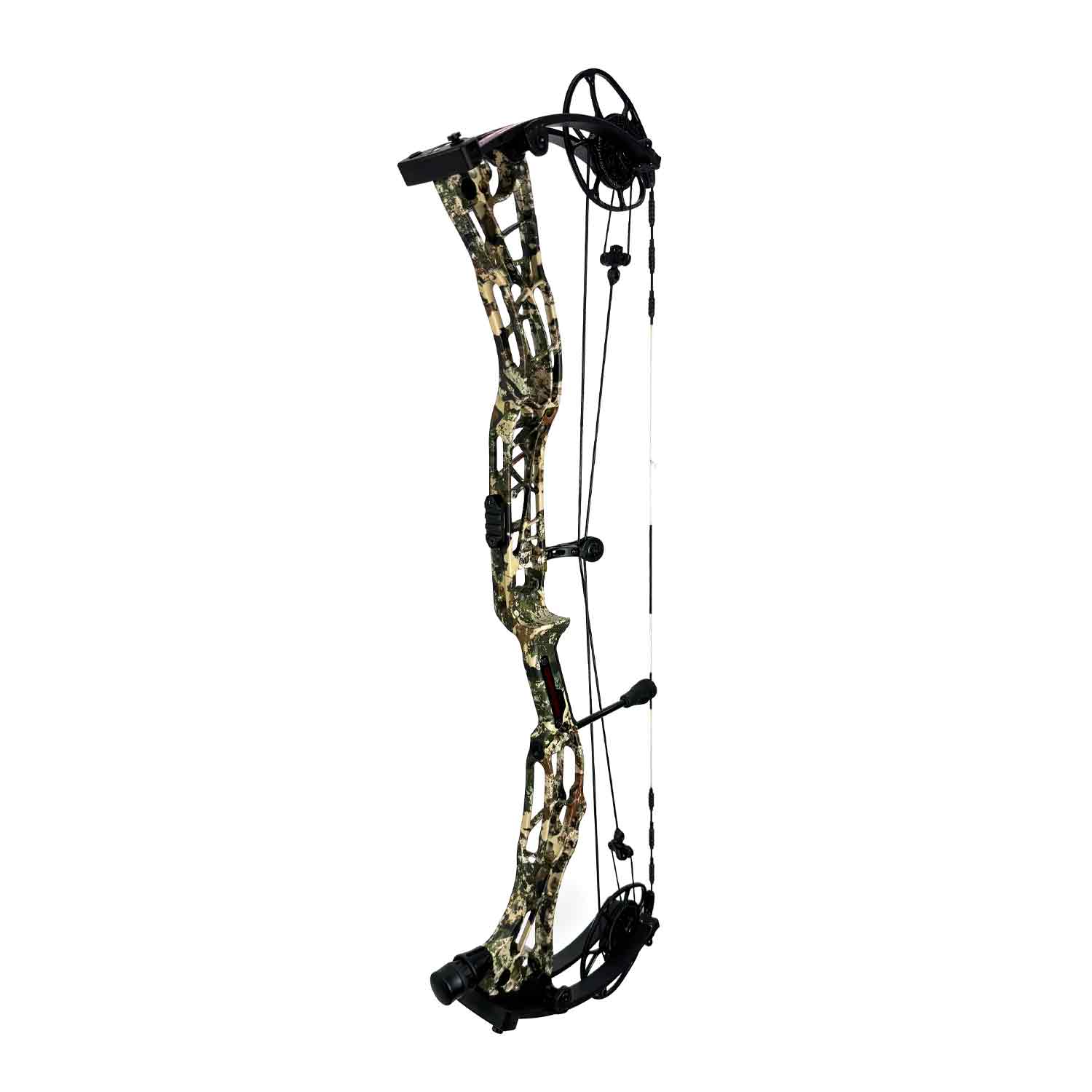
Darton doesn't advertise much, but the Michigan company that invented cam systems half the industry licenses builds arguably the best-value flagship in archery. The TriTech 33 is the middle of Darton's 2026 flagship trio (31/33/35), pairing the BBS dual-sync cam with three patent-pending tuning systems: Perfect Tune adjustable limb pockets, Perfect Timing yoke hangers, and a dual-function micro-adjust roller guard that moves arrow flight without a press. Uniquely, Darton publishes actual measured speeds rather than optimistic IBO math — 334–335 fps standard, 339–341 fps with the included speed mod — and ArcheryTalk chrono threads consistently back the numbers up, with owners calling it "the smoothest drawing 70 lb bow I've had." At $1,349 it undercuts a Mathews ARC 30 or Hoyt Alpha AX-3 by $100–$300 while giving up nothing in tunability. The catches: 4.6 pounds bare is portly, the dealer network is thin so test-drives are hard to arrange, resale values trail the big brands, and the styling is more machine shop than marketing department. For shooters who care about engineering over badge, it is the sleeper pick of 2026.
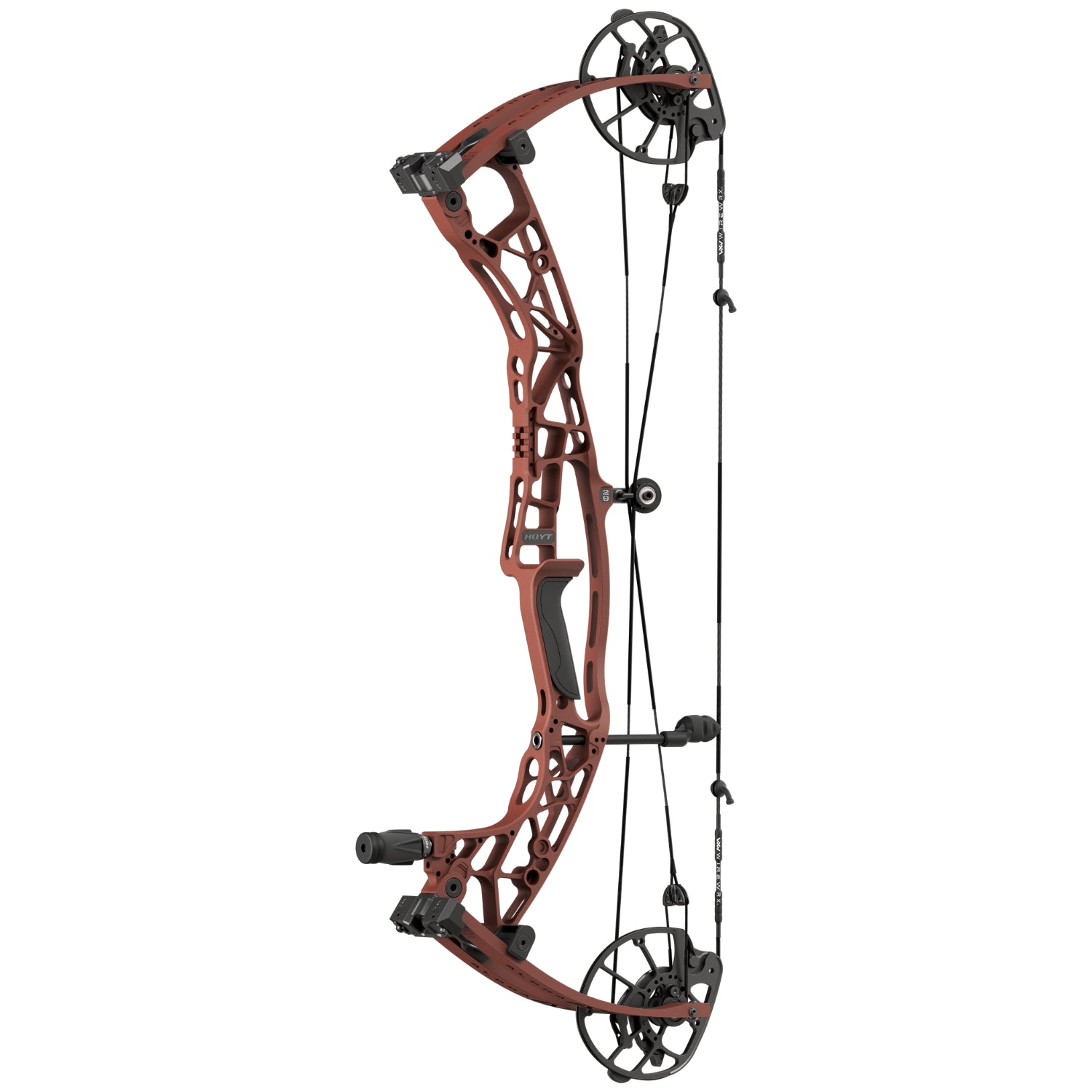
Hoyt's 2026 aluminum flagship comes in four versions; the AX-3 29 is the compact one, and it may be the most complete tuning package Hoyt has ever shipped. The new XTS Tuning System corrects both horizontal and vertical tears without a press — a first for Hoyt, whose shim-based tuning already led the industry — on what the company claims is the stiffest riser on the market. Bowhunter magazine measured it among the quietest, most vibration-free bows it has tested, crediting the In-Line accessory system that bolts sights and rests directly to the riser. It rates 340 fps ATA with the HBX Gen 4 cam's quarter-inch draw-length adjustments. ArcheryTalk head-to-heads against the Mathews ARC 30 read like a coin flip: Mathews usually wins draw feel, while the Hoyt wins the hold ("dead steady, minimal pin float"), quietness, and tuning system. The knocks: 4.4 pounds bare is nearly half a pound over the ARC 30, draw length tops out at 30 inches so longer-draw shooters need the AX-3 33, the flat Hoyt grip stays polarizing, and $1,399 is real money. The lone verified Scheels review so far is five stars.